
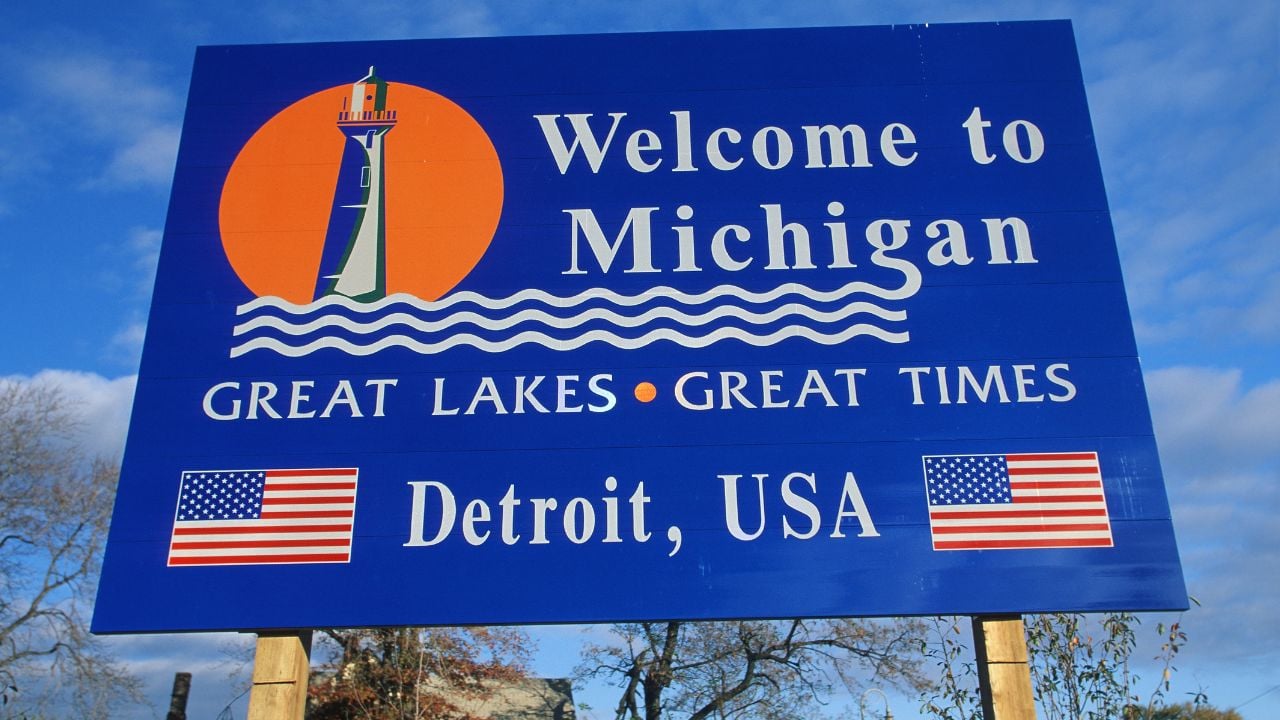
6 Things That Change the Second You Cross From Indiana Into Michigan

If you live in northern Indiana, a holiday shopping trip across the Michigan line is only a short drive away.
Your receipt on the Michigan side won’t look the same, though.
Here are the things that change the second you cross from Indiana into Michigan.
Note: This is general information, not legal or tax advice. Laws, tax rates and fees are subject to change.
1. Time Zone Line
If you cross from Indiana into Michigan along the line’s western end, your clock jumps ahead an hour.
Under federal rules, the Eastern and Central zones split along Indiana’s northern edge as far as the east line of LaPorte County.
LaPorte County sits on the Central side, and Michigan sits on the Eastern side.
So a 6 p.m. reservation on the Michigan side is a 5 p.m. deadline on the clocks in LaPorte County.
If you’re meeting someone on the Michigan side, tell them which clock you mean.
Farther east, Indiana’s side of the line should be on Eastern time as well, so your clock wouldn’t change.
2. Sales Tax
Buy the same thing on the Michigan side and the sales tax comes in a point lower.
Indiana retailers collect a 7% sales tax.
Michigan’s rate is 6% on the total price of taxable retail sales.
On a $1,000 appliance, that’s $70 of tax in Indiana and $60 in Michigan.
On a $200 coat, the tax is $14 in Indiana and $12 in Michigan.
Going the other way, the same purchase picks up the extra point.
3. Bottle Deposits
Michigan stores must charge a 10-cent deposit on eligible drink containers.
That makes Michigan one of ten states with a bottle deposit law.
You get the money back by returning clean containers of the same brand, size and type the store sells.
Michigan stores must refund the full deposit up to $25 a day for each person, which covers 250 containers at 10 cents apiece.
Michigan’s bottle deposit page says stores can refuse containers they don’t sell and containers that are very dirty.
Psst! How much do you know about Indiana and Michigan’s parks, dunes and Great Lakes history? Take our quiz and see if you can ace it.
Quiz
Indiana and Michigan IQ
Answer eight questions on Indiana and Michigan’s parks, dunes and Great Lakes history. We bet you can’t get them all right. Prove us wrong?
Which Indiana park does the state call its first state park?
4. State Park Fees
At a state park gate, whether you count as a local decides what you pay, and crossing the line changes that.
If you drive an Indiana-plated car into a Michigan state park, the nonresident daily rate is $12.
Take a Michigan-plated car south to Indiana Dunes State Park, and the gate charges $20 while Indiana plates pay $7.
That's a $13 difference.
A nonresident annual pass costs $42 in Michigan and $120 in Indiana.
At $12 a day, the $42 Michigan pass pays for itself by your fourth visit.
Indiana Dunes State Park Gate Rates
Indiana Dunes State Park prices its gate separately from the rest of Indiana's state parks.
Out-of-state plates pay $15 a day at those other parks, which makes the Indiana Dunes rate $5 higher.
Indiana's annual entrance passes work at Indiana Dunes State Park, but not at Indiana Dunes National Park.
5. Fireworks Rules
The rules for when and where you can use consumer fireworks are written differently on each side of the line.
Indiana's state law generally bars using fireworks after 11 p.m. or before 9 a.m.
On holidays, the cutoff moves to midnight, and July 4 runs from 10 a.m. to midnight.
Indiana's fireworks page says local ordinances may limit those hours even further.
Michigan's fireworks page lists the days you can use them in cities with a fireworks ordinance.
Those days include New Year's Eve, the weekend before Memorial Day, June 29 through July 4 and the weekend before Labor Day.
The page says a community without an ordinance has no prohibited days.
Indiana limits use to special discharge locations, your property, or another person's property with permission.
Indiana's fireworks page adds that someone who sets off fireworks in a legal location may still be held liable for injuries or damage.
Michigan bars using them on public, school or church property, or on someone else's property, without express permission.
6. Marijuana Laws
Michigan allows adults to possess marijuana, but Indiana's criminal code treats possession as a crime.
Michigan's adult-use law makes personal use and possession legal for people 21 and older.
The state defines personal use as 2.5 ounces in your possession, or up to 12 plants at home.
Even in Michigan, the law doesn't authorize you to use marijuana in public.
Under the 2023 edition of Indiana's code on Justia, possession of marijuana is a Class B misdemeanor.
A prior drug conviction raises it to a Class A misdemeanor.
A Level 6 felony takes both a prior drug conviction and at least 30 grams of marijuana.
So an adult with no prior drug conviction who carries Michigan's 2.5-ounce limit across the line would face a misdemeanor charge under that edition.
5 Indiana Buggy Laws Drivers Don't Learn Until They Meet One on the Road
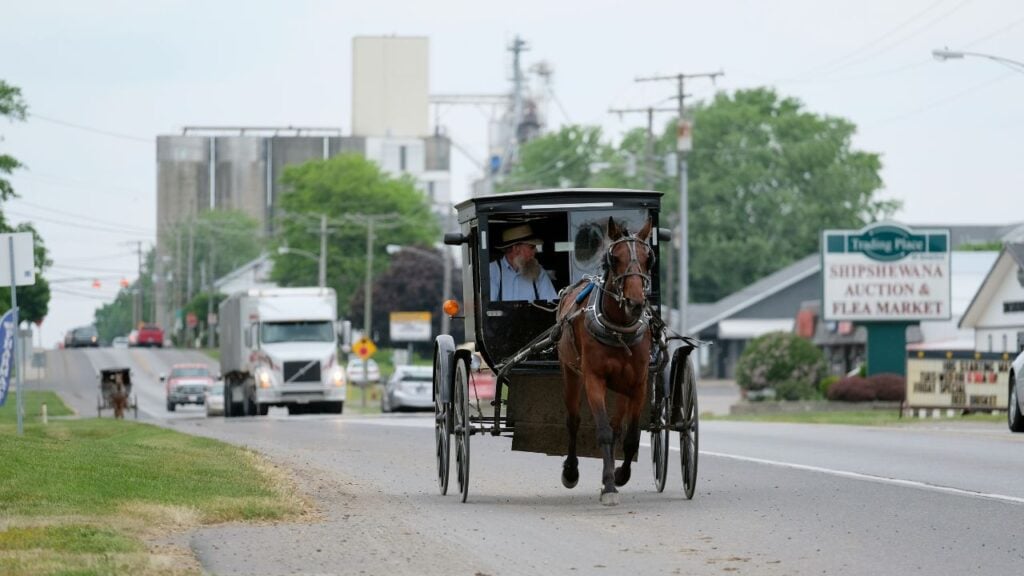
Some Indiana roads are shared with horse-drawn carriages, and the laws that cover them aren't obvious to every driver.
5 Indiana Buggy Laws Drivers Don't Learn Until They Meet One on the Road
5 Restaurant Chains That Closed Michigan Locations in 2026

Some restaurant chains have closed Michigan locations.
Here is which ones.
