
3 Wildlife Feeding Mistakes Alabamians Can Be Fined For

A bag of corn and a soft heart will make you popular with almost anything that has four legs.
Many of us grew up being told to share, and nobody said wild animals were the exception.
But the spot where you hand out the food matters more than you’d think.
Here are the wildlife feeding mistakes in Alabama that you can be fined for.
Note: This is general information, not legal advice. Wildlife rules and penalties are subject to change, so confirm the current details with the Alabama Department of Conservation and Natural Resources.
1. Feeding an Alligator
Feeding a wild alligator breaks a state rule that bars anyone from intentionally feeding alligators or luring them in with feed.
Alligators live statewide in Alabama, so a lake far from the Gulf Coast doesn’t get you off the hook.
Public exhibitors and other permit holders are exempt, but a backyard dock isn’t covered.
A fed alligator can lose its wariness of people, and the Alabama Department of Conservation and Natural Resources (ADCNR) says those animals must then be euthanized.
The alligator pays the price.
Breaking an ADCNR rule is usually a Class C misdemeanor in Alabama, and a court can fine you up to $500.
State law bars killing or harassing alligators, so if one hangs around your dock, leave it alone and call your district office with questions.
Tossing fish scraps in the water draws alligators too, so the trash can at the boat ramp is the better spot.
Keep pets out of the water, too.
2. Feeding Deer in a State Park
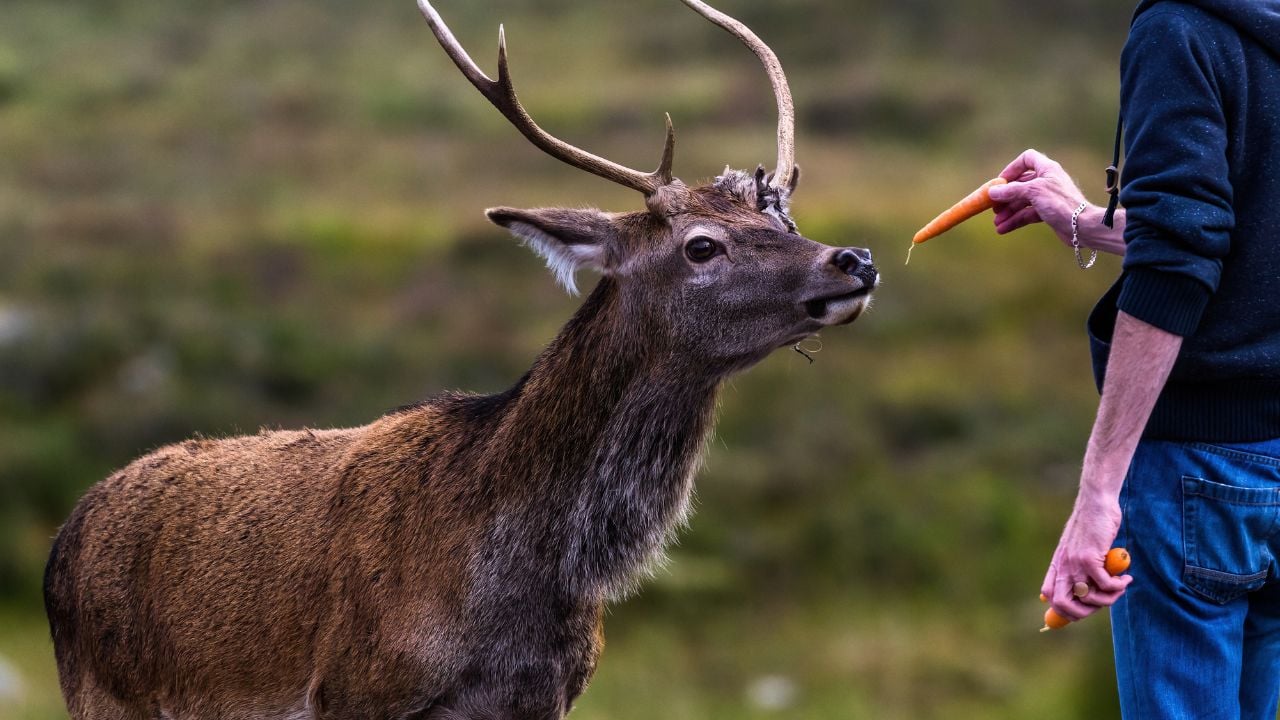
Under the conduct rules for Alabama’s state parks, feeding deer is unlawful.
A violation is a misdemeanor with a fine of up to $500, up to six months in jail, or both.
If a deer wanders up to your campsite, you can’t hand it a snack.
That includes crackers.
The parks division director has full police power to file charges and make arrests.
The same conduct rule bars picking wildflowers or collecting natural objects, so leave the bouquet behind.
Gulf State Park goes further and asks visitors not to feed any wildlife.
Fed animals can become used to people and start depending on them for food.
3. Feeding Wildlife in the CWD Zone
A state rule bans putting out corn or other feed for wildlife in Lauderdale, Colbert and Franklin counties.
Break the ban and you face the same Class C penalty as feeding an alligator.
The three counties make up the management zone for chronic wasting disease (CWD), a contagious neurological disease of white-tailed deer.
Corn on the ground is food that many deer share.
The federal Centers for Disease Control and Prevention says the disease passes between animals through body fluids, and through soil, food or water those fluids have touched.
The corn can stay home.
The ban isn’t new.
ADCNR suspended feeding and baiting in Lauderdale and Colbert counties in March 2022, two months after the first positive deer turned up.
Then a deer in Colbert County tested positive.
In December 2024, the zone grew to include all of Franklin County.
Biologists have since confirmed 21 detections in the zone.
Check where your property sits before you set anything out.
What Counts as Feed in the CWD Zone
The CWD zone’s feeding ban covers grain, salt products, minerals and any other consumable product put out for wildlife.
Seed or grain used for farming, forest management or a wildlife food plot is exempt.
Feed inside an active hog trap is exempt too.
So is bird and squirrel feed in common feeders within 100 feet of a home or occupied building.
8 Things an Alabama Landlord Can’t Legally Do to Renters in 2026

Many renters have more say than they think.
Some landlord habits cross a line.
8 Things an Alabama Landlord Can’t Legally Do to Renters in 2026
Psst! How much do you know about Alabama’s wild side? Take our quiz and see how many you can get right.
Quiz
Alabama Nature IQ
Answer nine questions on Alabama’s state symbols and the Mobile-Tensaw Delta. We bet you can’t get them all right. Prove us wrong?
Alabama’s state bird, the yellowhammer, goes by what other common name?
Gulf Coast Dolphins
A handout for a wild dolphin in Alabama's coastal waters can get you fined too, though that rule is federal instead of state.
If a dolphin trails your boat in Mobile Bay, resist the urge to toss it a fish.
The Marine Mammal Protection Act bars feeding or harassing wild dolphins, with fines of up to $100,000, up to a year in jail, or both.
Even a friendly dolphin counts.
Stay at least 50 yards (150 feet) away from wild dolphins.
Dauphin Island Sea Lab researchers estimated about 1,500 dolphins use Mobile Bay in summer.
That's a busy bay.
Fed dolphins learn to beg for food and swim too close to boats.
Even a small handout from your boat isn't harmless.
Young dolphins don't survive if their mothers compete with them for handouts instead of teaching them to forage.
Fed dolphins can also tangle in fishing hooks and lines and sicken on bait and human food.
Reporting a Violation
If you spot someone feeding a wild alligator or a deer where it's banned, call.
Don't confront them.
Operation Game Watch takes reports 24 hours a day at 1-800-272-4263.
The line is confidential, and you can share details such as a vehicle or boat description.
Jot down the time and place you saw it.
Where Feed Is Still Legal
Feeding wildlife isn't against the rules everywhere in Alabama.
Your county matters.
Outside the CWD zone, hunters with a bait privilege license can hunt deer and feral hogs over bait on private or leased land.
The license covers private and leased land only, so public land is a different story.
Without that license, hunting any area where feed has been put out is off-limits until all of that feed has been gone for at least 10 days.
A corn pile you set out on Saturday can turn Sunday's hunt into a violation.
5 Alabama Rules That Decide What Happens to a Car Left in Your Yard
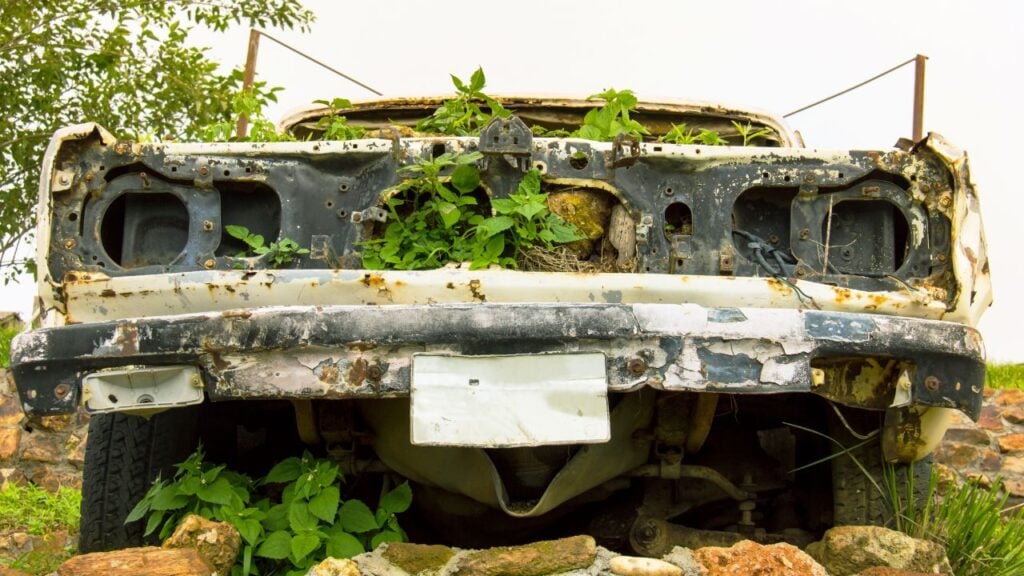
Many people aren't sure what to do when a car gets left in their yard.
Some of the answers change depending on where you live.
5 Alabama Rules That Decide What Happens to a Car Left in Your Yard
