
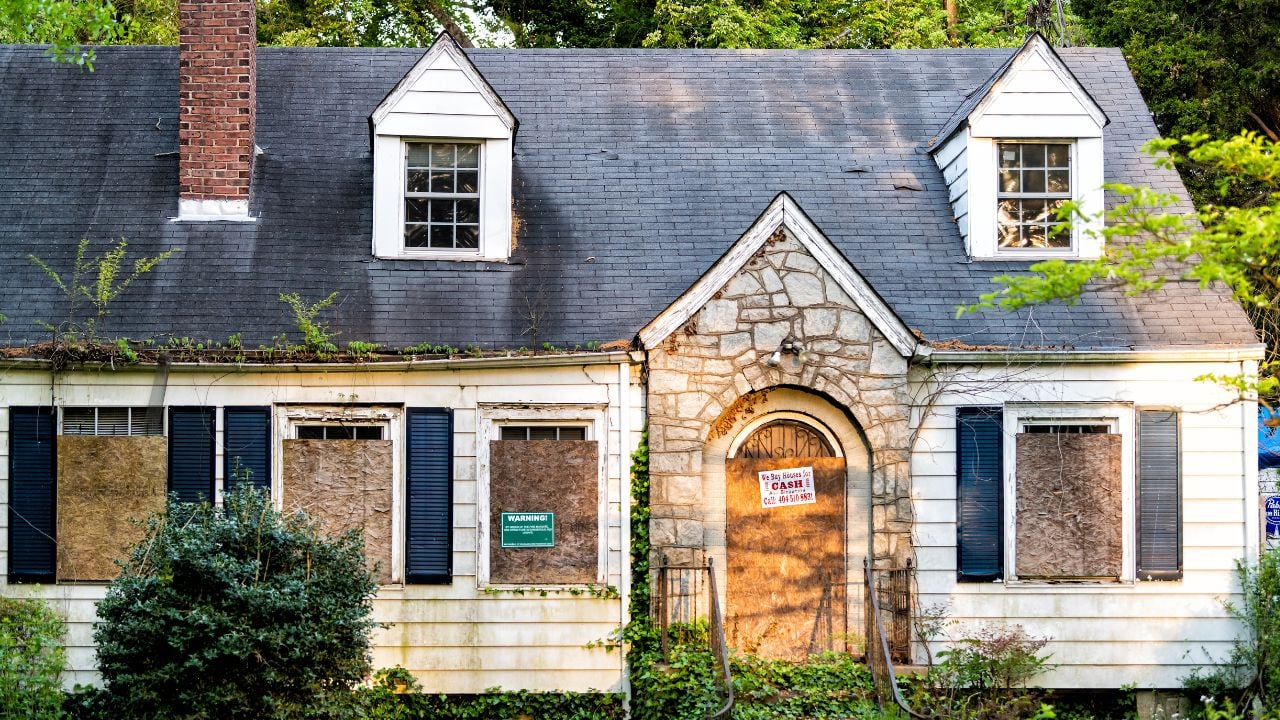
6 Squatter Laws Every Colorado Homeowner Needs to Know in 2026

Most Thanksgiving houseguests leave by Sunday.
A squatter is a different kind of guest: one you never invited and one who isn’t planning to go.
Here are the squatter laws every Colorado homeowner needs to know.
Note: This is general information, not legal advice. Property laws and required timelines are subject to change.
1. 18-Year Clock
If you own a cabin or lot you rarely check on, Colorado’s adverse possession law gives a squatter a shot at owning it after 18 years.
A squatter who holds someone else’s land for that long, and meets the law’s other tests, can end up with title to it.
You get the same 18 years to sue and take your land back, and generally not a day longer.
A baby born the last time you visited the cabin would be old enough to vote by then.
2. Color-of-Title Route
Paperwork can shrink a squatter’s wait from 18 years to seven years.
The shortcut comes with strings: The squatter needs color of title and has to pay all the property taxes assessed on the land.
Color of title means a document that looks like proof of ownership but has a defect that keeps it from transferring the property.
The law also says the claim has to be made in good faith.
If someone else has been paying taxes on land you own, that’s your cue to find out why.
3. Good-Faith Hurdle
Squatters have faced a tougher test in Colorado since July 1, 2008, when a rewrite of the adverse possession law took effect.
Now a squatter has to show a reasonable, good-faith belief that the land was theirs.
That’s a hard test for anyone who knows exactly whose land it is.
The proof is heavier too because a squatter has to prove every part of the claim by clear and convincing evidence.
If you’re the owner, that standard works in your favor.
10 Colorado DMV Requirements New Residents Never See Coming

Moving to Colorado from another state can come with a few paperwork surprises.
Your old habits at the DMV might not carry over, and that can mean a second visit.
10 Colorado DMV Requirements New Residents Never See Coming
4. Court-Ordered Payment
A squatter who wins title under Colorado’s adverse possession law doesn’t always get the land for free.
After a separate hearing, a judge can order the squatter to pay you if an award is fair and equitable.
That payment can be the land’s value as the county assessor most recently set it.
It can also be some or all of the property taxes you paid, starting 18 years before the lawsuit and running through the final judgment, plus interest.
Keep your property tax receipts, since the second kind of payment depends on what you paid.
5. First-Degree Criminal Trespass
Squatting can bring criminal charges, not only a civil lawsuit.
Colorado’s first-degree criminal trespass law makes it a crime to knowingly and unlawfully enter or stay in someone else’s home.
The catch?
The base charge is a misdemeanor, and it becomes a class 6 felony if the home is inhabited or occupied.
Whether that wording fits a particular squatter is up to prosecutors and judges, not you.
Under the vacant-home removal law in the next item, the sheriff also orders removed occupants to stay off your property or face arrest for criminal trespass.
6. Vacant-Home Removal Law
If squatters move into your vacant home, a law that took effect in 2018 gives you a court route to get them out.
It lets you, as the owner or your agent, file a complaint and a sworn motion in county court to remove unauthorized persons.
You get a hearing by the next court day, unless you ask for a later date.
Once the sheriff receives the order, the deadline to remove the occupants is 24 hours.
That’s fast.
The law says a false statement on the sworn motion can bring sanctions, a contempt finding or a perjury prosecution.
The courts post the forms for the process, so you can read them before you ever need them.
Who Counts as Unauthorized
Colorado’s removal law for unauthorized persons covers only someone who has no current or prior agreement with you about using the home.
It leaves out your relatives, including a spouse, a parent, a sibling or an aunt.
Anyone you’ve accepted money or anything of value from is out too, and so is anyone you previously gave permission to be there.
Adverse Possession as a Defense
If you sue a squatter for trespass, adverse possession can show up as the defense.
When it’s only a defense, the squatter’s burden of proof drops to a preponderance of the evidence.
The squatter generally has to say so in writing within 90 days after filing an answer, so you’ll see it in the case file.
A squatter who uses it only as a defense gives up any claim to legal title.
Psst! How much do you know about homesteaders and the race for land? Take our quiz and see how many you can get right.
Quiz
Land Claim Trivia
Answer these questions on homesteaders, land runs and Colorado’s land. We bet you can’t get them all right. Prove us wrong?
In the 1889 Oklahoma land run, settlers nicknamed “sooners” got ahead of everyone else by doing what?
Public Land Exception
Colorado's adverse possession law gives a squatter no path to title on land owned by the state or a local government, no matter how long the squatter stays.
That covers land owned by the state, a county, a city or a similar public body.
If your fence sits past your property line on city land, no number of years makes the strip yours.
Squatting Bill That Failed
In 2025, Colorado lawmakers weighed a bill that would have made squatting a separate crime.
As introduced, the bill would have required law enforcement to remove an occupant within 24 hours once you showed legal title as the owner, with no court order.
At a February 2025 hearing, a House committee adopted two amendments, but a motion to send the bill to the full House failed 4-7.
The committee then voted 7-4 to shelve it, and it never became law.
Removing squatters from your vacant home still generally runs through a county court.
3 Arguments Coloradans Keep Having With Their Utah Neighbors

Colorado and Utah share a border, and their neighbors don't always see eye to eye.
Here's a look at what Coloradans keep arguing about with Utah.
3 Arguments Coloradans Keep Having With Their Utah Neighbors
