
4 Wild Animals Californians Can Be Fined for Feeding

Thanksgiving is Thursday, and by Friday you could be looking at more leftovers than your refrigerator can hold.
If something hungry is watching from your back porch, you might be tempted to toss it a scrap.
That’s not legally okay for some animals.
These are the wild animals Californians can be fined for feeding.
Note: This is general information, not legal advice. Wildlife feeding rules, city ordinances and fine amounts are subject to change.
1. Deer
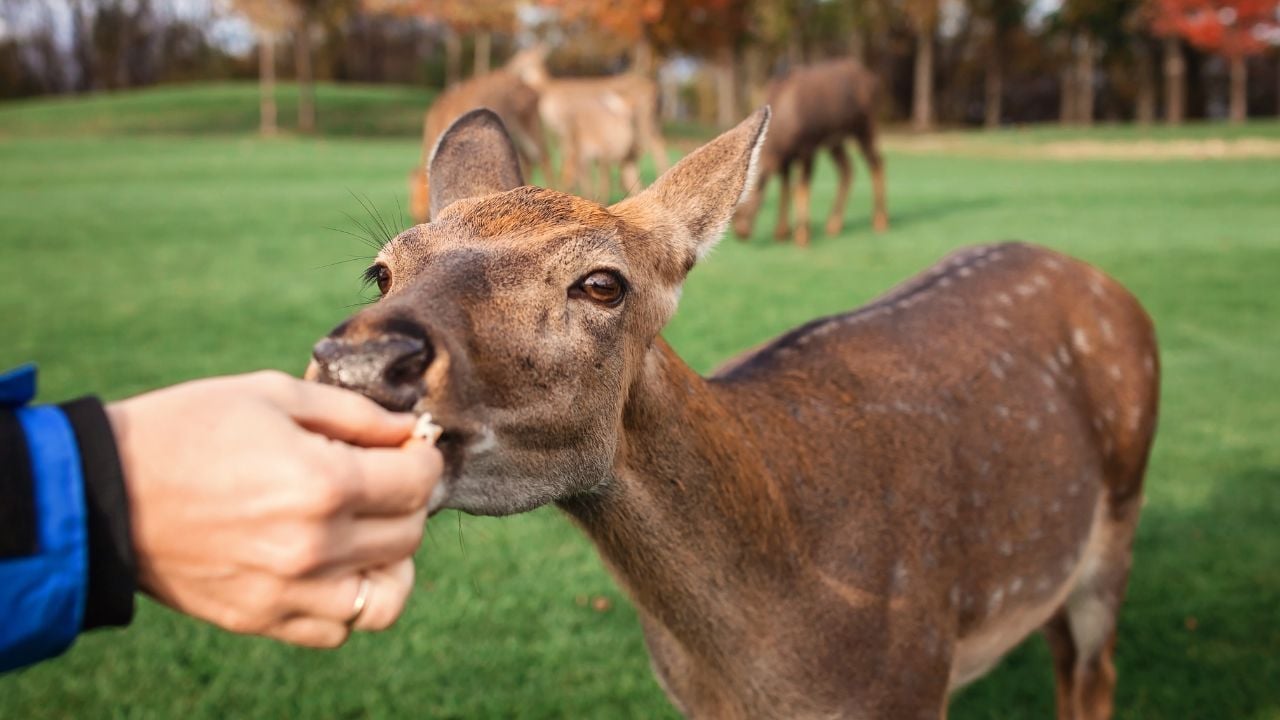
A bucket of corn for the deer in your yard sounds harmless, but deer are named in California’s ban on feeding big game.
Some local feed stores sell deer feed anyway, but El Dorado County’s wildlife guidance says that doesn’t make feeding deer legal.
If you get caught, you could face a citation and a fine of up to $1,000.
Years ago, a Magalia man who fed deer at his home drew a citation from a state wildlife officer.
Somebody noticed.
Wildlife officials had heard about it from someone more than a thousand miles away.
At the time, he could forfeit $585 in bail or go to court.
Corn is a bad handout because deer can’t digest it well and can starve to death in days with a stomach full of food.
Fed deer lose their fear of people and get more comfortable wandering into roads, which leads to more vehicle collisions.
Deer that crowd around a handout can pass along diseases such as chronic wasting disease, so feeding can leave them worse off.
2. Black Bears
If a black bear wanders into your yard, California’s ban on feeding big game applies to it.
The California Department of Fish and Wildlife (CDFW) calls feeding bears illegal.
Penalties may include a fine, jail time or both.
If you hand a bear food, you teach it to keep coming back.
A bear that keeps coming back may start breaking into homes, cars and garbage bins.
Human food can make bears sick and damage their teeth, leaving painful abscesses that can lead to death.
That’s no favor.
Cubs pick up the same habit, and that keeps a cycle of human-dependent bears going.
From Feeding Ban to Fine
California’s ban on feeding big game is a single sentence, and its key word is “knowingly.”
The penalty lives in a different law, the Fish and Game Code, which makes breaking a wildlife regulation a misdemeanor unless it says otherwise.
A misdemeanor under that code can bring a fine of up to $1,000, up to six months in county jail, or both.
Those numbers are ceilings, not a price list.
3. Elk
Feeding elk is a roadside temptation in the Owens Valley, where a herd near Tinemaha, just south of Big Pine, can often be seen right off Highway 395.
California’s big game ban names elk, and CDFW sorts the state’s elk into three kinds: Roosevelt, Rocky Mountain and tule.
Tule elk are endemic to California, and their herds have grown from three in 1970 to 22, with about 5,700 elk between them.
More herds mean more roadside stops where a granola bar can seem like a friendly gesture.
The catch?
If you hand an elk a granola bar, you could face the same fine of up to $1,000 as someone feeding deer.
4. Pronghorn
If you drive through the state’s northeast corner, you may meet pronghorn antelope, and feeding them can land you a fine.
About 90 to 95% of California’s pronghorn live in that corner of the state, according to CDFW, with a small population in Mono County.
If you toss a pronghorn a snack, you’ve broken the same regulation as feeding deer.
The penalty is a misdemeanor charge, with a fine of up to $1,000.
Take a photo instead.
Bighorn Sheep and the Fine Print
Bighorn sheep are named in the feeding ban, but with a condition the other animals don’t have.
The regulation names Nelson bighorn sheep, the desert subspecies.
It covers them only in areas described in a separate section of the Fish and Game Code.
That section refers to bighorn management units without naming any.
So the regulation doesn’t make clear which herds the ban reaches.
Don’t test it.
CDFW says bighorn sheep live from the Mojave Desert to the Sierra Nevada.
If you hike in either place, keep your trail mix in your pack.
Beyond the Big Game List
California’s feeding ban stops at big game, so a coyote or raccoon at your back door isn’t named in it.
Not so fast.
A separate state rule bars harassing any game or nongame bird or mammal, which it defines as an intentional act that disrupts an animal’s normal behavior.
Pasadena’s city page cites that rule for its ban on deliberately feeding coyotes.
Pasadena Now reported in 2025 that the ban also covers raccoons, foxes and opossums, with misdemeanor fines of $300 to $2,000.
So a raccoon snack in Pasadena can cost you up to twice what a deer snack does statewide.
Psst! How much do you know about wildlife? Take our quiz and see if you can ace it.
Quiz
California Wildlife IQ
Answer these questions on California wildlife and the people who protect it. We bet you can’t get them all right. Prove us wrong?
A California condor’s wings spread about how far from tip to tip?
Coyotes and City Rules
Pasadena isn't the only city that bans feeding coyotes.
Mammoth Lakes bans feeding for a list of wild animals that includes bears, coyotes, deer and raccoons, plus mice and squirrels.
Fines start at $100.
A second violation within a year costs $200, and each additional one costs $500.
Those are local rules, so what's allowed in your city can change at the city line.
Sausalito bans feeding any nondomesticated animal, unless you're filling a bird feeder in a private yard in a residential zone.
A Sausalito violation is an infraction, with a fine of up to $50 for a first offense and up to $100 after that.
14 California Tenant Protection Laws That Kick In the Moment You Sign a Lease

California tenants have protections that start working the moment they sign a lease.
Not everyone knows about them.
14 California Tenant Protection Laws That Kick In the Moment You Sign a Lease
10 Things California Neighbors Report You For That Are Perfectly Legal

If a neighbor photographs something in your backyard and emails your homeowners association, a notice could follow.
Many of the things California neighbors report are perfectly legal.
10 Things California Neighbors Report You For That Are Perfectly Legal
