

10 American Cities Residents Loved More Before Everyone Discovered Them, One in Georgia

Jackson, Wyoming sold about 200 single-family homes last year, and only two of them closed for under a million dollars.
Nobody who bought a ski chalet meant to price out the people who keep the town running, but that’s what happened.
These are the American cities residents loved more before everyone else found them, Georgia included.
1. Bend, Oregon
Bend, Oregon counted 76,639 residents in the 2010 census.
A Redfin migration report tracked Bend’s net inflow of out-of-town home searchers more than doubling in January 2021, rising from about 750 users the year before to roughly 1,600.
More than 107,000 people call Bend home now, up about 40% since that 2010 count.
The median home there cost $295,000 in 2016.
By 2026, that same house runs close to $895,000.
Bend’s own mayor, Melanie Kebler, put the mismatch plainly: If you work in Bend, she said, you should be able to afford to live in Bend.
Local paychecks didn’t rise anywhere close to that fast.
Many of the new buyers came from Portland, the Bay Area, and Seattle, three markets pricier than Bend used to be.
2. Savannah, Georgia
Savannah, Georgia pulled in about 5 million visitors a year before 1994.
Then Midnight in the Garden of Good and Evil hit shelves, and the whole city became a walking tour.
By 2022, Savannah’s visitor count had grown past 17 million a year.
Nobody exaggerated the shift.
Joseph Marinelli, who runs the city’s tourism bureau, says visitors still walk the squares holding the book up against the buildings it describes.
“We continue, to this day, to see people on the street corner holding the book, looking at certain buildings,” he said.
Longtime Savannahians remember an emptier downtown, the kind where a stranger reading a paperback on a bench was just a stranger reading a paperback.
Savannah, Georgia’s Visitor Count More Than Tripled
Savannah, Georgia’s tourism jump isn’t a rough guess.
The city tracked about 5 million visitors in 1994, the year Midnight in the Garden of Good and Evil was published.
By 2022, that number had grown past 17 million.
That’s more than triple in under thirty years.
Savannah’s own population never grew anywhere close to that fast.
3. Jackson, Wyoming
Jackson, Wyoming had already grown wealthy enough by 2020 to become the subject of its own book, Billionaire Wilderness: The Ultra-Wealthy and the Remaking of the American West, about the valley’s transformation.
Northern Colorado’s public radio station (KUNC) reported that the town’s average single-family home price hit $5 million in 2022, nearly double what it was in 2019.
Snowplow operators, teachers, and nurses are still expected to find rent inside that same market.
Ariel Kazunas, a Jackson worker KUNC interviewed, pays $1,200 a month for a room in a shared condo.
“I’m almost 38 years old and would at some point love to not have to have roommates,” she said.
4. Chattanooga, Tennessee
Chattanooga, Tennessee once carried a label no city wants: In 1969, the Environmental Protection Agency called its air the dirtiest in the country.
Local leaders spent the 1980s and 1990s rebuilding downtown and the riverfront.
Chattanooga’s public power utility (EPB) switched on the country’s first citywide gigabit internet network in September 2010.
Outside magazine’s readers voted Chattanooga the country’s Best Town Ever in 2011, then picked it again in 2015.
Chattanooga counted 167,674 residents in the 2010 census.
That number has grown to more than 194,000 today, a jump of nearly 16% in fifteen years.
The median home there now sells for $329,000, up 9.6% from a year ago.
The magazine’s 2015 write-up credited new coffeehouses, breweries, and record stores with turning the city around.
5. Bozeman, Montana
Bozeman, Montana had a median home price under $500,000 before the pandemic.
Then Paramount’s Yellowstone put Montana ranch life on television every week, and location scouts started showing up around town.
Bozeman’s median home price now sits around $750,000.
Renters have watched their rent triple.
Nobody voted for that.
Some have moved into RVs and tents just to stay in the valley they grew up in.
Bozeman locals used to joke that the only crowded spot in town was the diner counter on a Sunday morning.
6. Boise, Idaho
Boise, Idaho sits inside Ada County, which counted 392,365 residents in the 2010 census.
Ada County has grown to more than 546,000 people today, up about 39% in fifteen years.
The same Redfin migration report that tracked Bend’s boom found Boise’s net inflow of out-of-town home searchers had also more than doubled by January 2021, rising from about 500 users the year before to 1,100.
Los Angeles, the Bay Area, and Seattle topped the list of where those buyers came from.
Boise’s median home sale price was $420,000 that same January.
The Census Bureau’s latest estimate puts the median value of an owner-occupied Boise home at $484,800.
Boise still costs less than the coastal cities its newest residents left, but the gap keeps closing.
7. Asheville, North Carolina
Asheville, North Carolina priced its homes at about three times the area’s median income back in the 1990s.
By the 2010s, that ratio had grown to 4.5 times the median income.
Harvard’s Joint Center for Housing Studies found Asheville homes running 6.5 times the median income by 2022, the highest ratio in North Carolina.
A buyer needs a qualifying income of $112,726 to afford an Asheville home with 20% down, almost double the area’s median household income of $64,548.
Harvard researcher Alex Hermann called a ratio above 5 “pretty astounding.”
Asheville didn’t get there overnight.
Locals watched it happen one food festival and one magazine feature at a time.
8. Portland, Maine
Portland, Maine welcomed 153 cruise ships in a single season, more than 200,000 passengers stepping onto its cobblestone streets.
City officials called it the busiest cruise season yet.
Portland collects about $3 million a season from ship berthing, passenger fees, and utilities.
Residents phoned in 43 complaints about ship exhaust, traffic, and long restroom lines in one season alone.
The city hired flaggers just to help pedestrians cross Commercial Street.
Not everyone agrees.
Portland has since added waterfront emissions monitors and is planning more shore power so docked ships can plug in instead of running diesel engines.
9. Greenville, South Carolina
Greenville, South Carolina spent decades hiding its own waterfall behind a four-lane bridge that, by the city’s own account, mostly attracted crime.
Crews tore that bridge down in 2002.
The pedestrian-only Liberty Bridge opened in its place in 2004, and Mayor Knox White later said Greenville “never had an iconic image” until that bridge gave it one.
For a while, that rebuilt downtown belonged mostly to the people who lived there.
Not anymore.
Greenville’s Upstate region now adds about 241 new residents a week.
The wider Greenville-Spartanburg market’s retail vacancy rate sank to a historic low of 3.17% in the second quarter of 2024.
Home sale prices in Greenville hit a fresh record of $325,000 that same July.
10. Sedona, Arizona
Sedona, Arizona counted 10,031 residents in the 2010 census.
That number has since slipped to under 9,700, even as annual visits rose to somewhere around 3 million.
By 2022, the traffic and the crowds had become the whole campaign issue in a local election.
Voters replaced a mayor and a council member that November, largely over how the city handled tourism.
By April 2023, Sedona’s own tourism bureau walked away from its city marketing contract because officials wouldn’t let it restart destination marketing.
Councilman Peter Furman put it bluntly: “Somebody had to make a bold decision. The chamber pulled the trigger first.”
They meant it.
Psst! How much do you know about America’s other famous discovered towns? Take our quiz and see how many you can get right.
Quiz
Discovered Towns Trivia
Answer these questions on towns and cities that got famous almost by accident. We bet you can’t get them all right. Prove us wrong?
Which Michigan island banned “horseless carriages” in 1898 because they were frightening the horses pulling its carriages?
Sedona's own tourism bureau spent years marketing the town to new visitors.
By 2023, it had decided that wasn't the job anymore.
7 Georgia State Parks Locals Keep to Themselves (and 3 Everyone Swarms)
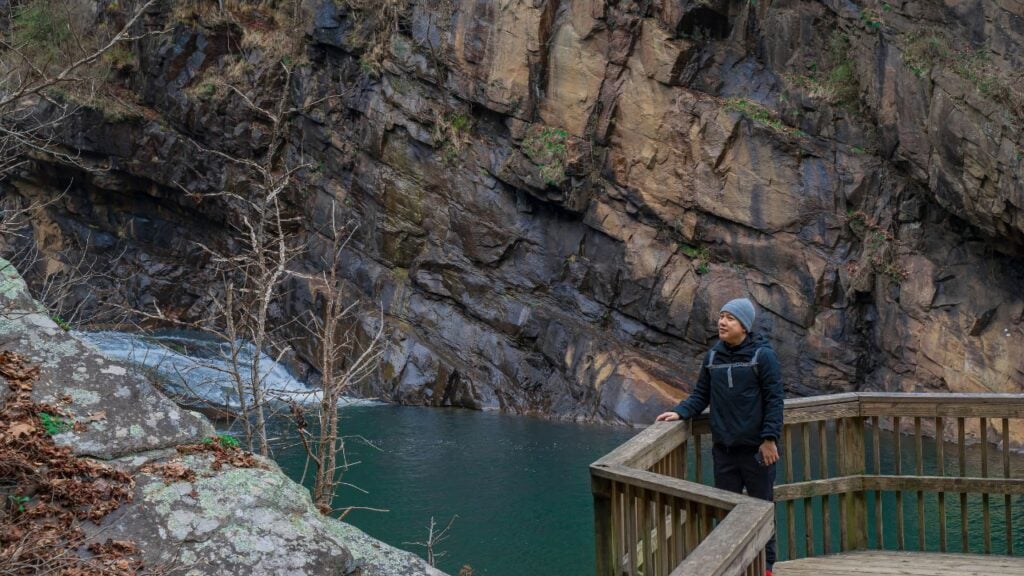
Georgia keeps a handful of state parks that never show up on anybody's must-see list, and locals like it that way.
One Georgia lake won't even allow a private dock, so its parking lot never fills.
7 Georgia State Parks Locals Keep to Themselves (and 3 Everyone Swarms)
9 Things Georgia Shoppers Should Never Buy Secondhand

A federal recall doesn't disappear just because a product changes hands at a Georgia yard sale.
Georgia shoppers hunting a deal at flea markets and estate sales can walk right into a fire risk or a food-safety problem the price tag never mentions.
