

10 California Refunds and Rebates Residents Leave Unclaimed Every Year

California doesn’t lose your money.
It holds onto it, on purpose, across a dozen different agencies, until somebody asks for it back.
Many people never ask.
These are the refunds and rebates California residents leave unclaimed every year.
Note: This is general information, not financial, tax, or legal advice. Program rules, deadlines, and dollar amounts are subject to change.
1. California’s Unclaimed Property Program
California’s Unclaimed Property Program holds more than $15 billion, and a sizable slice of that pile is nothing more exotic than refund and rebate checks nobody cashed.
That’s not a typo.
Insurance premium refunds, retailer rebate checks, and stock dividend refunds all count as unclaimed property once a company loses touch with the person they belong to.
Insurers and companies turn that money over to the state after a few years of silence, and a refund check that bounced back as undeliverable is one of the most common ways it ends up there.
Searching costs nothing.
A maiden name, a canceled insurance policy, or an address from three moves ago can all hide a refund under a version of your name you’d never think to search.
2. County Property Tax Refunds
County property tax refunds pile up every time a homeowner appeals an assessment, pays twice by accident, or wins an exemption after the check already cleared.
Santa Clara County posts a searchable list of these refunds by name, and other counties, including Ventura, San Diego, San Joaquin, and Tulare, run the same kind of rolls.
The check goes out.
It bounces back as undeliverable, the owner never notices, and the refund just sits on a list many homeowners have no idea exists.
The Clock on a County Tax Refund
Santa Clara County gives an unclaimed property tax refund exactly two years on its public list, and that two-year window comes from state law, not a local Santa Clara policy.
California Government Code Section 29802 sets the same clock for county funds statewide, not just in Santa Clara County.
After two years, a county auditor is allowed to fold the refund into the general fund.
Ventura, San Diego, San Joaquin, and Tulare counties run on that same statutory clock, even though each posts its own separate list.
The refund doesn’t roll over to the State Controller’s unclaimed property program the way a bank account does, and once a county keeps it, getting it back is at that county’s discretion.
3. California Climate Credit
California’s Climate Credit lands on electric and gas bills twice a year, funded by the state’s cap-and-trade program, and it’s worth roughly $36 to $49 per household on the electric side alone.
Homeowners with their own meter get it automatically.
Renters in a master-metered building, where one gas or electric line serves the whole property, are a different story.
State law requires the landlord to pass that credit through to every unit based on its share of the building’s usage, and utilities like SoCalGas mail landlords a notice spelling out the rule in plain terms.
Many landlords never bother.
Renters who don’t know the credit exists never ask where their share went, and the utility has no way to chase it down on a tenant’s behalf.
4. FTB Refund Checks Marked Undeliverable
The Franchise Tax Board (FTB) mails out state income tax refunds all year, and a share of that mail comes back every season, returned by the post office as undeliverable.
A move, a new apartment, a name change.
Any of it can leave a refund check with nowhere to land.
The check just sits.
A refund check is only good for six months, and the FTB’s own process for getting a bounced or expired one reissued runs through a form and a wait, not an automatic resend.
Update your address with the FTB directly, and a stalled refund starts moving again.
5. California’s CARE Utility Discount
California’s California Alternate Rates for Energy (CARE) program cuts an eligible household’s electric bill by 30% to 35% and its natural gas bill by 20%, straight off the monthly total.
It isn’t automatic.
A household has to apply through its utility or a local community agency, and the discount only starts once that application clears.
Income limits set who qualifies, and they run higher than many renters and retirees assume.
Utilities mail reminders about the program constantly.
Many eligible Californians still toss that mailer, and a 30% to 35% discount on every electric bill for the rest of the year goes back to the utility instead.
6. DMV’s Total-Loss Registration Refund
California’s Department of Motor Vehicles (DMV) owes a prorated refund of the vehicle license fee on a total-loss vehicle, one that’s stolen and never recovered or wrecked beyond repair.
The math is simple.
The DMV pays back one-twelfth of the annual fee for every full month left on the registration, minus a small service charge.
Nobody sends that refund on their own.
An owner has to file Form REG 65, the DMV’s own Application for Vehicle License Fee Refund, with a salvage certificate attached, and many drivers who just totaled a car in a wreck are too busy dealing with the insurance company to ever get around to it.
7. Utility Deposit and Closing-Account Refunds
Utility deposits and final-bill credits pile up whenever a California customer closes their gas or electric account and moves without leaving a forwarding address.
That’s easy to miss.
San Diego Gas & Electric (SDG&E) processes claims for that unclaimed money once a former customer’s name turns up on a State Controller notice, not through some separate SDG&E-only list the way it’s sometimes described.
Miss that window, and the balance escheats to the state.
From there, the State Controller’s regular unclaimed property claim process picks it up.
Pacific Gas and Electric (PG&E) and Southern California Edison run comparable processes, so a customer who moved a few times in the last decade may have more than one small refund sitting with more than one former utility.
8. California’s Vehicle Retirement Rebate
California’s Consumer Assistance Program pays eligible drivers a cash rebate to retire an old or smog-failing vehicle instead of paying to fix it.
The Bureau of Automotive Repair runs the payment, not the DMV, though the two agencies share much of the same paperwork drivers already deal with.
Nobody gets a check without applying.
A driver has to submit an application, hand the vehicle over for retirement, and wait for the Bureau to confirm eligibility before the rebate goes out.
The money is allocated fiscal year by fiscal year, and the Bureau itself warns that funding depends on “the availability of funds” each cycle.
Funding runs out first.
A car that’s been sitting because repairs cost more than it’s worth can still be worth a rebate check, the moment its owner stops assuming nobody would pay for a clunker.
9. California’s LIHEAP Energy Bill Credit
California’s Low Income Home Energy Assistance Program (LIHEAP) pays a one-time credit toward an income-eligible household’s heating or cooling bill, including a bill that’s already led to a shutoff.
Nothing arrives without an application.
A household has to apply through a local LIHEAP agency, and because funding is federal and limited, agencies prioritize whoever is in the worst shape first.
For 2026, a single person earning up to roughly $3,332 a month can still qualify, and a family of four can earn up to roughly $6,407 a month and get help.
Those limits catch far more households than the phrase “emergency energy assistance” suggests.
This isn’t a last resort.
A late notice from the utility doesn’t have to turn into a shutoff before that credit gets applied.
10. Middle Class Tax Refund’s Expired Cards
The Middle Class Tax Refund (MCTR) mailed direct deposits and debit cards to almost 32 million Californians and their dependents back in 2022 and 2023, and the program itself is officially over.
The debit cards weren’t.
Every prepaid MCTR card carried its own balance, and any card that sat unused finally expired on April 30, 2026.
An estimated 960,000 of those cards never got activated or spent down, and roughly $400 million in leftover balances reverted to the state’s general fund instead of the households the money was meant for.
None of it is retrievable through the MCTR program anymore.
A recipient who still has an old MCTR card can visit MCTRpayment.com through July 31, 2026, to pull their transaction history.
The balance itself is a different story, gone the moment the card expired, whether anyone ever spent a dollar of it or not.
Psst! How much do you know about California’s refunds and unclaimed money? Take our flip cards and see how many you get right.
8 WinCo Mistakes That Cost Californians Money Every Week
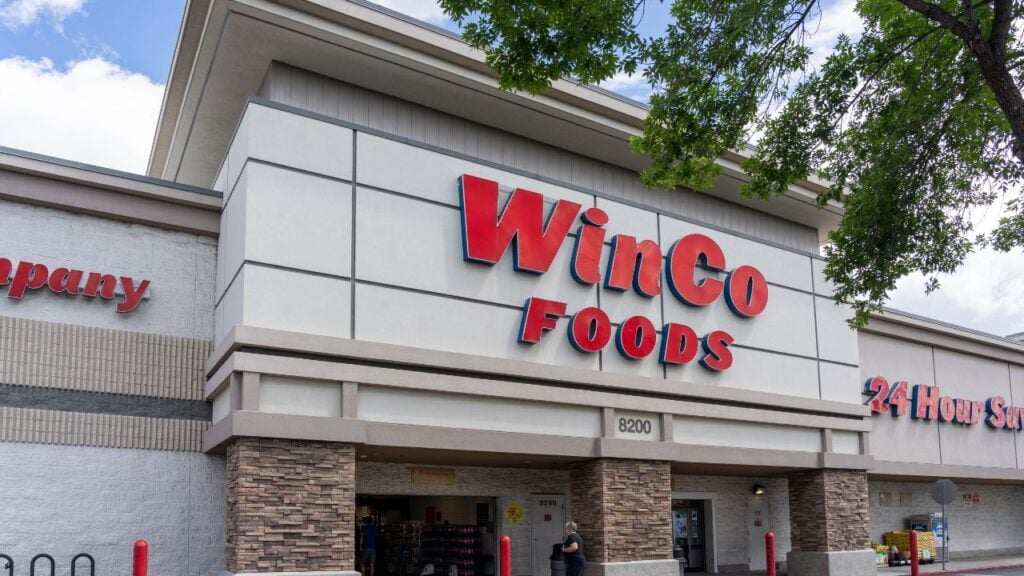
Rice, rolled oats, and gummy bears sit in open bins at a California WinCo, sold by the pound, and shoppers still overpay on the way out.
Unclaimed refunds aren’t the only place Californians hand money back without meaning to.
8 WinCo Mistakes That Cost Californians Money Every Week
11 Things Californians Miss Most After They Leave the State

Leaving California looks great on a spreadsheet, right up until February, when the strawberries in a new state’s produce aisle taste like water.
Some things follow a former Californian for years after the moving truck pulls away.
