
10 Florida Wildlife Rules People Break Just by “Being Friendly”

A stomped-on sea turtle nest in Miami Beach turned into a felony charge and a $5,000 bond for a tourist in 2019.
That’s the extreme case.
Many people who run into trouble with Florida’s wildlife rules are trying to help an animal, pet it, or snap a good photo, not hurt it.
These are the Florida wildlife rules people break just by trying to be friendly.
Note: This is general information, not legal advice. Florida’s wildlife rules and their penalties are subject to change, so confirm current regulations with the Florida Fish and Wildlife Conservation Commission (FWC).
1. Hand-Feeding an Alligator
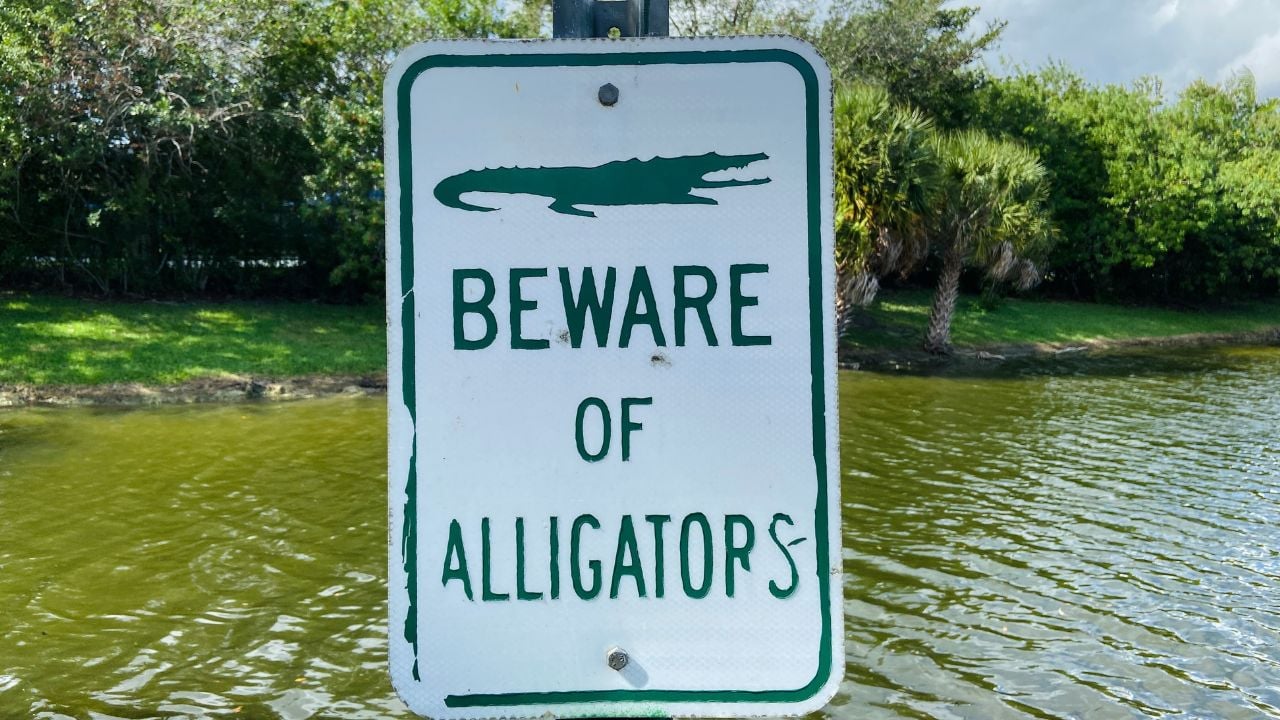
Florida bans feeding a wild alligator outright, and it doesn’t matter whether the handout is a marshmallow or a whole sandwich.
A first offense draws a $100 civil citation under Florida Statute 379.412, no court date required.
Keep it up, and the penalty escalates fast.
A second offense turns criminal, a misdemeanor that can mean jail time.
A fourth conviction for feeding a gator or a bear becomes a third-degree felony worth up to five years in prison.
Almost nobody who gets that first ticket meant any harm.
They wanted a closer look, a good photo, or a story about the gator that ate straight from their hand.
None of that reads as friendly once the alligator stops fearing people altogether.
2. Touching or Feeding a Manatee
Florida declared itself a refuge for manatees decades ago, and the Manatee Sanctuary Act still bans touching, chasing, or feeding a manatee, even gently.
A conviction is a second-degree misdemeanor, up to 60 days in jail and a $500 fine.
Manatees are also protected under the federal Endangered Species Act, which allows fines up to $50,000 and a year in prison for a knowing violation, on top of the state charge.
That’s a steep price for a hug.
Biologists say repeated touching pushes manatees out of the shallow grass beds they need to feed in.
A crowd of well-meaning swimmers can chase a manatee away from its own dinner without meaning to.
3. Feeding a Sandhill Crane
Florida made it illegal to intentionally feed a sandhill crane back in 2002, and the birds still wander into yards from the Everglades to golf courses expecting a handout anyway.
Once people feed a crane, it loses its fear of them fast.
The Florida Fish and Wildlife Conservation Commission has documented habituated cranes pecking hands, attacking their own reflections in car windows, and wandering into traffic looking for their next meal.
Many sandhill cranes die on Florida roads every year for that exact reason.
Not so tame after all.
Neighbors who toss out corn or birdseed rarely see themselves as the problem.
They just like having a four-foot bird show up on the lawn.
4. Tossing Scraps to a Pelican
Florida’s fishing docks are full of pelicans waiting for an easy meal, and state rule 68A-4.001 bans feeding them in a way that changes their natural behavior.
Anglers who toss bait fish overboard for the “regulars” are usually just being generous with the extra catch.
Pelicans that learn to beg at cleaning stations, though, start crowding boats and grabbing hooks along with the fish.
Wildlife rehabbers say hook injuries turn up often in Florida’s pelicans.
Feeding a pelican doesn’t make its life easier.
It makes it shorter.
5. Shining a Light on a Nesting Sea Turtle
Florida’s beaches host more loggerhead nests than almost anywhere else on Earth, and disturbing a nest carries the harshest penalty on this entire list.
Under the Marine Turtle Protection Act, molesting, harassing, or disturbing a nesting turtle or its nest is a third-degree felony, up to five years in prison and a $5,000 fine, and federal law can add fines up to $25,000 on top.
Florida prosecutors don’t treat that lightly: A Miami Beach tourist faced felony charges in 2019 after deliberately stomping on and poking a marked nest with a wooden stake.
That’s the extreme end.
Many people who cross the marked line at night are just curious, not cruel.
They want a closer look at something they’ll probably never see again, so they click on a phone light to help them see the sand.
Wrong move.
That light alone can send a nesting turtle back into the ocean without laying her eggs at all.
6. Feeding a Black Bear
Florida’s black bears are shy by nature, and wildlife officers say the bears that end up trapped almost always got that way through somebody’s kindness.
State rule bans leaving out food, garbage, or pet bowls in a way that draws bears back to the same yard.
Wildlife officers trapped and euthanized a 740-pound black bear in a Central Florida subdivision, the largest ever recorded in the state, after residents had kept it fed for weeks.
Relocating a food-conditioned bear rarely works anyway.
FWC’s own research found that almost 70% of relocated bears leave the release site entirely, and at least half end up back in conflict somewhere new.
Not a happy ending.
Homeowners who leave a plate out for a “hungry-looking” bear rarely picture it this way.
What Counts as Feeding in Florida
Florida’s wildlife-feeding bans reach past an obvious hand-fed marshmallow or hot dog.
State rules also cover pet food, garbage, and bait left where a bear, raccoon, or alligator can reach it, along with scraps tossed to pelicans or dolphins.
A homeowner who never touches an animal can trigger the same kind of violation just by leaving trash cans unsecured.
7. Feeding a Backyard Raccoon or Fox
Florida bars leaving out food that attracts raccoons or foxes into a nuisance, the same rule that covers bears and coyotes.
A fed raccoon loses its wariness around people fast, and it starts bringing other raccoons, then bobcats and coyotes hunting the same easy meal.
Bad company follows.
Pets pay for that mistake more often than the person who made it.
A predator that stops telling wild prey apart from a small dog on a leash is simply following the easiest meal it can find.
Psst! How much do you know about Florida wildlife interactions? Flip these cards and see how many you can call correctly.
8. Tossing Bait to a Dolphin
Florida’s charter boats draw dolphins looking for an easy meal off the transom, and federal law treats feeding them as a serious offense.
Feeding or attempting to feed a wild dolphin is prohibited under the Marine Mammal Protection Act, and a violation can bring fines up to $100,000 and a year in jail.
Even dumping unused bait overboard to lure dolphins closer counts.
Boaters who share their catch rarely think they’re doing anything wrong.
Federal wildlife officials say fed dolphins swim closer to churning propellers, tangle themselves in fishing line, and stop teaching their calves to hunt.
Not so playful, then.
One Florida woman needed hospital care after a dolphin she’d been feeding bit her leg while she tried to swim alongside it.
9. Walking a Dog Into a Posted Nesting Closure
Florida closes stretches of beach and coastal islands as Critical Wildlife Areas during nesting season, and state law lists violating a closure as a second-degree misdemeanor, up to 60 days in jail and a $500 fine.
The rule bans dogs from those posted areas even on a leash.
Dog owners who slip past the rope usually just want their dog to say hi to the shorebirds up close, the same curious greeting they’d let it give a jogger on the boardwalk.
Shorebirds see it differently.
Even a calm, leashed dog moving through a colony can spook adult birds off their eggs and chicks long enough for the sun or a predator to finish the job.
10. Picking up a “Lone” Fawn
Florida requires any injured, orphaned, or seemingly abandoned fawn to go straight to a licensed wildlife rehabilitator, not a stranger’s spare bedroom.
FWC’s own rules are direct about it: Caring for a fawn beyond the time it takes to reach a rehabilitator is against the law, the same rule that blocks Floridians from keeping deer as pets.
A doe hides her fawn in tall grass on purpose, leaving it there for hours while she forages nearby.
A fawn lying still and alone almost always has a mother close by.
People who scoop up a fawn like that think they’re rescuing an orphan.
That’s backward.
Instead, a mother can reject a fawn that now carries a human scent.
The FWC’s wildlife alert line takes reports of fawns and other young animals that look sick, hurt, or orphaned, and a dispatcher can usually tell over the phone whether the animal needs help at all.
That one call keeps more fawns with their mothers than any well-meaning car ride ever has.
7 Reasons People Are Leaving Florida in 2026

Florida gained thousands fewer new residents last year than it did two years earlier, and the math behind that slowdown keeps showing up in the same places.
Property tax bills, condo assessments, and hurricane season all made the list before anyone even got to the heat.
7 Reasons People Are Leaving Florida in 2026
13 Florida Theme Park Habits That Instantly Mark You as a Tourist

A theme park line reveals a tourist faster than any accent ever could, right down to the shoes.
These are the small habits that separate a seasoned Florida park-goer from someone still figuring out the parking garage.
13 Florida Theme Park Habits That Instantly Mark You as a Tourist
