
10 Home Features That Make Insurance More Expensive in Colorado

Colorado’s Division of Insurance found hail drives 26% to 54% of an average homeowner’s premium, depending on the county.
A Denver bill of $3,040 carries $1,547 for hail and $30 for wildfire.
These are the home features that make insurance more expensive in Colorado.
Note: This is general information, not insurance advice. Coverage, discounts, and underwriting rules are subject to change, so confirm the current details with your insurer or the Colorado Division of Insurance.
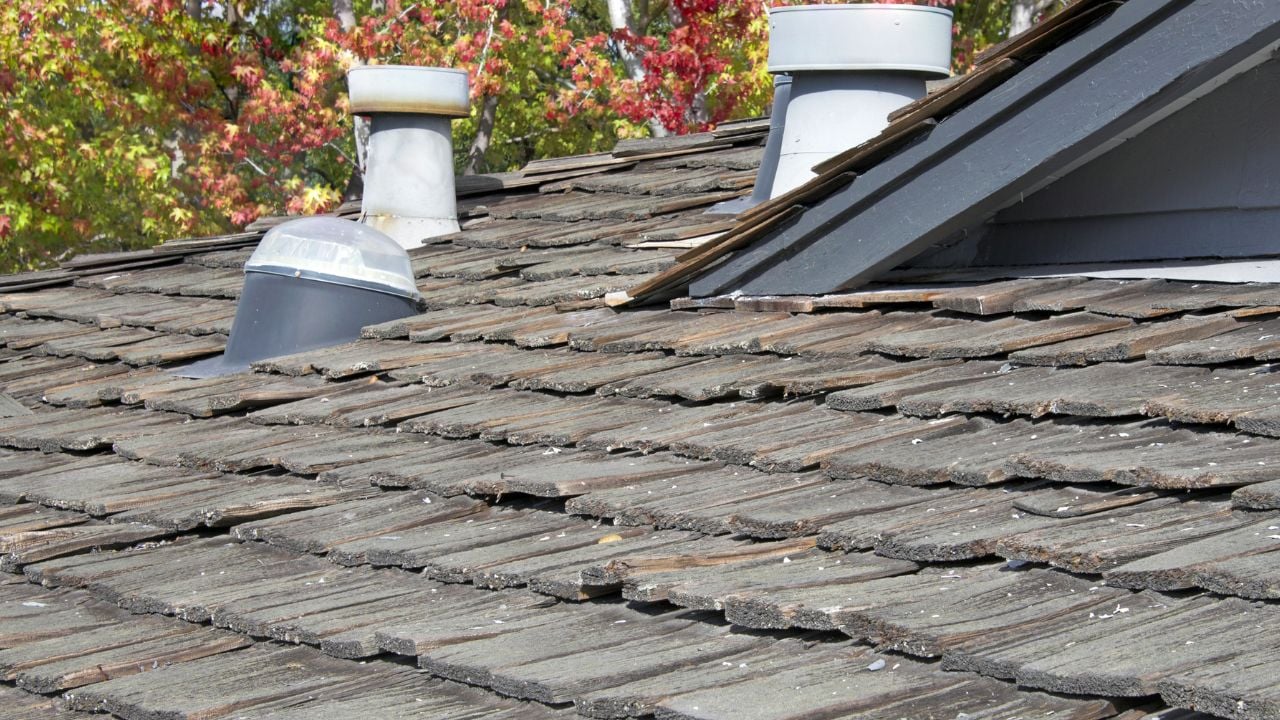
1. Wood Shake or Shingle Roofs
Colorado’s 2025 wildfire law, HB25-1182, pushes insurers to credit documented “building hardening measures” toward a wildfire-mitigation discount.
The law itself doesn’t name which roofing materials qualify.
Wood shake and cedar shingle roofs don’t fare well under that standard anyway.
Insurers across the state have been tightening on flammable roofing on their own.
Several no longer write a new policy on an untreated wood shake roof in a wildfire-prone area.
Wood doesn’t earn the discount other roofing types do.
Existing policyholders sometimes get 45 to 60 days’ notice before a carrier drops the policy entirely.
2. Roofs That Aren’t Impact-Resistant
Colorado’s Division of Insurance landed on that 26%-54% range after surveying 20 homeowners insurance carriers in 2026.
Hail costs more than wildfire in nearly every county.
A newer roof rated Class 4 for impact resistance costs less to insure.
Colorado’s new Strengthen Colorado Homes Enterprise is building a grant program to help homeowners upgrade to a Class 4 roof.
What Hail Costs on a Colorado Roof, County by County
Colorado’s county-level breakdown shows the hail-versus-wildfire split changes by address: A Denver homeowner’s average $3,040 bill includes $1,547 for hail and just $30 for wildfire.
Summit County flips the wildfire number higher, to $274, while hail still costs more there too, at $1,233 of a $3,463 average bill.
The state’s analysis found roof hail-mitigation work can save $82 to $387 a year, compared with just $3 to $25 for wildfire mitigation work.
3. Sitting in a High Wildfire-Risk Score Area
Colorado insurers build a wildfire-risk score for every home from several fixed inputs, not just an address.
A structure’s construction, its roofline, and how much cleared space surrounds it all factor in.
Colorado’s county-level data shows how much that score can swing a bill.
Wildfire risk adds up to about a quarter of the premium in exposed counties like La Plata, versus roughly 1% in Denver.
That’s the wildfire risk score HB25-1182 requires insurers to share with policyholders now.
Homeowners can ask their insurer for that score and appeal it if the number looks wrong.
4. Trees or Brush up to the House
The defensible-space perimeter Colorado insurers score starts at a home’s exterior walls and roofline, not the property line.
Dead branches, stacked firewood, and dry brush pressed against siding all count against a home just as much as trees at the property’s edge do.
HB25-1182 requires insurers to fold documented mitigation work into that score, and a cleared, maintained space around the structure is among the factors they weigh.
Clearing it can move the score enough to matter for a renewal.
5. Untreated Wood or Log Siding
Colorado’s wildfire building code treats siding as a separate risk category from the roof.
Garfield County’s guidance on the state code limits exterior walls in high-hazard zones to noncombustible or ignition-resistant materials.
Wood and log siding aren’t automatically excluded, but insurers want documentation that it’s been treated with a fire retardant.
Treatment isn’t optional.
Skip the paperwork, and insurers won’t apply the credit.
Many mountain homes wear log siding, and that’s exactly the style the state is asking owners to document or upgrade.
Psst! How insurance-ready is your Colorado home? Run through this checklist and see where you stand.
6. Outdated Federal Pacific or Zinsco Panels
One Denver-area home inspection company reports flagging two panel brands more than any other: Federal Pacific and Zinsco.
Independent testing between 1979 and 1983, documented in a U.S. Consumer Product Safety Commission (CPSC) investigation, found these breakers failed to trip somewhere between 14% and 74% of the time under overload.
A jammed breaker keeps sending power to a circuit that should have shut off.
The circuit stays live instead of shutting down the way it’s supposed to.
Declining to write new coverage on a home with one of these panels is standard practice for insurers nationwide, not a rule unique to Colorado.
Colorado carriers follow that practice too, and some non-renew an existing policy until the panel is replaced.
Replacement in Colorado typically runs into the thousands of dollars, with estimates commonly falling between $2,500 and $10,000 depending on the panel and the electrician.
Insurers that do keep covering the panel often add a surcharge, typically a few hundred dollars a year, to the premium.
7. Aluminum Wiring From Before 1972
Colorado homes built before 1972 sometimes ran aluminum branch wiring instead of copper.
The U.S. Consumer Product Safety Commission found homes wired that way are 55 times more likely to reach a fire-hazard connection at an outlet than copper-wired homes.
The metal expands and contracts more than copper, and that movement loosens connections at outlets and switches over years of ordinary use.
The connection runs hot.
Insurers ask about wiring type on many Colorado applications now.
Aluminum wiring that hasn’t been professionally repaired can mean a surcharge, or a request for an inspection before coverage starts.
8. Rooftop Solar Panels
Colorado’s sunshine makes it one of the best states in the country for home solar, and installing panels changes what a dwelling policy has to cover.
Roof-mounted panels count as a permanent part of the home’s structure, so they fall under the same dwelling coverage that protects the roof and walls underneath them.
That addition raises the home’s total replacement cost, and insurers typically raise the dwelling coverage limit to match.
The change can add a modest amount to the premium, commonly less than 5%.
Ground-mounted or freestanding systems work differently: Those often fall under a home’s other-structures coverage instead, which usually carries a lower limit than the dwelling line.
Hail complicates the math further in Colorado.
Most residential panels are built to withstand hail only up to about an inch across at 50 mph.
That’s well under the size of the stones the Front Range sees in its worst storms.
Insurers generally ask to be notified before installation.
A documented system, with receipts, warranty, and photos on file, moves a hail claim along faster than an undocumented one.
9. Swimming Pools or Hot Tubs
Colorado insurers count a pool or hot tub under Coverage B, the same category as a detached garage or shed.
That’s the structure coverage.
The bigger cost isn’t the structure limit.
It’s the liability that follows.
American Family and other Colorado-licensed carriers treat a backyard pool as an attractive nuisance, a legal term for something that draws a child who shouldn’t be there.
Colorado courts can hold owners responsible for injuries even when the child trespassed to reach the water, under the state’s attractive nuisance doctrine.
That’s why insurers often ask for higher liability limits and a locking fence before they’ll extend full coverage.
10. Trampolines
Insurers nationwide apply the same attractive-nuisance logic to a trampoline that they apply to a pool, and Colorado carriers are no exception.
A trampoline draws kids over a fence the same way a pool does, and insurers price it that way.
Nets change the math.
Many standard policies exclude trampoline injuries outright unless the owner adds trampoline coverage and meets safety rules.
A locking gate around the yard, or a safety net around the trampoline, is usually the ask.
Skip that step, and some insurers decline the policy altogether rather than price the risk in.
A trampoline without a net costs more to insure than many other features on this list, when insurers will cover it at all.
Insurers that do write coverage for a netted trampoline behind a locked fence typically add it as a modest annual surcharge rather than declining the policy outright.
American Family, along with other carriers that offer trampoline coverage, recommends pairing it with an umbrella policy.
A standard homeowners liability limit may not stretch far enough to cover a serious injury claim.
10 Things Coloradans Are Told About Their State That Aren’t True

A hiker in Rocky Mountain National Park points at the nearest summit and calls it Colorado’s tallest peak.
It isn’t, and that’s just one of the things Coloradans keep hearing about their state that doesn’t hold up.
10 Things Coloradans Are Told About Their State That Aren’t True
10 Things Coloradans Say That Baffle Everyone Else

A visiting cousin listens to a Coloradan describe a weekend plan and catches maybe half of it.
Coloradans pull their words from ski runs, drought summers, and mining camps that closed a century ago, without anyone noticing.
