
10 Hotel Features Florida Travelers Over 50 Care About More Than a Trendy Lobby

Contrary to the past, hotel beds now typically run 30 to 32 inches off the floor because tall beds photograph better for websites.
The catch is that a bed closer to 23 inches is easier to get out of.
More than one in five Florida residents are 65 or older, and what they’d change about a hotel room rarely shows up in the average, non-disabled accommodation.
These are the hotel features Florida travelers over 50 care about more than a trendy lobby.
Note: This is general information, not legal advice. Accessibility requirements are subject to change.
1. Step-Free Room Access
A federal elevator exemption skips the requirement for a huge share of Florida’s two-story hotels and motels.
The exemption kicks in whenever a building has fewer than three stories or fewer than 3,000 square feet on each floor.
Meeting only one of those two conditions is enough to skip the elevator, not both.
That’s not a loophole.
A guest with knee or hip trouble who books blind can land on the second floor of a Florida beach motel with no way down but the stairs.
That’s not a small group.
More than one in five Florida residents are 65 or older, per the Census Bureau.
Many travelers feel that same need well before that birthday.
Knees and hips often start limiting stairs by the 50s, long before the Census starts counting anyone as a senior.
Booking a ground-floor room, or confirming the elevator works, is the only way to guarantee step-free access before check-in.
2. Grab Bars and a Roll-In Shower
Two measurements define a Florida hotel bathroom that meets the Americans with Disabilities Act (ADA): Minimum roll-in shower size and where the grab bars sit.
Neither number promises the shower is comfortable to use.
Shelton Ensley, an accessibility specialist at the architectural consultancy Studio Pacifica, has a fix.
Ensley says many hotel showers would serve guests far better with a hand-held head instead of only a fixed one overhead.
That lets a guest seated on a bench still aim the water.
Small detail, big difference.
Ask about the shower type when you book a room, not just whether the property calls itself wheelchair accessible.
3. Bed Height
Florida hotels have followed the same trend as everywhere else. Beds keep getting taller.
Many run 30 to 32 inches off the floor now because a tall bed photographs better for the website.
That height works against a guest with a bad hip or a bad knee.
Keith Harris, vice president of architecture, design and construction at Wyndham Hotels & Resorts, says bed height ranks among the most common concerns guests raise about accessible rooms.
Bed height directly affects how easily someone can move around and stay independent.
A lower bed, closer to 22 to 23 inches, is far more workable for getting in and out.
That’s the whole difference.
A guest who mentions a lower bed when booking, or asks about it at check-in, has a good shot at getting one.
4. Outlets Within Reach
Florida hotel rooms often have outlets placed behind furniture or halfway up a wall, out of easy reach from the bed.
Older travelers who use medical equipment like a Continuous Positive Airway Pressure (CPAP) machine for sleep apnea often need an extra outlet within arm’s reach overnight.
Moving an outlet within easy reach of the bed is one of the cheapest fixes a hotel can make, according to hospitality trade coverage on accessible design.
That fix requires no renovation at all.
Not exactly plug and play.
A guest packing a CPAP machine, a nebulizer, or a phone that needs to charge overnight needs more than one working outlet.
Asking for a room with outlets near the headboard, not just behind the desk, solves that before check-in.
5. Lighting That Works After Dark
A Florida hotel room’s after-dark lighting matters more to older guests than it looks on a listing page.
The National Institute on Aging tells older adults to keep a night light and a light switch within reach of the bed.
So many falls happen during that short walk in the dark that the agency built the advice into its guidance.
Even lighting that reaches every corner of a room, plus a simple plug-in nightlight, helps a guest who wakes up at night move around safely.
Problem solved.
A single lamp by the door does the opposite.
That short crossing turns into exactly the kind of dark, unfamiliar walk the National Institute on Aging warns against.
6. Pool Lifts, Not Just Ladders
Florida hotel pools have been under a federal push for an accessible entry for years now, either a fixed lift or a sloped entry.
That obligation kicks in when installing the fix is within a property’s reach.
Once the lift or ramp is there, it has to stay in place and working whenever the pool is open.
A portable lift stashed in a closet doesn’t count.
Paper compliance isn’t enough.
That matters directly to a guest managing a hip replacement, arthritis, or a bad knee who simply can’t climb down a ladder rung by rung.
Ask before you book whether the lift is out and working, not just whether the property checks that box on paper.
What “Accessible” Doesn’t Always Mean at the Pool
A Florida hotel isn’t required to install a pool lift the moment federal rules take effect.
The law only requires the fix when it’s “readily achievable,” meaning it doesn’t cost much or take much effort for that property.
A smaller, older Florida hotel can legally skip the upgrade if the cost or logistics are still out of reach.
Call the hotel directly and ask whether the lift is in place today, not just whether the brochure says the property is compliant.
7. Parking Close to the Door
Federal design standards put accessible parking on the shortest route to a Florida hotel’s entrance.
General ADA rules for accessible routes keep that path free of curbs and stairs.
A valet-only entrance can undercut that rule anyway, leaving a guest with a cane to hunt for a self-parking option two buildings away.
No detour required.
That rule exists for a reason.
A hot Florida parking lot in August is a long walk for anyone managing a bad hip or a walker.
A guest booking online can ask about self-parking distance to the room, not just whether parking is available.
8. Washer and Dryer Down the Hall
Florida hotels serve a different kind of long-stay guest than a one-night business traveler passing through.
Florida’s classic long-stay guest is the snowbird.
A University of Florida study found the state’s snowbirds are consistently older than Florida’s other seasonal and year-round residents.
Nobody packs for a month.
National extended-stay brands like Extended Stay America build on-site laundry into every property, calling it a standard part of a stay that long.
A traveler booking a longer Florida stay can check for a laundry room the same way they’d check for a kitchenette.
9. Room Away From the Noise
A Florida hotel room next to the elevator or the ice machine collects foot traffic and mechanical noise well past midnight.
Sleep grows shallower and more easily disrupted with age, according to the National Institute on Aging.
Older adults wake up more often and spend less time in deep sleep than younger guests do.
Every interruption counts double.
A room in the middle of a hallway, on a higher floor, away from the elevator and the ice machine, keeps that noise down.
That protects the sleep a guest is already more likely to lose.
It’s worth naming that room location when booking, instead of leaving it up to whichever room is left.
Psst! How age-friendly is your next Florida hotel pick? Run it through this quick checklist and see how it holds up.
10. Real Person at the Front Desk
Florida hotels are following the same push toward app-based check-in that’s sweeping the hotel industry nationwide.
That works fine until the app won’t load, the room number never comes through, or a phone battery dies somewhere on I-95.
Then the app is useless.
That shift skips over a guest who’d rather talk to a person.
A 2019 survey found 66% of travelers 55 and older would rather call a hotel directly for a special request.
Only 15% of millennials preferred texting instead.
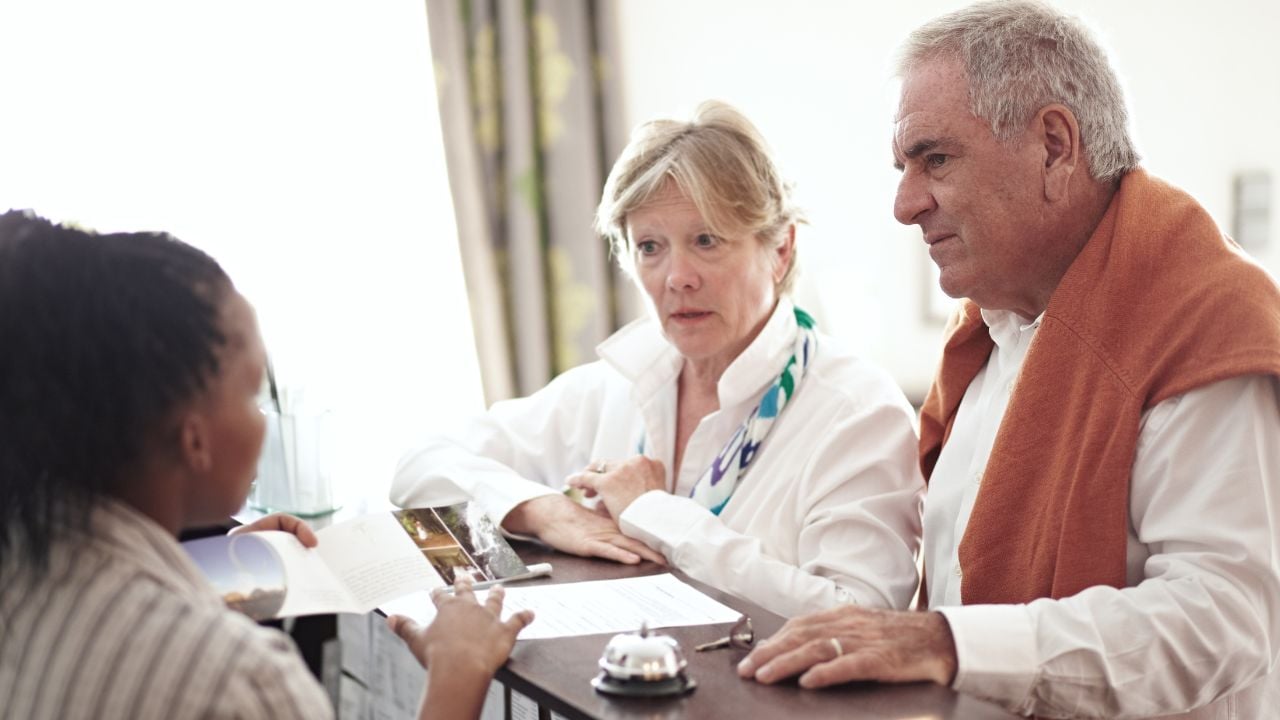
A guest without a smartphone, or a guest who’d rather hand a card to a person and ask a question, still needs somewhere to go.
A staffed front desk also means someone can answer a question the app can’t, like which restaurants deliver late or how far the beach access sits.
A hotel that still staffs that desk around the clock is one more phone call a guest doesn’t have to make from the parking lot.
9 Florida State Parks Locals Visit Before Tourists Find Them

Florida runs 175 state parks, trails, and historic sites, and many road trips down I-75 only ever touch three or four of them.
These are the Florida state parks locals visit long before a tourist ever finds the exit.
9 Florida State Parks Locals Visit Before Tourists Find Them
9 Florida Springs Locals Escape to When the Beaches Get Too Crowded

A summer Saturday at a popular Florida beach means a parking lot that closes by mid-morning and towels touching on every side.
Some Floridians skip that scene entirely and drive inland instead, to springs that never need a lifeguard whistle to be worth the trip.
9 Florida Springs Locals Escape to When the Beaches Get Too Crowded
