
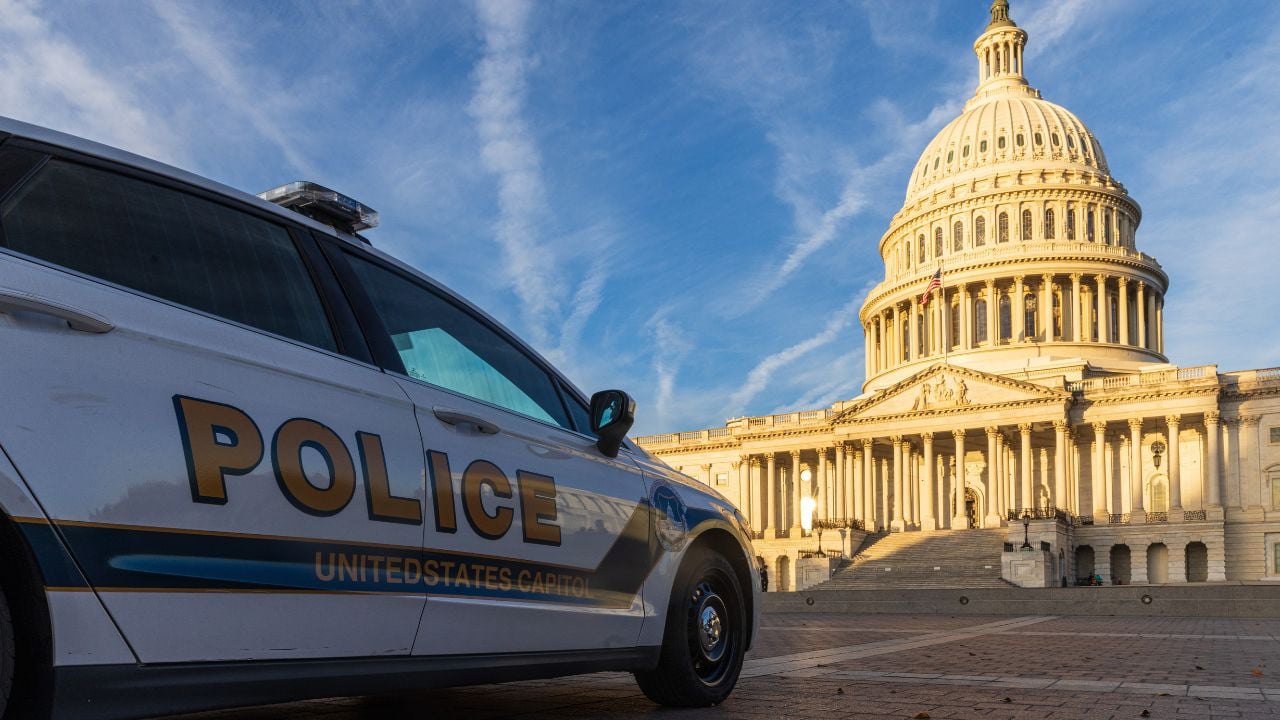
10 Jobs at the Capitol That Have Existed for Over 100 Years. Can You Name Them, Floridians?

The U.S. Capitol has been the beating heart of American government since the late 1700s, and some of the jobs inside those marble walls have been around almost as long as the building itself.
We’re talking about positions that predate the Civil War. It’s hard for many Floridians to even imagine that.
Roles that existed when the Capitol was literally burning during the War of 1812.
Jobs that survived the invention of the telephone, two world wars, and the entire modern political era without going away.
Senate Sergeant at Arms and Doorkeeper (1789)
This role technically started as the Office of the Doorkeeper on April 7, 1789, during the very first United States Congress.
In 1798, the title Sergeant at Arms got added after then-Doorkeeper James Mathers was ordered to compel former senator William Blount to return for an impeachment trial.
Today, the sergeant at arms serves as the Senate’s chief law enforcement officer, chief protocol officer, and executive officer.
They can literally compel absent senators to come to the chamber to establish a quorum. That’s an 18th-century power that still gets exercised in the 21st century.
House Sergeant at Arms (1789)
The House created its own Sergeant at Arms position on April 14, 1789, the same week as the Senate version.
The role has always included security and protocol duties, but one of its most visible moments happens every year at the State of the Union.
The House Sergeant at Arms is the person who announces the arrival of the president.
“Madam Speaker, the President of the United States.” That line has been delivered by a House Sergeant at Arms at every modern State of the Union.
Clerk of the House (1789)
When a quorum gathered for the first time on April 1, 1789, the House elected its Speaker first (Frederick Augustus Conrad Muhlenberg) and then its first Clerk (John Beckley of Virginia).
The Clerk maintains the official journal of the House, manages legislative records, and oversees the electronic voting system.
The role has changed in scale since 1789, but the basic function has been essentially the same for over 230 years.
Keeping the official written record of what the House does.
House and Senate Chaplains (1789)
The tradition of opening each legislative day with a prayer goes back to the Continental Congresses, and both chambers formalized chaplain positions in 1789.
The Right Rev. Samuel Provost became the first Senate chaplain that year. Rev. William Linn became the first House chaplain on May 1, 1789.
Today, the chaplains offer opening prayers, provide pastoral counseling to members, staff, and their families, coordinate guest chaplains, and officiate at occasional memorial services for the Capitol community.
The role is nonsectarian and nonpartisan, and it’s been in continuous operation since the first Congress.
Architect of the Capitol (1793 / Permanent in 1876)
Dr. William Thornton won the original architectural competition for the U.S. Capitol in 1793, making him the “first” Architect of the Capitol.
The position was informal for decades, filled by a succession of architects overseeing construction and maintenance.
In 1876, Congress made it a permanent office under the legislative branch.
Today, the Architect of the Capitol leads an agency responsible for maintaining 18.4 million square feet of buildings and over 570 acres of land across Capitol Hill, including the Capitol itself, the House and Senate office buildings, the Library of Congress, and the Supreme Court Building.
U.S. Capitol Police (1828)
Congress established the Capitol Police in 1828, originally to protect the Capitol building itself.
The department has grown significantly in the nearly 200 years since, especially after the events of 1954 (when Puerto Rican nationalists opened fire in the House chamber), 1998 (when an assailant killed two officers), and January 6, 2021.
Today, the Capitol Police employs around 2,000 officers and civilian staff.
The mission remains basically the same as it was in 1828. Protect the Capitol, the members of Congress, and the millions of visitors who pass through each year.
Capitol Pages (1829)
The Senate appointed its first page in 1829, and the Capitol page program ran for nearly two centuries as a formal institution.
Pages were high school juniors who worked part-time at the Capitol, helping deliver messages, setting up the chamber each morning, and assisting members.
The House officially ended its page program in 2011, citing technological changes that had reduced the need.
The Senate page program continues today, though it operates in a smaller form than in decades past. For nearly 200 years, thousands of American teenagers got a front-row seat to Congress through this role.
Senate and House Parliamentarians (Senate 1935, House 1927)
The Parliamentarian serves as the nonpartisan interpreter of each chamber’s rules and procedures.
The House Parliamentarian role was formalized in 1927, while the Senate Parliamentarian role took shape around 1935.
Both positions are just under 100 years old (the House version is over 100 at this point), but they function in roles that had existed informally for decades before official titles were created.
The Parliamentarian’s job involves advising on procedural questions, clarifying arcane legislative lingo, and arbitrating disputes over what can and can’t happen under the rules.
In recent years, the Senate Parliamentarian has gained public attention for rulings on what can be passed through the budget reconciliation process.
Official Reporters of Debate (1848)
The Senate established its Office of Official Reporters of Debate in 1848, and the House followed with a similar office around the same time period.
These are the folks responsible for creating the official transcript of every word spoken on the House and Senate floor.
They use stenography to capture floor proceedings and produce the Congressional Record, which remains the official record of what Congress says and does.
The technology has changed (from shorthand to machine stenography to modern digital tools), but the core function has been uninterrupted for over 175 years.
Capitol Subway Operator (Late 1800s/Early 1900s)
The Capitol has its own subway system connecting the main building to the surrounding House and Senate office buildings, and the Russell Senate Office Building subway still has a human operator running it.
The original Capitol subway system opened in 1909, initially as a pair of battery-powered Studebakers running between the Russell building and the Capitol.
Modern subways in the Hart and Dirksen buildings run automatically.
The Russell building subway, though, has kept its human operator role for well over 100 years, and the person who drives it is part of a tradition that’s run uninterrupted through 19 presidencies.
The Quiet Machinery of the Capitol
Most Americans only think about Congress in terms of the lawmakers themselves, but the building and its institutions run on a roster of positions that have been around since before the Civil War.
Some of these jobs have evolved dramatically. Some have stayed nearly identical to what they were in 1789.
All of them are part of the reason the U.S. Capitol has kept functioning continuously through wars, scandals, political upheaval, and a steady stream of historic moments.
Next time you see a State of the Union, a joint session, or footage from inside the Capitol, remember there’s a whole crew of folks running things behind the scenes, and most of them are working in roles that have existed since before anyone’s great-great-great-grandparents were born.
That’s a lot of history in one building.
10 Things U.S. Presidents Have to Pay for on Their Own That Americans Are Clueless About
Living at 1600 Pennsylvania Avenue has obvious perks.
But the president of the United States still receives a monthly bill from the White House usher’s office, and what’s on that bill catches many Americans off guard.
10 Things U.S. Presidents Have to Pay for on Their Own That Americans Are Clueless About
15 Facts About Death Row Few Americans Know About

Polls suggest that most Americans support the death penalty, but a majority also worry about the way states carry it out. These are the things about death row that most Americans have no clue about.
