
10 Problems Pennsylvania Home Inspectors Find That Buyers Walk Right Past

A young couple stands in the kitchen of a stone farmhouse outside Lancaster, running their hands along the original beams and already picking paint colors for the hallway.
Their inspector is still down in the basement.
He’s circling something on his clipboard that never came up during their walkthrough.
These are the problems Pennsylvania home inspectors find that buyers walk past on their own.
Note: This is general information, not legal or inspection advice. Pennsylvania’s disclosure rules and inspection standards are subject to change, so confirm the requirements with a licensed professional.
1. Grading That Slopes Toward Your Foundation
Pennsylvania home inspectors flag one problem more than any other, and it never involves a single tool.
Improper grading and drainage tops the list, showing up in 35.8% of inspections surveyed by the International Association of Certified Home Inspectors (InterNACHI).
Buyers walk the yard, admire the landscaping, and never check which way the ground slopes.
A downspout dumping water three feet from the foundation looks harmless on a dry afternoon.
It’s not.
A few Pennsylvania winters of freeze and thaw later, that water backs up in the basement every time it rains.
Regrading the soil and extending the downspouts usually runs a few hundred dollars.
Ignore it, and the fix gets far more expensive later.
2. Knob-and-Tube Wiring Still Live in Your Walls
Pennsylvania’s housing stock skews old, and many prewar farmhouses and rowhomes still run their original wiring.
Buyers spot the ceramic knobs and porcelain tubes poking through attic insulation and read them as character.
Not quite.
Knob-and-tube wiring was built to shed heat into open air, and it worked fine that way for decades.
The trouble started once later owners packed insulation around it, trapping heat the design never accounted for.
The 1987 National Electrical Code banned insulation from touching this type of wiring for exactly that reason.
Standard insurers will often decline coverage on a home with active knob-and-tube wiring at all.
Find that out after closing, and the wiring becomes your problem to fix before you can even insure the place.
3. Radon Readings Above the Action Level
Pennsylvania’s geology produces some of the country’s higher radon levels.
About 40% of tested homes in the state come back above the Environmental Protection Agency’s (EPA) action guideline of 4 picocuries per liter (pCi/L), according to the Pennsylvania Department of Environmental Protection.
Radon has no smell.
You can’t see it either.
A buyer can walk through a house a dozen times and never pick up on it because nothing about the air gives it away.
Only a short-term test placed during the inspection window catches it, and Pennsylvania buyers who skip that step are guessing.
4. Crumbling Mortar in a Stone Foundation
Many Pennsylvania farmhouses past the century mark rest on fieldstone foundations instead of poured concrete.
Buyers see exposed stone and picture solid, old-world construction.
Half right.
The stones themselves usually are solid.
What holds them together is a different story, since builders used a less rigid, lime-based mortar instead of modern concrete.
That mortar breaks down with decades of water exposure, turning to powder and losing the strength that keeps the wall standing straight.
A bowing or shifting wall points to failing mortar, not weak stone.
Repointing it, replacing the mortar joint by joint, is a specialist job and not a weekend fix.
5. Outdated Panel Insurers Won’t Touch
Buyers pop the electrical panel door, watch a breaker flip during a quick test, and move on to the next room.
The brand stamped on that panel matters more than whether it flips.
Federal Pacific and Zinsco panels, common in Pennsylvania homes wired between the 1950s and early 1980s, share a documented design flaw.
Their breakers can fail to trip during a real overload, the exact moment they’re supposed to work.
Not that day.
The federal Consumer Product Safety Commission opened a two-year investigation into Federal Pacific breakers in 1980 and closed the case in 1983 over budget cuts, not a safety finding.
Insurers increasingly won’t renew a policy once one shows up in a report.
Replacing individual breakers doesn’t fix it. The whole panel has to go.
Psst! How much do you know about home inspections and the buyers who skip them? Take our quiz and see if you can ace it.
Quiz
Home Inspection IQ
Answer these questions on home inspections and the buyers who skip them. We bet you can’t get them all right. Prove us wrong?
What’s the national average price of a standard home inspection today?
6. Buried Oil Tank in Your Own Yard
Many older Pennsylvania homes, especially rural ones, heated with oil for decades before switching to gas or electric.
When owners converted, they often just capped the tank and left it in the ground instead of pulling it out.
Buyers see a small pipe sticking out of the lawn and guess it's an old sprinkler line.
Not a sprinkler line.
It's usually the fill pipe for a tank nobody registered or removed.
Under Pennsylvania's storage tank rules, cleanup liability runs with the property, not with whoever installed the tank.
Buy the house without checking, and any contamination underneath becomes your bill.
7. Efflorescence on Your Basement Walls
A chalky white residue on basement block or brick barely registers with most buyers walking through.
It wipes off with a hand, so it looks cosmetic.
InterNACHI describes efflorescence as one of the clearest visible signs that water has been moving through a foundation wall.
Water dissolves salts inside the concrete or brick as it travels through, then leaves those salts behind on the surface once it dries.
The powder itself won't hurt anything.
What caused it might.
What it points to, ongoing moisture intrusion that can lead to mold or structural damage, is the part worth chasing down before closing.
8. Lead Still Running Through Your Water Line
Pittsburgh and Philadelphia alone still have roughly 29,000 and 25,000 lead service lines running from the street to older homes.
Buyers turn on the kitchen tap, see clear water, and never think about the pipe carrying it.
A standard visual inspection doesn't identify pipe material on its own, so this one takes a separate water test to catch.
Lead doesn't change the taste or the color.
No warning at all.
In Philadelphia, the homeowner owns the entire service line and the full cost of replacing it, not the city.
Pittsburgh has been replacing lines faster, but many older houses there still wait their turn.
A water test during the inspection period is the only way to know which pipe a house has.
9. Vermiculite Insulation in Your Attic
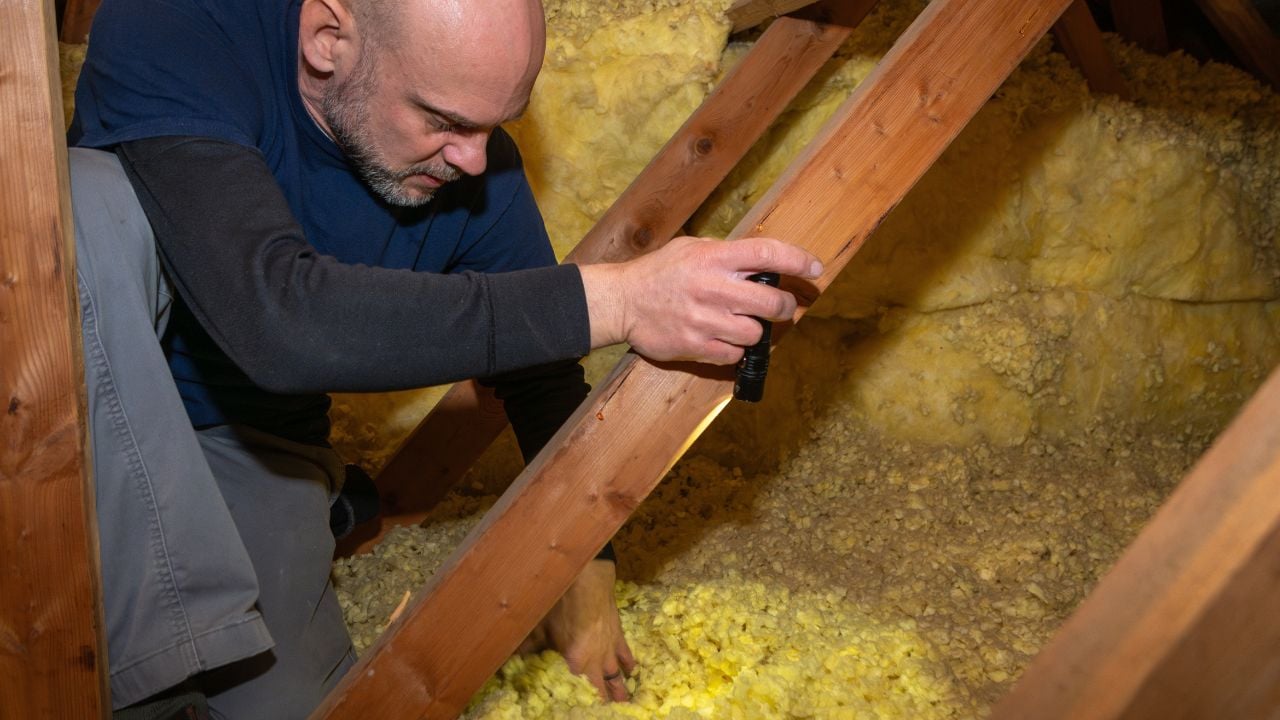
Buyers peek into the attic, see loose, pebbly insulation spread across the floor, and figure it's just extra coverage.
Vermiculite insulation was common in American homes from the 1920s until it was phased out around 1990.
Most of it came from a single mine in Libby, Montana, that also carried a natural asbestos deposit.
The EPA advises treating any vermiculite insulation as if it may contain asbestos until it's tested.
A standard home inspection doesn't test for it, so it's easy for the whole thing to go unmentioned start to finish.
Disturbing it releases fibers into the air.
Don't touch it.
Leave it alone until a specialist tests it.
10. Two-Prong Outlets With No Ground Wire
A house built before 1962 almost certainly started life with two-prong outlets in every room, since the National Electrical Code (NEC) didn't require the modern three-slot design until that year.
Most buyers clock the two slots right away and assume a quick fix covers it.
Not the whole fix.
Swapping in a ground fault circuit interrupter (GFCI) outlet cuts the shock risk fast, but it still doesn't give a fault anywhere to go, since there's no real ground wire behind the wall.
A full rewire is the only upgrade that adds a true ground path, and Pennsylvania electricians typically price that job by the number of circuits, not the square footage of the house.
Why Pennsylvania Doesn't License Its Inspectors
Most buyers assume a home inspector answers to a state licensing board the same way a contractor or a plumber does.
Pennsylvania doesn't work that way.
The state has no licensing board for home inspectors, though Pennsylvania's Home Inspection Law still sets rules for the job.
Under that law, an inspector has to belong to a national association, have completed more than 100 inspections, and have passed a recognized exam on inspection procedure.
Every inspector working in Pennsylvania also has to carry errors-and-omissions and general liability insurance of at least $100,000 per occurrence, with $500,000 in total coverage.
That's the floor, not a guarantee of a great report.
Pennsylvania's separate seller disclosure law only requires sellers to reveal defects they know about, so a seller who never opened the attic can honestly claim ignorance about the vermiculite up there.
A seller who lies outright, rather than staying silent, can still face a lawsuit under that same law, though proving what a seller knew at the time is its own fight.
Does Pennsylvania Tax Social Security? What Retirees Pay in 2026

Buying a home in Pennsylvania is one big money decision, and it isn't the last one waiting on a new homeowner.
Pennsylvania skips its own tax on Social Security, but retirees still run into a few surprises once other income enters the picture.
Does Pennsylvania Tax Social Security? What Retirees Pay in 2026
12 Things Pennsylvanians Miss Most After Moving Away

Every inspection report eventually leads to a closing table, and then to living in the house.
Ask anyone who's left Pennsylvania for good what they miss, and the list starts before the moving truck even clears the driveway.
