
10 Sounds and Smells That Instantly Feel Like Home to Louisianans

Louisiana hauls somewhere between 100 million and 120 million pounds of crawfish out of its ponds and the Atchafalaya Basin every year.
You smell it before you see them.
These are the sounds and smells that instantly feel like home to Louisianans.
1. Calliope Music Rolling off the Steamboat Natchez
Louisiana’s Steamboat Natchez blasts calliope music across the New Orleans riverfront three times a day.
The showboat’s 32-note steam pipe organ plays at 10:30 a.m., 1:45 p.m., and 5:30 p.m. daily, according to the boat’s site.
A steam calliope has announced a working steamboat’s arrival on the Mississippi River since 1865, according to New Orleans’ tourism site.
Even a small calliope can be heard for miles.
The Natchez’s version rolls straight through the French Quarter every time it plays.
That sound means the boat is minutes from pulling away from the dock.
Same time, every day.
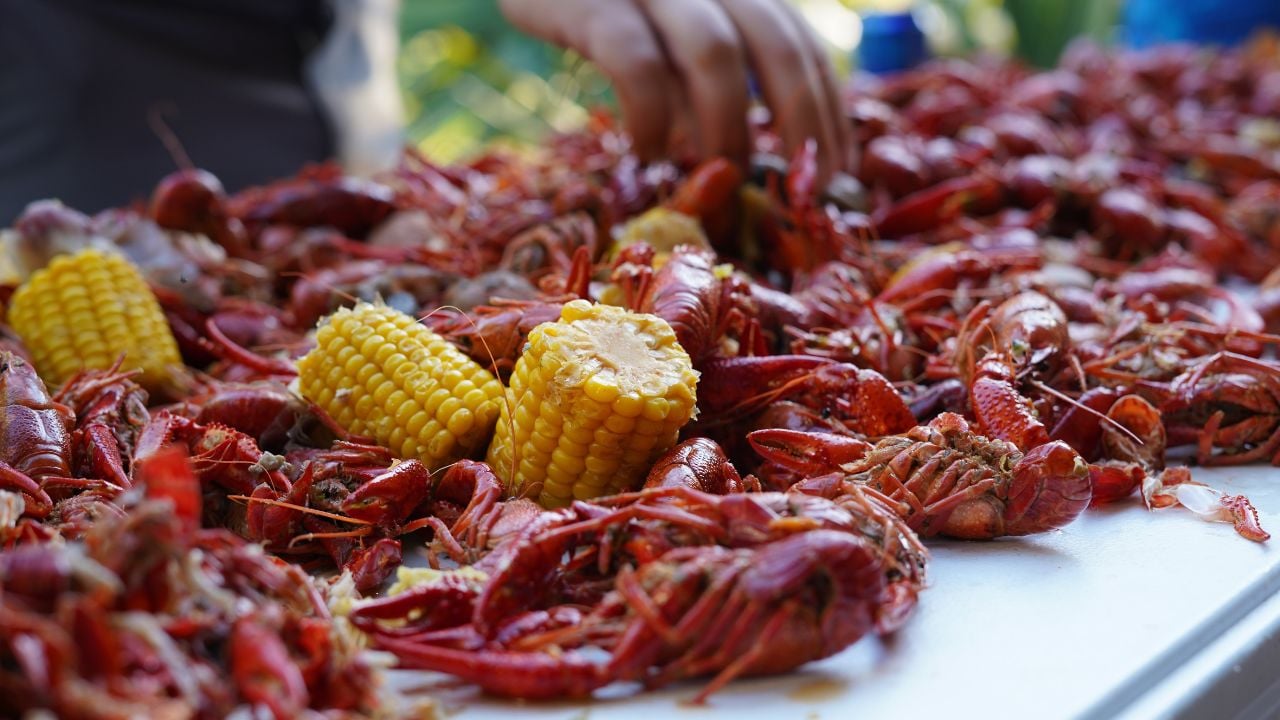
2. Cayenne Steam off a Crawfish Pot
Louisiana’s wildlife agency says the state leads the nation in crawfish production.
Ponds and the Atchafalaya Basin supply most of that haul.
None of those numbers explain the smell every Louisianan knows by heart: Cayenne and garlic steam rolling off a backyard boil pot each spring.
The yard smells like cayenne.
Whole crawfish, corn, potatoes, and sausage go into the same pot, so the cayenne clings to everything before anyone sits down.
Peel a crawfish, and the smell rides on your fingers for the rest of the day.
3. Tambourines on Super Sunday
Louisiana’s Mardi Gras Indians, also called the Black Masking Indians, spend all year building the hand-beaded, feathered suits they wear once a year.
Their music runs on call-and-response.
A big chief sings out a line.
The tribe answers back in a chant that carries down the block before anyone sees them coming.
Tambourines, cowbells, and found objects like beer bottles keep the beat underneath the chant, according to the Louisiana history journal 64 Parishes.
Every neighborhood tribe picks a route on Super Sunday each spring.
Nobody outside Louisiana sees anything quite like it.
It’s not for tourists.
4. Gumbo Roux Browning Into a Toasted Smell
Louisiana cooks start almost every gumbo the same way, standing over a pot of oil and flour that has to be stirred without stopping.
Walk away for a minute, and it burns.
There are no shortcuts.
The color tells the cook everything.
A flour-and-oil roux moves from pale to peanut-butter tan to a dark copper penny.
The kitchen fills with a toasted, nutty smell the entire time it’s happening.
That copper-penny shade is the shade many Louisiana gumbos are built on.
Copper Penny vs. Chocolate Roux
Louisiana’s most common gumbo roux, the copper-penny stage, takes about 20 to 30 minutes of constant stirring to reach.
A darker, chocolate-brown roux takes closer to 45 minutes.
Cajun cooks save that darker roux for duck or wild-game gumbo.
There’s a tradeoff: The darker the roux gets, the more flavor it carries and the less thickening power it keeps.
5. Frottoir Scraping out a Zydeco Beat
Louisiana’s Creole and Cajun dance halls run on zydeco.
The engine underneath the accordion is a metal vest called a frottoir.
Louisiana law even names the accordion the state’s official musical instrument.
A refinery welder named Willie Landry built the first version of the frottoir.
He made it around 1947 for the musicians Clifton and Cleveland Chenier, according to the Smithsonian.
It stuck.
Players strap the frottoir across their chest and scrape it with bottle openers or spoons.
That scratchy rhythm underneath the accordion and fiddle is the sound of a genuine zydeco dance hall, not a stage built for tourists.
6. Smoke That Smells Like Burnt Sugar
Louisiana’s sugarcane parishes turn the sky a little hazy every fall, and it isn’t wildfire.
Harvest season starts in early October, when mills fire up and farmers burn the leafy trash off freshly cut cane.
That burn strips away 30 percent to 50 percent of the leaves before the stalks reach the mill, according to Louisiana State University’s (LSU) Agricultural Center.
Louisiana cane growers run that burn through a Certified Prescribed Burn Manager Program, built with the Thibodaux-based American Sugar Cane League and LSU’s Agricultural Center.
The smoke smells like burnt sugar and dead leaves, sharp enough to catch in the back of your throat.
Every parish knows the smell.
It fades by January, and then the cycle starts again.
7. Brass Band Turning a Funeral Into a Party
Louisiana’s biggest city, New Orleans, buries people the way it does everything else: With a brass band.
A jazz funeral opens with a slow, somber dirge on the walk to the cemetery.
The tradition blends European brass-band mourning with West African traditions of honoring the dead, according to the Louisiana history journal 64 Parishes.
Then the mood flips.
64 Parishes describes that moment as the body being “cut loose.”
That’s when the band switches to upbeat music.
The crowd walking behind the family, called the second line, turns the walk back into a street party.
That switch from dirge to celebration is the sound every Louisianan means when they say somebody got a proper send-off.
8. Chicory Coffee Brewing on the Stove
Louisiana’s coffee habit smells different before it even hits the cup.
Union naval blockades cut off coffee shipments to the port during the Civil War.
New Orleans residents stretched what little coffee they had with ground chicory root, according to Smithsonian magazine.
The habit never left.
Roasted chicory root gives off a heavier, more bitter smell than plain coffee grounds, with a caramelized edge close to burnt sugar.
Chicory carries no caffeine.
The roasted, ground root still adds that dark smell to a pot brewing on the stove.
Louisianans drink it on purpose now, in a café au lait poured half coffee and half hot milk.
The smell hits before the first sip does.
9. Boudin Sizzling on a Gas Station Grill
Louisiana’s gas stations sell more than fuel and lottery tickets; many of them sell boudin.
Boudin is a Cajun sausage of pork, rice, and seasoning stuffed into a casing.
It traces back to communal hog-butchering days called boucheries, when families used every part of the animal.
The town of Scott earned the title “Boudin Capital of the World” from Louisiana’s state legislature in 2012.
Gas stations and meat markets across Acadiana sell a version of boudin today.
It’s a snack, not a special occasion.
It’s hot off the grill.
The smell is what gives it away: Pork, rice, and pepper, popping in its casing by the register.
Psst! How much do you know about Louisiana beyond gumbo and Mardi Gras? Take our quiz and see how many you can get right.
Quiz
Louisiana IQ
Answer these questions on Louisiana history, food, and law. We bet you can’t get them all right. Prove us wrong?
Louisiana runs on a civil law system with roots in the Napoleonic Code. What legal system do the other 49 U.S. states use instead?
10. Crackle of a Fresh Po'Boy Loaf
Louisiana's biggest city, New Orleans, built its sandwich culture around one loaf of French bread.
German immigrant George Leidenheimer opened his bakery in 1896.
The loaf it's turned out ever since became the standard po-boy bread.
The crust is the point.
Leidenheimer bakes the crust crisp enough to shatter under a knife, while the inside stays light and airy so it won't turn to mush under gravy or fried shrimp.
Slice a loaf open, and you can hear the crackle before you smell the yeast underneath.
That two-second sound is as much a part of lunch as the roast-beef-versus-fried-shrimp debate that follows.
Pick a loaf that doesn't crackle, and a Louisianan will hand it right back to the counter.
9 Louisiana Towns Visitors Skip Because They Never Leave New Orleans
Louisiana has 64 parishes, and New Orleans sits in exactly one of them.
These are the small Louisiana towns that rarely make it onto a visitor's itinerary, even though many of them earn the detour.
9 Louisiana Towns Visitors Skip Because They Never Leave New Orleans
