
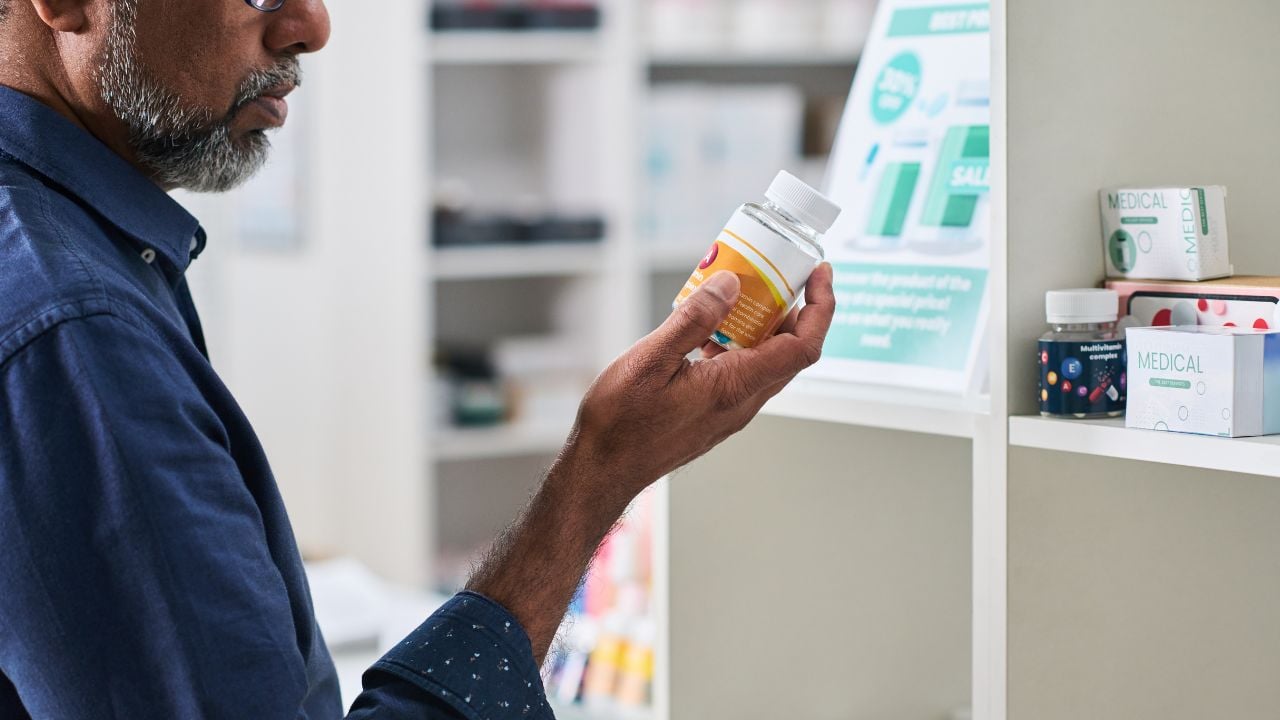
10 Supplement Label Phrases That Can Mislead North Carolinians

A vitamin bottle can reach a Charlotte or Raleigh pharmacy shelf without a single government test behind it, North Carolina’s Department of Justice warns.
No regulatory body has to check the front label first.
These are the supplement label phrases that can mislead North Carolinians.
Note: This is general information, not medical advice. Supplement labeling rules are subject to change.
1. “Proprietary Blend”
A supplement’s “Proprietary Blend” label only has to disclose one number under federal law: The combined weight of everything packed inside it.
The Code of Federal Regulations (CFR) spells out the rule at 21 CFR 101.36, and it never requires a brand to say how much of any single ingredient made the cut.
A five-ingredient blend could carry four milligrams of the ingredient that works and a gram of cheap filler.
The label looks identical either way.
That’s the whole trick.
2. “GMP Certified”
Every legitimate supplement company already has to follow Good Manufacturing Practices (GMP).
It’s already the law, not a badge a brand earns.
There’s no club to join.
A brand printing “GMP Certified” in big letters on the front is marketing a floor every legitimate competitor already has to clear.
It’s a baseline, not a bonus.
3. “FDA Approved”
Can a supplement legally be “FDA Approved”?
Federal law answers no before the label even prints the words.
The Food and Drug Administration (FDA) has no authority to approve a dietary supplement’s safety or effectiveness before it reaches a shelf.
That’s by design.
That’s exactly why North Carolina’s Department of Justice warns residents that a supplement can reach a Charlotte or Raleigh pharmacy shelf without a single government test behind it.
A bottle can say “FDA Approved” and nothing about that sentence has to be true.
4. “FDA Registered Facility”
Thousands of supplement facilities carry an “FDA Registered” badge, including ones the FDA has never inspected.
Registering a facility is mostly paperwork.
Federal regulation says a registration number doesn’t convey approval or endorsement of the facility or anything it makes.
It proves nothing.
Filing a form isn’t a stamp of quality.
5. “Doctor Recommended”
Federal Trade Commission (FTC) guidance requires any doctor endorsing a supplement in an ad to have examined or tested that exact product.
“Doctor Recommended” on a bottle skips that requirement more often than shoppers assume.
A paid spokesperson in scrubs doesn’t clear that bar.
Neither does a stock photo of a lab coat on the box.
Ask which doctor made the claim.
Then ask what they reviewed.
6. “Clinically Proven”
A supplement’s “Clinically Proven” claim often rests on a study that tested something else entirely.
The FTC’s advertising guide flags exactly that gap: A different form, dose, or concentration than what’s in the bottle.
A raw herb studied at one strength isn’t the same product as a concentrated extract sold at another.
Close enough doesn’t hold up.
The dose a study tested and the dose sitting on the shelf are often two different amounts, and the label only answers one of those questions.
Psst! How much do you know about the claims on other supplement bottles? Flip these cards and see how many you get right.
7. “All Natural”
“All Natural” on a supplement label answers to nobody.
“Organic” answers to the U.S. Department of Agriculture, with a legal definition behind it.
The FDA doesn’t define or police the word “natural” for supplements, so a company can print it without meeting any federal standard at all.
North Carolina’s consumer protection office puts the risk plainly: A product being natural doesn’t mean it’s safe.
Nature isn’t safety.
Many natural substances, arsenic and hemlock among them, are anything but safe.
8. “Standardized”
Does “Standardized” on a supplement label mean the product is tested and consistent, batch after batch?
Not necessarily.
The National Institutes of Health (NIH) runs an Office of Dietary Supplements, and it says the word doesn’t necessarily indicate product quality.
That’s a loophole.
Here’s why: A company can standardize a bottle to a marker compound that isn’t even the ingredient doing the work.
The label reads “standardized to 5% of X” while the part of the plant that matters goes uncounted.
A number on the label isn’t proof of anything on its merits.
9. “Made in USA”
A North Carolina shopper who sees “Made in USA” stamped on a supplement bottle assumes every ingredient inside came from home.
The Federal Trade Commission’s actual bar for that claim is stricter than that assumption allows.
An unqualified “Made in USA” claim has to be “all or virtually all” American under that standard, ingredients included.
Bottling capsules in a Carolina warehouse doesn’t clear that bar if the herb or vitamin inside came from a supplier overseas.
Close doesn’t count.
The Math Behind “Made in USA”
“Made in USA” on a supplement bottle has to clear a federal bar, not just a feeling.
The FTC weighs how much of the finished product’s cost and function comes from outside the country.
A capsule filled and sealed in a U.S. plant from a ginseng extract or fish oil sourced overseas usually fails that test.
The imported ingredient is the reason the product works, not a minor part swapped in along the way.
A bottle can still say so honestly with the right wording, something like “Made in USA with globally sourced ingredients.”
10. “Detox” and “Cleanse”
Federal regulators have already tested the “detox” and “cleanse” promise on a supplement label in court, essentially.
The Federal Trade Commission forced one detox tea marketer to return more than $930,000 to customers after ruling its claims lacked the scientific evidence the law requires.
That’s not a small settlement.
A healthy liver and a pair of working kidneys already filter what the body needs filtered, every single day, with no tea or gummy required.
How to Spot a Verified Claim
Supplement labels aren’t entirely a guessing game for North Carolina shoppers willing to look closer.
A handful of seals mean something because an outside group did the testing, not the company selling the bottle.
The U.S. Pharmacopeia’s (USP) Verified Mark confirms a product contains what its label says, in the amount stated, without harmful contamination levels.
NSF International (NSF), a separate independent testing group, runs a program called NSF Certified for Sport.
That program screens for more than 200 banned athletic substances a bottle was never supposed to contain.
Both programs are voluntary and paid for by the brand.
No law requires it.
The USP Verified Mark has already reached more than 700 million supplement labels and packages nationwide, the U.S. Pharmacopeia reports.
Major League Baseball, the National Hockey League (NHL), and the Canadian Football League go further with the NSF seal, restricting their teams to supplements that already carry it.
8 North Carolina Pawn Shop Rules Bargain Hunters Learn the Hard Way
A North Carolina pawnbroker can legally hand over a receipt for stolen property and never know it.
You won’t get a refund once someone else comes looking for what you bought.
8 North Carolina Pawn Shop Rules Bargain Hunters Learn the Hard Way
12 Crazy Facts About Earth North Carolinians Never Learned in School

Many classrooms covered plate tectonics and maybe a volcano diagram, and stopped there.
Few teachers gave North Carolina students the fuller picture of what this planet is doing underground, underwater, and overhead.
12 Crazy Facts About Earth North Carolinians Never Learned in School
