
10 Texas Summer Rules Locals Follow That Newcomers Learn the Hard Way

Think the worst thing Texas’ summer can cost you is a high electric bill?
Not necessarily.
Ask anybody who’s spent a July night in an emergency room after reaching into a woodpile they couldn’t see into.
These are the Texas summer rules locals follow that newcomers often end up learning the hard way.
Note: This is general information, not insurance or medical advice.
1. Buying Wind Coverage Early
Coastal homeowners buy their windstorm and flood coverage in the spring, long before anybody’s watching a swirl on a map.
Once a storm in the Gulf of Mexico gets a name, most insurers stop selling new policies or changing the coverage already in force.
The Texas Windstorm Insurance Association shuts its own books the moment that storm becomes a hurricane.
Your agent’s hands are tied.
That freeze covers 14 coastal counties plus the part of Harris County east of Highway 146, and an application filed while it’s in place can’t take effect until the association starts writing again.
A National Flood Insurance Program policy has its own waiting period.
Buy one now and you usually wait 30 days before it covers anything.
So a newcomer in Rockport who calls an agent the morning a storm gets a name has missed both windows, and the roof over the kitchen is now a personal expense.
2. Turning Around at a Barricade
Barricades go up fast on the low-water crossings between Kerrville and Wimberley, and drivers who grew up on those roads turn around without arguing about it.
A thunderstorm miles upstream can fill a dry creek bed while the sky over your car stays clear.
Six inches of fast-moving water is enough to make a driver lose control, even in a pickup, and flash flooding is the leading cause of weather-related deaths in Texas.
Then comes the part transplants don’t expect: Driving past a barricade where water covers the road is a Class B misdemeanor under state transportation law, not a traffic ticket.
The barricade isn’t a suggestion.
That detour costs half an hour, and the crossing will still be sitting there tomorrow.
3. Checking the Burn Ban First
Longtime residents don’t light a brush pile, a fire pit, or a welding torch in August without checking whether their county sits under a burn ban.
Breaking that order is a Class C misdemeanor, and the fine tops out at $500.
That’s the cheap version.
The worse outcome arrives if the fire gets loose, since the person who struck the match can end up answering for whatever the fire burns.
A county’s commissioners court adopts the ban under the Local Government Code, never the state, and no order can run past 90 days.
The Texas A&M Forest Service keeps a running map of the counties under one right now.
It changes week to week.
That’s why a rancher outside Junction will let a brush pile sit until November, no matter how neatly he stacked it in June.
4. Watering Your Foundation
When the rain quits for six weeks, homeowners on North Texas clay stop worrying about the grass and start watering the house.
Clay shrinks as it dries out, the slab settles into the gap, and a door that closed fine in May sticks by the middle of August.
Then the cracks open.
The fix is a soaker hose run about 20 to 24 inches out from the perimeter, kept damp enough that the soil feels tacky rather than soaked.
Foundation crews around Dallas tell people to let the lawn go brown and save the slab.
Grass comes back on its own, and concrete never does.
One homeowner in North Dallas paid $11,000 for foundation repairs, then watched the house shift again the next time the rain stopped.
5. Holding Your Nose
Swimmers raised on warm rivers pinch their nose before they jump, and it has nothing to do with the smell of the water.
Naegleria fowleri, an ameba that lives in warm freshwater, does its damage only when water goes up the nose and reaches the brain.
Swallowing it does nothing.
The risk rises after a long hot stretch, once rivers and lakes run warm and low.
By August, that describes your favorite swimming hole.
Nationwide, the federal Centers for Disease Control and Prevention counted 167 cases between 1962 and 2024, and four of those people survived.
So the habit costs nothing: Hold your nose or wear a nose clip when you jump, keep your head above the surface in warm shallow water, and leave the silt on the bottom alone.
Psst! How much do you know about Texas weather history? Take our quiz and see if you can ace it.
Quiz
Texas Weather History IQ
Answer these questions on record storms, deep droughts, and the grid that keeps the lights on. We bet you can’t get them all right. Prove us wrong?
The first high-rise office building in the country built with air conditioning opened in 1928. Which Texas city got it?
6. Ants in Your Air Conditioner
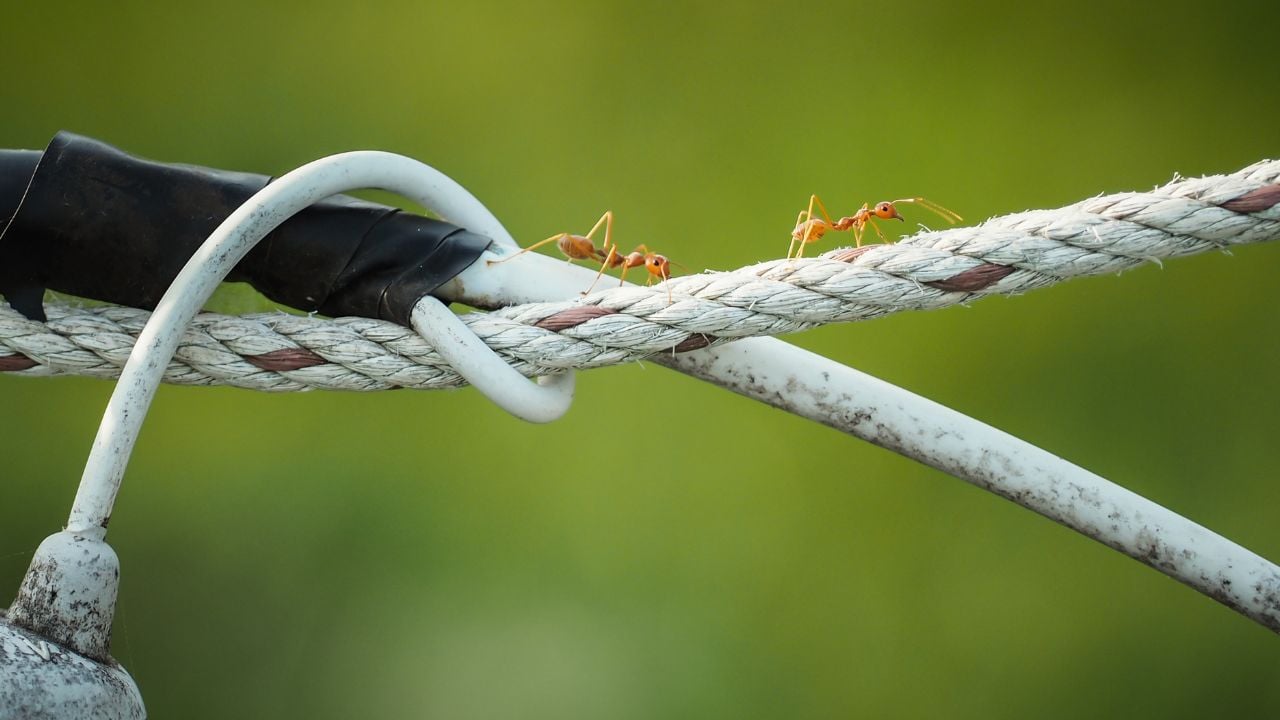
Anybody who's lost a perfectly good air conditioner to fire ants knows to keep fire ant mounds away from their new unit.
Fire ants move entire colonies into electrical housings and haul soil in with them.
They chew the coating off the wires, short the circuit, and pile up until the switch can't close, and the air conditioning quits on the hottest afternoon of the year.
Repair crews book up fast.
An older Texas survey put the yearly cost of fire ant damage to electrical and communication equipment at $146.5 million.
Those are dollars nobody has updated since, and air conditioners turned up in 42.9% of the cases.
People who've paid for that repair once treat the concrete pad like part of the yard.
They bait around it through the summer and lift the top panel now and then to look inside.
7. Keeping Dogs off Green Water
Dog owners in Austin read the water before they let a dog near it, and green scum means the walk keeps going.
Blue-green algae can produce toxins that kill a dog in hours, and the city has tied six dog deaths to those toxins since 2019.
Blooms take hold in warm, stagnant water where the flow has dropped off, which is what an August lake looks like.
On June 2, the city flagged thick mats at Red Bud Isle on Lady Bird Lake and at Walsh Boat Landing on Lake Austin.
The city's advice runs three ways: Keep dogs out of any water carrying scum or film, rinse their fur before they can lick it, and stay off the waterways for three days after a rain.
An owner who sees a dog stagger or throw up after a swim drives straight to a vet instead of waiting to see whether it passes.
Nobody waits it out.
8. Watching Where You Step
Longtime residents keep a flashlight by the back door all summer because a copperhead on a warm walkway blends into the leaves until you're a step away.
Copperheads, cottonmouths, and rattlesnakes are the pit vipers state health officials warn about, and they settle into woodpiles, the lip of a stock tank, and the shaded side of a house.
Those officials count one to two deaths a year in Texas from venomous snake bites, and about half of all venomous bites turn out to be dry, with no venom in them.
That's the good news.
The rest of it is an emergency room, a night of watching, and a bill nobody budgets for in July.
State guidance is blunt about the first aid, too, ruling out tourniquets, ice, cutting the wound, and any attempt to suck the venom out.
They wear boots and long pants through tall grass, and they never put a hand into a space they can't see into.
The flashlight is for the ten feet between your porch and your trash can.
9. Checking Your Tires Cold
Drivers crossing the state in August check tire pressure before they've driven anywhere, since a tire has to sit at least three hours to read cold.
Warm tires read high, so a reading taken in a hot parking lot can look fine on a tire that's running low.
An underinflated tire runs hotter still.
Nationwide, 511 people died in tire-related crashes in 2024.
Age counts as much as tread, and some vehicle and tire makers say to replace a tire between six and ten years old no matter how deep the tread still looks.
The date's on the sidewall.
Nobody checks that date on a cheap used pickup, and it's the difference between a spare tire in the driveway and a blowout on the shoulder of Interstate 10 with nowhere to stand out of the sun.
Psst! How ready is your place for the rest of the summer? Run through this checklist and see where you stand.
10. Dumping the Standing Water
Many cities send spray trucks out in July once their mosquito traps test positive, and no truck reaches the water sitting behind your fence.
So after a storm, people walk the yard and tip over anything holding water.
Mosquitoes don't need a pond.
The list is short: Saucers under potted plants, a sagging tarp over a boat, the low corner of a gutter, and a kiddie pool nobody drained.
About 80% of the people who catch West Nile virus never feel ill at all, and roughly one in 150 develops the severe form that reaches the brain and spinal cord.
The sweep takes five minutes, and the people who bother turn every saucer upside down instead of just pouring it out.
Then they walk it again after the next storm, since one afternoon of rain fills everything back up.
9 Foods Texans Swear By That the Rest of America Won't Touch
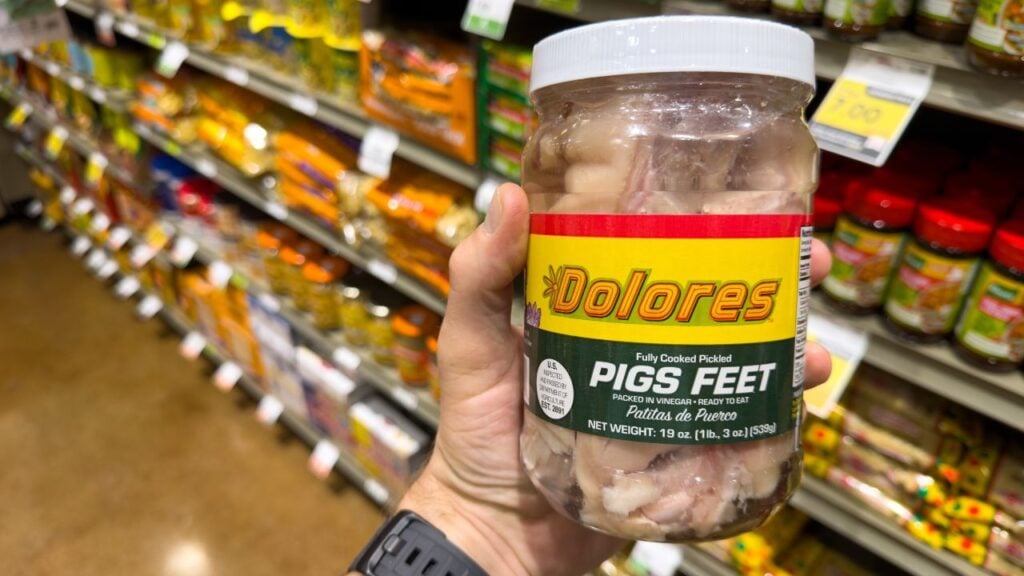
A newcomer from California sits down at a South Texas table on a Sunday morning, and somebody sets a bowl in front of her she can't name.
She takes one polite spoonful, works out what's in it, and decides the toast will do.
9 Foods Texans Swear By That the Rest of America Won't Touch
8 Joe V's Smart Shop Habits That Give Away a Longtime Texas Shopper

Regulars at Joe V's Smart Shop have a nickname they earned, and H-E-B built the store around the way they shop.
Somebody who's shopped Joe V's since 2010 moves through it nothing like a first-timer does.
8 Joe V's Smart Shop Habits That Give Away a Longtime Texas Shopper
