
11 Hygiene Habits From Other Countries That Hoosiers Find Weird

You’re traveling abroad, you duck into a bathroom, and something stops you cold.
There’s a second little faucet next to the toilet. A pair of plastic slippers waiting by the door. A sign, in three languages, begging you not to flush the paper.
Welcome to the rest of the world, where the daily routines you’ve never once questioned in Indiana look downright bizarre.
Here’s a tour of the hygiene habits that make Americans do a double take.
They Wash, We Wipe
Much of the planet cleans up after the bathroom with water.
But Americans reach for dry paper and call it done.
In Italy, nearly every home has a bidet. In Japan, the heated, water-spraying Washlet is standard in homes, hotels, and public restrooms.
To much of the world, wiping with dry paper and calling yourself clean is the baffling part.
They’d no sooner do that than wash a dish without water.
We think the bidet is the strange one. They think we are.
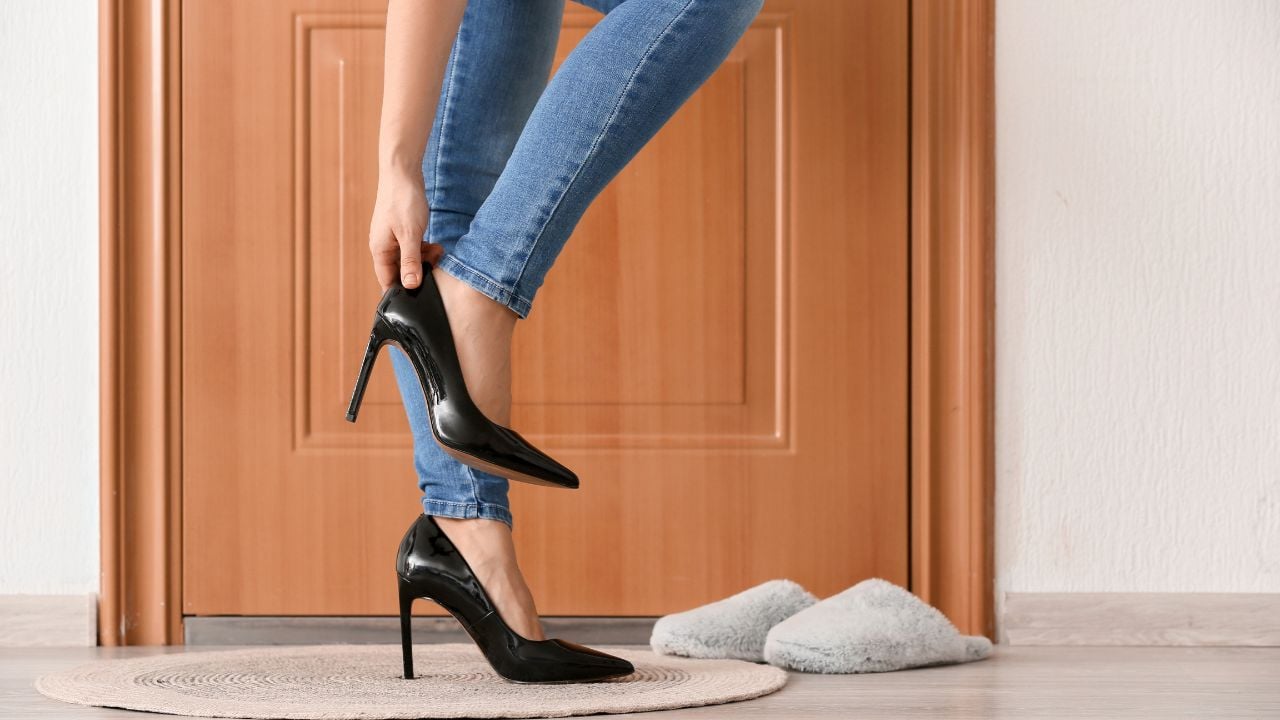
Shoes Off at the Door
In Japan, Korea, and much of Scandinavia and Asia, walking into a home with your street shoes on is a small horror.
The thinking is simple. Your shoes have been on the sidewalk, the bus, the bathroom floor.
Why would you drag all of that across the clean floor where people sit and children play?
Americans tromp from the driveway to the bedroom without a second thought.
In a lot of the world, that’s the part that turns stomachs.
Slippers Just for the Toilet
In Japan, the shoes-off rule has a sequel that catches every visitor off guard.
You take off your street shoes at the door and put on house slippers.
Then, at the bathroom door, you swap those for a separate pair of toilet slippers, worn only in there and taken off the second you leave.
The cardinal sin is forgetting to switch back and padding into the living room in the toilet slippers.
To the Japanese, the logic is airtight. To an American, it’s a lot of footwear for one trip.
Getting Undressed With Strangers
The communal bathhouse is a pillar of life in Japan, Korea, Turkey, and Finland, and it runs on a rule that mortifies a lot of Americans.
You’re naked. Fully. Around everyone.
At a Korean jjimjilbang or a Japanese onsen, you soak, sweat, and rinse in the buff alongside neighbors, coworkers, and grandparents, split only by gender.
Nobody stares. Nobody cares.
It’s about as charged as a trip to the grocery store.
Americans, raised to guard the body like a state secret, tend to find this the hardest one to get over.
A Stranger Scrubs You Raw
Once you’re inside that Korean bathhouse, there’s an option Americans can’t quite believe is voluntary.
It’s called seshin, and it means lying down while a no-nonsense attendant scrubs every inch of you with a coarse mitt, soaking first so the dead skin rolls off in little gray ribbons.
It’s vigorous. It borders on painful. And the result is skin softer than you’ve felt since childhood.
People go weekly. They swear by it for circulation and glow.
An American hears “stranger sands you down for 40 minutes” and books a normal shower instead.
The Paper Goes in the Bin
Here’s the one that rattles American travelers the hardest.
In Greece, Turkey, Egypt, and across much of Latin America and Eastern Europe, you do not flush the toilet paper. You drop it in a small bin beside the toilet.
It isn’t a quirk. The pipes in older systems are narrow, sometimes half the width of American plumbing, and flushing paper clogs everything.
Greece practically invented the flushing toilet thousands of years ago, and its plumbing has the seniority to prove it.
Visitors hate this rule. Locals are mystified that anyone would flush and risk the flood.
Toilets You Squat Over
In rural areas, transit stops, and older buildings across Asia and the Middle East, the toilet is a basin set into the floor that you squat over.
No seat. No throne. Just you and your knees.
Americans tend to find squat toilets intimidating, bracing for the worst the moment they see one.
Plenty of doctors point out that the squatting posture is better for the body’s plumbing than sitting upright.
So the fixture an American dreads is the one a good chunk of the world considers more natural.
Eating With Your Hands, by the Rules
In India, Ethiopia, and much of the Middle East, hands are the utensil, and there’s nothing careless about it.
There’s etiquette to it. You eat with the right hand only. The left hand is reserved for the bathroom and stays out of the food entirely.
Hands are washed carefully before and after, and the rules around which hand does what are taught from childhood.
Americans see no fork and assume things have gone sideways.
The truth is it’s a tidy system with cleaner hands than the diner who never washed before grabbing the breadbasket.
Scraping Your Tongue Every Morning
In India, brushing your teeth is only half the job. The other half is the tongue.
Tongue scraping comes from Ayurveda, the ancient Indian system of medicine, and it means running a small metal or copper scraper across your tongue first thing to clear off the overnight gunk.
It cuts down on the bacteria behind bad breath, and dentists now broadly agree it works.
Plenty of Americans give the tongue a half-hearted swipe with the toothbrush and call it good.
Half the planet has been scraping since before the toothbrush existed.
Swishing Oil Around Your Mouth
Another Indian habit straight out of the Ayurvedic playbook sounds, to American ears, made up.
It’s called oil pulling, and it means taking a spoonful of oil, usually coconut or sesame, and swishing it around your mouth for several minutes before spitting it out.
The idea is that the oil pulls bacteria and debris off your teeth and gums.
Tell an American you rinse with oil before coffee, and you’ll get a look.
In much of India, it’s a routine that predates the toothbrush.
Brushing Teeth With a Stick
Long before drugstore toothbrushes, much of the Middle East, Africa, and South Asia cleaned their teeth with a twig, and plenty still do.
It’s the miswak, a chewing stick from the arak tree, frayed at one end into soft bristles and rubbed across the teeth.
It carries natural antibacterial compounds, and it’s used so widely that even modern dentists have studied it.
An American picturing someone cleaning their teeth with a stick assumes hard times have hit.
For millions, it’s the trusted tool, no batteries or charging cable required.
America Is Slowly Coming Around
Here’s the twist worth knowing before you judge any of this too hard.
When store shelves were stripped of toilet paper back in 2020, a lot of Americans suddenly looked at the bidet with fresh eyes.
Sales of bidet seats and attachments took off, and a fixture once dismissed as foreign started showing up in ordinary American bathrooms.
Tongue scrapers now sell in every drugstore. Shoes-off homes are spreading.
It turns out some of the habits we called weird were just a few decades ahead of us.
Give it time, and your grandkids may find the old American way the strange one.
18 Disturbing Facts You’ll Wish You Never Learned
The facts we’re about to share will make you set your coffee down and stare at the wall for a second.
Warning: You can’t unread these.
18 Disturbing Facts You’ll Wish You Never Learned
15 “Polite” Things Passengers Do That Flight Attendants Secretly Hate

Flight attendants love polite and considerate passengers, but sometimes good intentions turn into less-than-ideal behaviors.
If you want to be seen as an all-star passenger, make sure you avoid these in-flight habits.
15 “Polite” Things Passengers Do That Flight Attendants Secretly Hate
