
11 Things ’80s Kids Did at the Mall That Would Confuse Ohio’s Teenagers Today

North Randall’s Randall Park Mall cost $175 million to build in 1976. That’s more than $749 million in today’s dollars.
Two 20-story office towers and three 14-story apartment buildings rose right alongside the storefronts.
Ohio kids grew up treating that kind of scale as ordinary.
A whole Saturday could disappear inside it, pocket change only, with no way for any parent to reach them.
These are the things ’80s kids did at the mall that would leave Ohio’s teenagers today completely lost.
1. Feeding Coins Into Pac-Man
An Ohio kid at a 1980s mall walked into the arcade with a pocket of quarters, not a phone.
Ohio’s teenagers today rarely drop an actual coin into a video game at all.
Aladdin’s Castle, the mall arcade chain that expanded into hundreds of shopping centers by the early 1980s, ran on quarters or its own brass tokens, with a token dropped in for every turn at a cabinet like Pac-Man, Galaga, or Dragon’s Lair.
Tokens ran out fast.
The game ended right there, with no extra life waiting inside an app and no online match to pick up where a kid left off.
A kid rationed that pocket of change like a small budget, spending one game at a time.
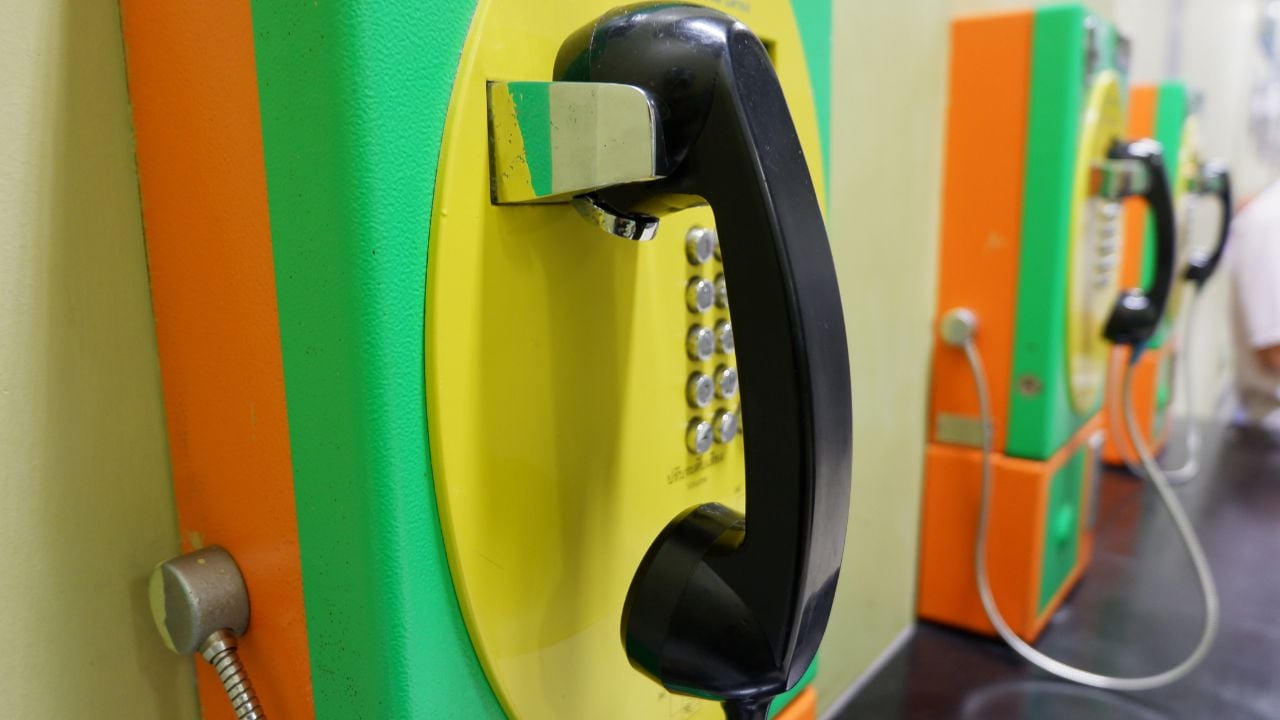
2. Hunting Down a Pay Phone
An Ohio kid at the mall in 1985 carried nothing but pocket change to get home on, not a phone.
Getting home meant hunting down a bank of pay phones, dropping a dime or a quarter into the slot, and hoping a parent picked up on the first ring.
Ohio’s teenagers today just check the phone already in their pocket instead.
Nobody sent a text.
Sharing a location on a map wasn’t an option either.
It was just a phone booth, a coin slot, and a plan made hours before anyone left the house.
3. Picking Out Blank Tapes at Camelot Music
Camelot Music grew out of a Massillon, Ohio, record shop a local businessman opened in 1956, years before the chain took the Camelot Music name.
By the 1980s, its mall stores stocked the blank cassettes and cassette singles a kid needed to build a mixtape.
An Ohio kid picking through that rack chose between a 60-minute tape and a 90-minute tape, weighing exactly how many songs needed to fit.
Ohio’s teenagers today build a playlist in seconds with a few taps, no rack, no decision at all.
That blank tape still had to be filled at home, finger on the record button, hoping the deejay didn’t talk over the intro.
There was no do-over.
Miss the moment, and the tape rolled on without it.
4. Getting Their Ears Pierced
A kid at an Ohio mall in the 1980s got their ears pierced on a whim, no appointment, just a walk into Claire’s.
Booking days ahead is what Ohio’s teenagers today usually do instead.
Claire’s began offering in-store ear piercing in 1978, no appointment required, and it turned into a rite of passage a friend could witness on the spot.
A staffer marked two dots with a pen, lined up a spring-loaded gun, then asked one question: Were you ready?
It only took two clicks.
Many kids said yes before they meant it, then walked out with a new pair of studs to show off before the ride home.
5. Buying Parachute Pants
Chess King was where an Ohio kid chasing a trend went in the 1980s, no apps required.
The chain built its whole business on flashy, trend-chasing menswear, and it had grown past 500 stores by 1984, parachute pants and all.
A pair with more zippers than pockets was the whole point.
The risk paid off, mostly.
Buy the wrong pair, and classmates noticed Monday morning.
6. Ordering From Five Counters
Ordering dinner for an Ohio kid at the mall in the 1980s meant hitting five different counters at once, not one app with a single driver.
The food court itself was still a new idea then, and developer James Rouse opened one of the country’s first successful ones inside New Jersey’s Paramus Park mall in 1974, built around shared tables and no wait staff at all.
One friend grabbed an Orange Julius.
Another waited on a Hot Dog on a Stick.
Nobody needed a server.
Everybody met back at the same table, trays balanced, five separate orders arriving on five separate timelines.
Psst! How much do you know about shopping mall history? Take our quiz and see how many you can get right.
Quiz
80s Shopping Mall IQ
Answer these questions on shopping mall history and 80s retail crazes. We bet you can’t get them all right. Prove us wrong?
In the winter of 1983, shoppers hit, shoved, and even swung baseball bats over which doll?
7. Flipping Through Blacklight Posters
Spencer Gifts opened its first mall storefront at New Jersey's Cherry Hill Mall in 1963, and by the '80s its shelves were packed with blacklight posters, lava lamps, and gag gifts that looked different depending on which light hit them.
An Ohio kid could spend twenty minutes flipping through the poster racks and leave with nothing but sore eyes from all the neon.
Ohio's teenagers today scroll past the same kind of novelty items in a five-second video instead.
A ten-dollar bill never made it out of that store in one piece.
Worth every minute anyway.
8. Lining up for a Paperback
Waldenbooks, which opened its first permanent mall store in 1962 and eventually grew past 1,300 stores nationwide, was often the only bookstore for miles, stocked with paperbacks and teen magazines like Tiger Beat.
Getting a new book at an Ohio mall in the 1980s meant waiting in an actual line for it, no download button anywhere in sight.
The line moved slowly.
Grab the wrong book, and there was no easy return.
You read it anyway, cover to cover because that paperback ate a whole week of allowance.
9. Losing an Entire Saturday
Ohio's teenagers today send a check-in text if they're running twenty minutes late.
An Ohio kid dropped off at the mall in the 1980s might not resurface for hours.
North Randall's Randall Park Mall opened in 1976 with more than 200 stores under one roof and, for a short while, the title "World's Largest Shopping Center."
Parents dropped kids off at noon with a pickup time and nothing else.
Nobody checked in.
You showed up at the food court at four, or you didn't.
How Big Was Randall Park Mall?
Randall Park Mall packed more than 200 stores and five full department stores, Sears, JCPenney, the May Company, Higbee's, and Horne's, into more than 2 million square feet when it opened in North Randall.
That's roughly 35 football fields under a single roof, all of it walkable without ever stepping outside.
10. Paying Cash at the Movies
An Ohio kid at Randall Park Mall in the 1980s walked up to the theater window and paid cash for a ticket, no app, no seat picked from a screen.
Randall Park Mall built its own three-screen theater right into the building, one of many Ohio malls that ran a movie theater as just another storefront.
No seat map existed.
No reserved row waited for you.
You showed up early, stood in an actual line, and hoped the good seats weren't already gone.
11. Bringing Home a Cartridge
Babbage's, a mall-based video game store that opened its first location inside a Dallas shopping center in 1983 and grew past 160 stores within six years, sold physical cartridges for the Atari 2600 and the Nintendo Entertainment System.
An Ohio kid in the 1980s carried that cartridge home in a plastic bag.
Ohio's teenagers today download a new game in minutes instead.
It just worked, eventually.
No update waited for you to sit through first.
You blew into the cartridge if it didn't work on the first try, and somehow, that usually fixed it.
9 Things You Never Knew Were Invented in Ohio
Two engineers at Dayton's McCook Field built a parachute a falling man could open by hand.
Somebody had to test it.
A pilot jumped out of a plane over the field in 1919 and broke his ankle pulling the cord.
He started a parachute company anyway.
9 Things You Never Knew Were Invented in Ohio
11 Things Ohioans Are Told About Their State That Aren't True

A kid in a Dayton classroom repeats the same wrong fact about Ohio that the whole class has heard for years, and nobody corrects it.
Those are the kind that outlive the person who first said them, checked against a $28 billion factory and a presidential head count.
11 Things Ohioans Are Told About Their State That Aren't True
