
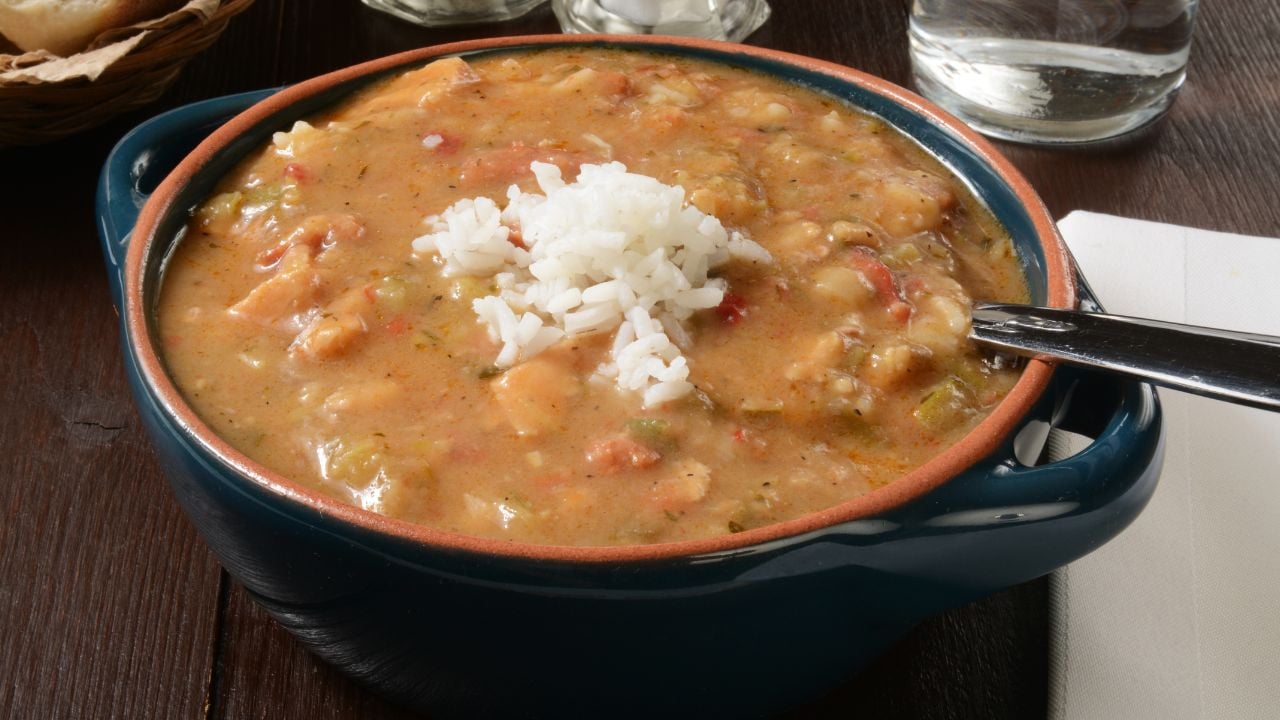
11 Things Many Louisiana Kitchens Have That Out-of-Staters Have Never Heard Of

Most spoons stir. But if you’re from Louisiana, one spoon in your kitchen was made just for roux.
Your pantry has its own cast of characters, too, and out-of-staters would need every one explained.
Here are the things many Louisiana kitchens have that out-of-staters have never heard of.
1. Creole Cream Cheese
Creole cream cheese is a spoonable cheese in the ricotta and mascarpone family, not a solid spread like the Philadelphia cream cheese you know.
If you grew up outside Louisiana, you may never have tasted it.
Cooks typically make it with milk and buttermilk, heated with rennet.
Once curdled, the mixture ferments for up to two days before the curds are drained.
Creoles historically ate it for breakfast with sugar and fruit.
By 1999, the cheese was virtually extinct.
Then radio host Poppy Tooker nominated it for Slow Food’s Ark of Taste, an international catalog of endangered heritage foods.
In 1999, third-generation dairy farmer Henry Mauthe attended one of her demonstrations at the Crescent City Farmers Market.
He spent a year perfecting the cheese he remembered from childhood.
When Mauthe’s Dairy Creole Cream Cheese debuted, 600 units sold out in two hours.
2. Filé Powder
Filé powder is made from finely ground sassafras leaves.
The Choctaw ground the leaves into a powder and added it to soups as a thickener and flavoring.
Louisiana Creoles have kept the tradition going by adding filé to their gumbos.
You stir in a hefty pinch after the dish has cooked, and the broth turns thick with an aromatic finish.
Many New Orleans chefs and home cooks avoid boiling gumbo once the powder is in.
A 1901 New Orleans cookbook says the powder makes the stew stringy if you warm it too long.
Filé Versus Okra in Gumbo
Kitchen tradition names a gumbo for its thickener, with gumbo févi for okra and gumbo filé for ground sassafras.
Tradition holds that you keep okra and filé out of the same pot.
In winter, when okra wasn’t in season, you could thicken gumbo with filé.
3. Steen’s Cane Syrup
Steen’s cane syrup has been made in Abbeville since 1910.
Cajun chef Melissa Martin says the yellow Steen’s can is what you’ll find in many Cajun pantries, including her mother’s.
The story began when an early freeze hit founder Charley Steen’s cane crop.
He fashioned a small mill and turned the frozen crop into a few barrels of syrup.
By 1930, the Steen family had built a larger mill in the heart of Abbeville, on the banks of Bayou Vermilion.
By the 1950s, the company says, the syrup was a household word in South Louisiana.
A spoonful gives you a syrup that is thick, with a slightly bitter edge.
Jimmie and Carole Steen, a brother and sister team, now lead the mill as the fourth generation of the family.
4. Roux Spoons
Michael Bonin, a retired Iberia Middle School principal, makes roux spoons from cherry wood.
A roux spoon has a slanted end made for stirring and scraping the sides of the pot while you cook.
He makes about 35 varieties of wooden spoons, including roux spoons.
The slant lets either hand use the same spoon.
Roux means tedious, constant stirring, and the slanted end makes that a bit easier for you.
He sells his roux spoons at wholesale and retail shops around the state and at craft shows.
Families will likely gather in the kitchen while using his spoons.
Buc-ee’s was among the places that sold his spoons as of 2021.
Each spoon takes only about four to six minutes to make, before drying.
5. Blue Plate Mayonnaise
Blue Plate mayonnaise was born in New Orleans in 1927.
It was first made in a little warehouse in Gretna, across the Mississippi River from New Orleans.
The brand took its inspiration from the blue Willow Ware plate, the company says.
In 1941, Blue Plate expanded into a Mid-City factory that is now on the National Register of Historic Places.
Open a jar, and you’ll find a simple recipe of oil, vinegar, and only the egg yolks.
If you’ve eaten a po-boy, you may have tasted Blue Plate, known as the go-to mayo for the sandwich.
Reily Foods Company, based in New Orleans, owns the brand now and says it still makes some products in the state.
6. Camellia Red Beans
Camellia Brand red beans date to 1923, when founder L.H. Hayward started selling red beans at the Old French Market in New Orleans.
His son Gordon later trademarked the Camellia name, after his mother’s favorite southern flower.
Around 1940, the company says, Gordon came up with packing beans in individual cellophane bags.
In an anniversary blog post, Camellia said it packages 19 varieties of beans, peas, and lentils, so your pantry can hold more than red beans.
As of 2024, the company processes and packages its dried beans at a facility in Elmwood.
Martin says her mother swears by Camellia beans for freshness, and that beans that wrinkle and soften quickly in the pot are fresh.
Psst! How much do you know about Louisiana food? Take our quiz and see if you can ace it.
Quiz
Louisiana Food IQ
Think you know what’s in a Louisiana kitchen? We bet you can’t get them all right. Prove us wrong?
In which Louisiana town did the Walker family create the Slap Ya Mama seasoning in 2001?
7. Black Pots
A black pot is a seasoned cast iron skillet or Dutch oven for cooking gumbos, stews, and jambalayas.
If you only know the word skillet, the name black pot may be new to you.
One popular story begins in 1755, when the British military started expelling French-speaking Acadians from Canada.
In that story, the family black pot was the one thing they were sure to take.
Some people describe receiving a black pot as a rite of passage.
On camping and hunting trips, a black pot is regarded as the portable hearth, a focal point where friends gather.
In 2009, the South Louisiana Black Pot Festival & Cookoff in Lafayette honored that role with a weekend of Cajun music and a cook-off.
8. Community Coffee
Community Coffee began in 1919, when Henry Norman Saurage served complimentary cups of his blend in his Baton Rouge grocery store.
If you have ever sipped a cup of Community, you have tasted a blend that began as free samples in a grocery store.
If you wonder about the name, he chose Community for the friends and customers who gathered over his coffee.
By 1924, he had eased out of the grocery business to devote himself to coffee.
He even converted the horse barn in his backyard into a coffee-grinding mill.
The Advocate reported in 2024 that the company roasts and packs its coffee at a Baton Rouge facility, though the beans come from international locations.
The company says five generations of the Saurage family have stewarded it.
9. River Road Recipes
River Road Recipes is a cookbook series from the Junior League of Baton Rouge, first published in 1959.
The 1959 original has sold 1.3 million copies, according to a 2024 report.
The series now runs four volumes, with the latest published in 2004.
Its pages give you recipes like Spinach Madeleine, gumbos, étouffées, and Potato Chip Cookies.
The book has been a wedding gift for generations of newlyweds.
The Junior League's cookbook committee chair says people still want a copy on their counter.
If you open a well-loved copy, it is common to find notes stuffed inside and rubber bands holding the pages together.
10. Louisiana Hot Sauce
Bruce Foods, the company that made Original Louisiana Hot Sauce, was founded in 1928 in New Iberia.
Si Brown, who was president of Bruce Foods in 2011, says he and his two brothers borrowed money from a local bank to buy the company.
At the time, it had eight employees and four products, all sold only in Louisiana.
Those products were hot sauce, peppers in vinegar, ground red pepper, and gumbo filé.
The first orders from outside Louisiana were small, between 10 and 25 cases, before they grew to full truckloads.
Southeastern Mills of Rome, Georgia, bought the Original Louisiana Brand Hot Sauce from Bruce Foods in April 2015.
The deal included the manufacturing and warehouse facilities in New Iberia.
You probably have a favorite hot sauce, and Martin's family's is Louisiana Hot Sauce, produced in New Iberia.
If you keep a bottle of the Original brand in your pantry, you are using a sauce whose brand was built by a New Iberia company.
11. Tony Chachere's Creole Seasoning
Tony Chachere's Creole seasoning began as a retirement hobby for an Opelousas pharmacist and insurance salesman.
Chachere opened Tony Chachere's Creole Foods in 1972 on North Lombard Street in Opelousas.
If you shake Tony Chachere's seasoning over your dinner, you are using a product from a business that began as a retirement hobby.
That same year, he released his Cajun Country Cookbook, a bestseller.
The Advocate reported in 2024 that the blend you buy is created, packaged, and shipped from the company's facility in Opelousas.
8 Louisiana Gas Station Kitchens Worth Driving Past a Restaurant For
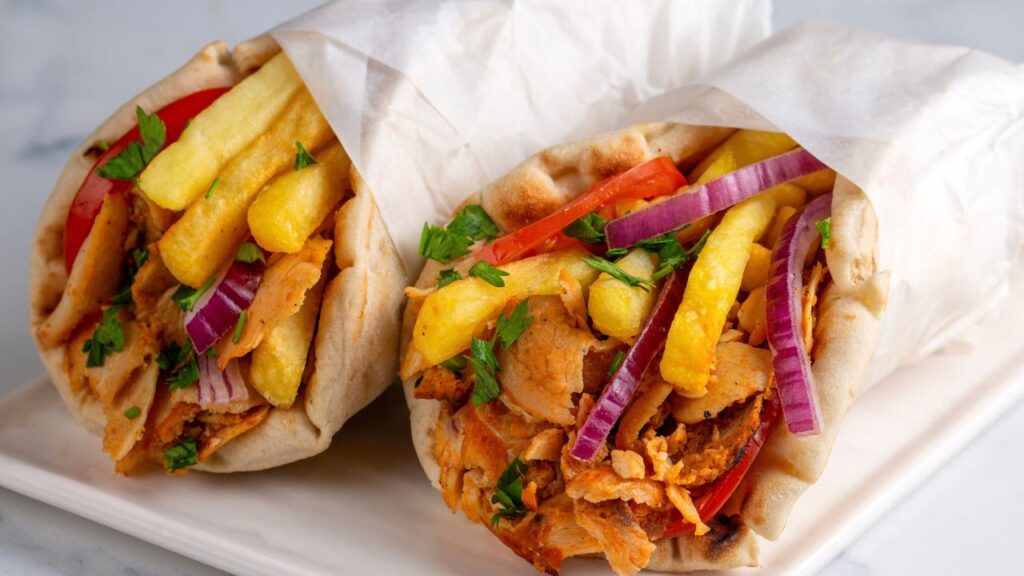
A gas station off a Louisiana backroad can smell like hickory smoke and boiled crawfish before you even reach the pump.
The diesel is almost beside the point.
8 Louisiana Gas Station Kitchens Worth Driving Past a Restaurant For
7 Roof Claim Steps Louisianans Innocently Overlook That Leave Them Underpaid

A roof claim can feel like a maze.
These steps help you keep the check closer to what you're owed.
7 Roof Claim Steps Louisianans Innocently Overlook That Leave Them Underpaid
