
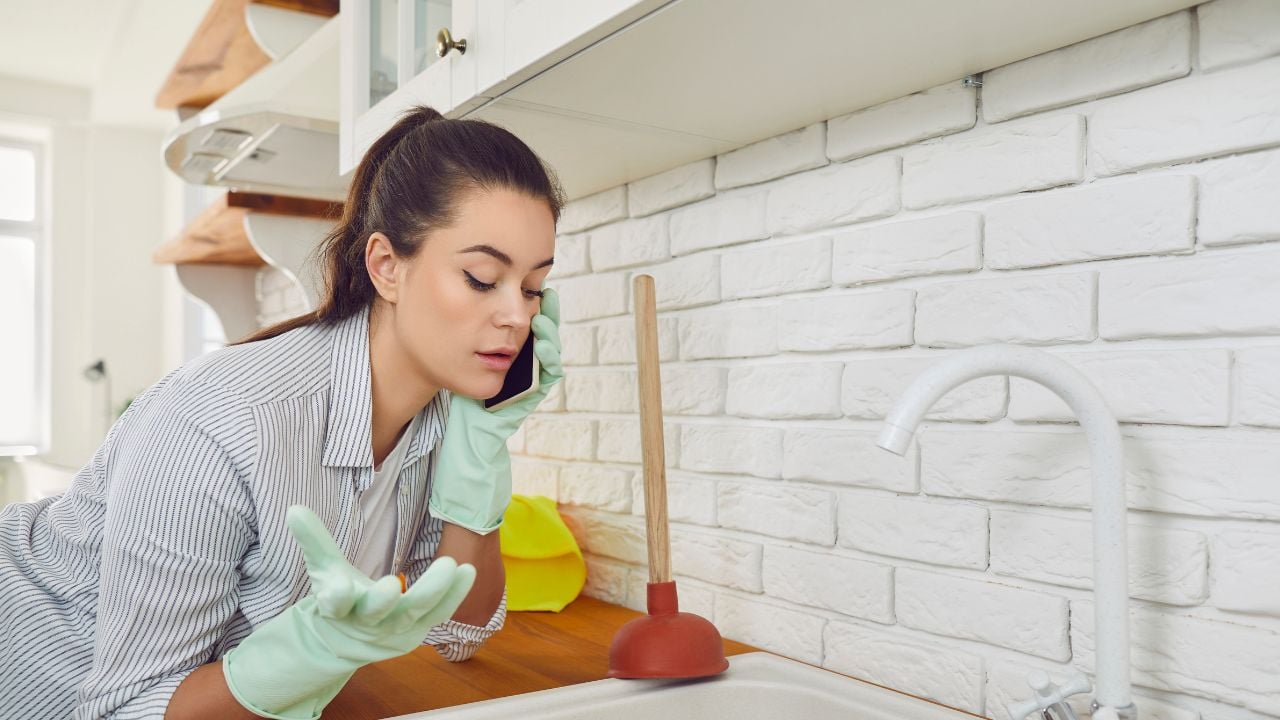
11 Things North Carolina Plumbers Wish Homeowners Would Stop Putting Down the Drain

A Wake County plumber feeds a drain snake fifteen feet into a clogged kitchen line, then pulls back a wad of shredded wipes marked flushable.
Nothing about that surprises a North Carolina plumber.
These are the things North Carolina plumbers wish homeowners would stop putting down the drain.
1. Coffee Grounds
Coffee grounds poured down the drain never dissolve, not even in scalding water.
They settle into the low bend of a kitchen pipe, then bind with grease and soap scum until the mix hardens into a slow, creeping clog.
Hot water doesn’t help.
For the roughly half of North Carolina homes running on a septic tank, grounds that make it past the sink drain settle at the tank’s inlet.
The grounds never fully break down once they’re there.
The buildup crowds out the space solids need to separate from wastewater.
2. Eggshells
Plumbers hear the same defense every time an eggshell goes down a garbage disposal: It’s supposed to sharpen the blades.
That’s not true.
A garbage disposal grinds food against a spinning plate, not a set of blades, and an eggshell passes through it without much resistance.
The shell isn’t the danger.
Its grit and thin membrane don’t fully break down, and Consumer Reports has found they can build up inside a drain over time, especially with older pipes.
That slow buildup is what turns a cheap habit into a service call, not a jammed motor.
3. Dental Floss and Cotton Swabs
Charlotte Water’s advisory on plumbing puts dental floss and cotton swabs in the same category as grease and wipes: Items that never belong in a toilet.
Floss doesn’t break down.
It stays a thin, strong thread that wraps around a pump’s moving parts or knots together with hair until it forms a solid mass.
Cotton swabs cause a similar jam, since the plastic or cardboard stick doesn’t break down the way toilet paper does.
4. Paper Towels and Napkins
Plumbers on service calls will tell a homeowner the same thing: Only toilet paper belongs in a toilet.
Charlotte Water’s FlowFree program names paper towels by name on its do-not-flush list, right alongside wipes and dental floss.
Toilet paper is built to fall apart in water.
Paper towels aren’t.
A wet paper towel or napkin holds its shape well past the toilet and into the pipe running under the yard.
Stack a few of those flushes together.
A line that used to run clear starts backing up.
5. “Flushable” Wipes
Plumbers field a steady run of calls tied to one product category: Wipes sold as flushable.
The city’s FlowFree program lists baby wipes and wipes labeled flushable right alongside grease as top offenders behind sewage backups.
They don’t break down.
A wipe can clear the bowl on the first flush and still travel intact for miles, snagging on a pipe joint, a tree root, or a pump station downstream.
What “Flushable” Means on a North Carolina Wipe Label
A wipe sold in North Carolina earns the flushable label by clearing a basic industry test, not by surviving a working sewer line.
Consumer testing has found that many wipes marketed as flushable still contain plastic-based fibers such as polyester.
Those fibers hold their shape the way a plant-fiber sheet of toilet paper never does.
Passing that test only proves a wipe held together for a few seconds.
It says nothing about the miles of pipe waiting on the other side.
6. Bacon Grease and Cooking Oil
North Carolina’s Charlotte Water responds to more than 200 spills a year tied to grease from home drains clogging sewer pipes.
The city compares the buildup to cholesterol narrowing an artery.
Grease pours as a liquid.
It hardens as a solid once it cools inside a pipe, then narrows the line from the inside out.
Raleigh and Durham both run free grease-collection programs for residents for the same reason.
Pouring fats, oils, and grease down a drain is a leading cause of sewer overflows in both systems.
Pour it into a can instead, let it harden, and toss it in the trash.
7. Chemical Drain Cleaners
Plumbers dread the chemical drain cleaner as much as the clog it was supposed to fix.
These cleaners work through a strong chemical reaction.
That same reaction eats at the inside of a pipe with every repeat use.
Metal pipes corrode.
Plastic pipes can warp or lose rigidity instead.
A plumber who opens a line full of leftover cleaner ends up working around a caustic chemical, not just a clog.
A simple clog can turn into a section of pipe that has to be replaced.
The same holds inside the many homes that run on a septic tank instead of a city sewer line.
That chemical wash reaches a colony of bacteria the tank can’t do without.
8. Clumping Cat Litter
Plumbers in the Triangle and beyond see clumping cat litter cause damage that surprises many cat owners.
Clumping litter is built to swell on contact with moisture.
That’s the whole point in a litter box.
Not once it’s flushed.
A flushed clump swells the same way inside a pipe, hardening into a cement-like mass that lodges in a bend long before it reaches the street.
The stakes run higher for the roughly half of North Carolina households on a septic tank instead of a city sewer line.
Litter that settles in the tank disrupts the bacteria a septic system needs to break waste down.
Scoop it, bag it, and put it in the trash.
9. Bleach and Harsh Cleaners
Plumbers who service septic systems push back hardest on one habit: Pouring bleach or a harsh disinfectant down the drain by the cupful.
Septic tanks run on bacteria.
NC State Extension guidance warns that pesticides, paint thinners, and other household chemicals can kill the bacteria a septic tank relies on to break down sewage.
Once that bacteria dies off, solids stop breaking down the way they’re supposed to.
The tank fills faster than a normal pumping schedule accounts for.
10. Leftover Paint
Leftover paint turns a rinsed-out tray in the utility sink into a routine after nearly every home project.
That rinse-out habit is one of the easiest habits to break.
The City of Raleigh’s stormwater program is blunt about it: never dump paint down a drain, since old paint can carry lead that harms streams and creeks.
Latex paint sets like glue.
It hardens inside a pipe the same way it hardens on a brush left out overnight.
Raleigh’s advice for leftover paint is simpler than it sounds: Stir in a little cat litter or sand.
Let the can dry out all the way, then set it in the regular trash.
Psst! How much do you know about the pipes running under your North Carolina home? Take our quiz and see how many you can get right.
Quiz
Pipes and Porcelain IQ
Test yourself on toilet history, old pipes, and North Carolina’s water supply. We bet you can’t get them all right. Prove us wrong?
In 1596, an English writer described what is considered the first modern flush toilet design. Who was he?
11. Unused Medications
What happens to an unused medication that's flushed down the drain instead of thrown out?
The old advice said to flush leftover pills so nobody finds them in the trash.
That advice is outdated.
Wastewater treatment plants aren't built to remove every medication from the water before the plant releases it.
Flushed pills can end up back in a river or a water supply downstream instead.
North Carolina's Operation Medicine Drop program has collected more than 448 million pills at take-back sites across the state instead, no plumbing involved.
A pharmacy counter or a sheriff's office drop box usually sits closer than many people expect.
Either one clears out a medicine cabinet faster than digging through old bottles ever does.
8 Harris Teeter VIC Card Mistakes That Cost North Carolinians Every Week
A hundred Harris Teeter Fuel Points knocks ten cents off a gallon at the pump. Losing track of them costs North Carolina shoppers more than they realize.
A few careless taps at checkout can wipe out the points sitting in a shopper's Value Incentive Card (VIC) account before they ever redeem them.
8 Harris Teeter VIC Card Mistakes That Cost North Carolinians Every Week
8 Things North Carolinians Are Tired of Hearing From Virginians

North Carolina has more than two million more residents than Virginia, yet that never stops a Virginian from lecturing a Tar Heel the moment they spot an opening.
From a Richmond reception to a Charlottesville tailgate lot, the same lines keep coming up. North Carolinians are ready for every one of them.
8 Things North Carolinians Are Tired of Hearing From Virginians
