
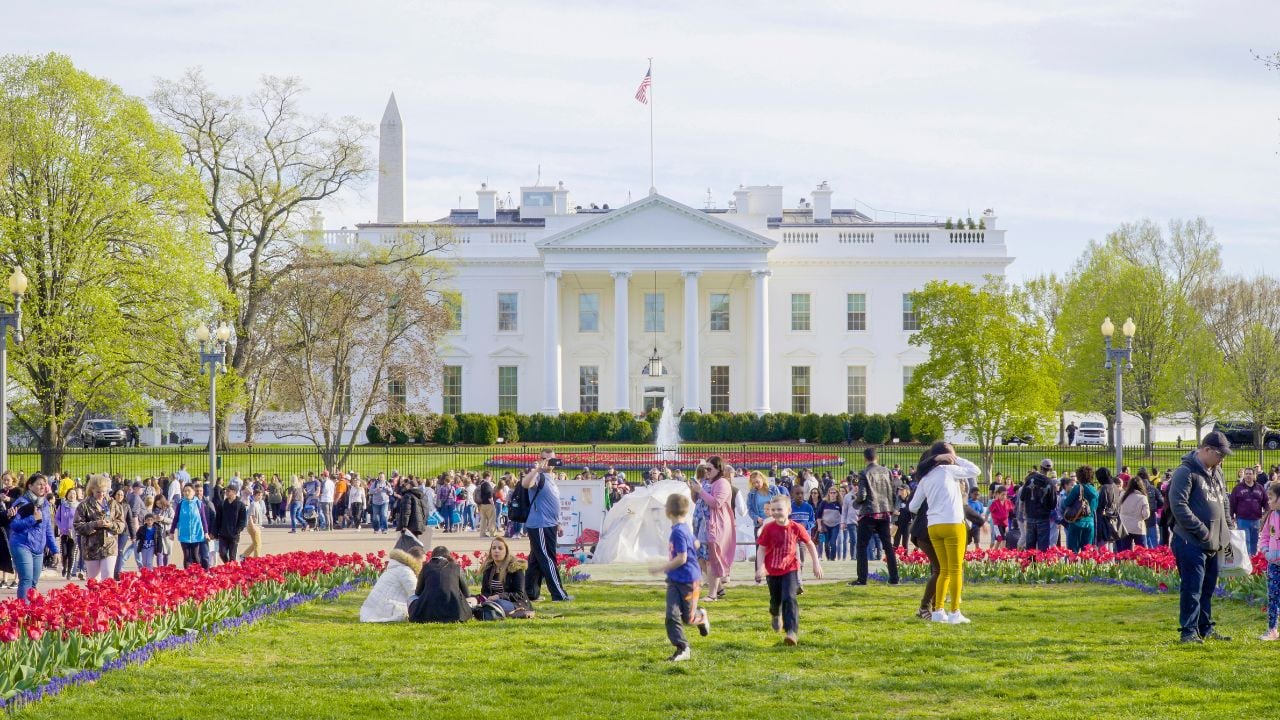
11 White House Traditions That Go Back Over 100 Years. Can You Name Them All, Floridians?

The White House is the second-oldest residence used continuously by a head of state in the world. The rituals that go on inside it have built up over centuries.
Here are 11 White House traditions still practiced today that started before 1926.
The White House Easter Egg Roll
The Easter Egg Roll has been a White House tradition since 1878, making it 148 years old in 2026.
The event began when President Rutherford B. Hayes opened the South Lawn to children who’d been turned away from rolling Easter eggs at the U.S. Capitol grounds.
Congress had restricted the use of Capitol Hill in 1876 over concerns about damage to the landscape.
When kids showed up at the White House gates the following Easter Monday in 1878, Hayes told his guards to let them in.
Every president since has hosted the event with only a few exceptions.
World War I canceled the egg roll from 1917 to 1920. World War II shut it down from 1943 to 1945. President Truman’s renovation of the White House kept the South Lawn closed from 1948 to 1952.
Eisenhower revived the tradition in 1953, and it’s been running ever since.
The Marine Band as “The President’s Own”
The United States Marine Band has been performing at the White House since New Year’s Day, 1801.
President John Adams invited the band to play at the first official White House public reception on January 1, 1801, just months after the building was completed.
Later that same year, Thomas Jefferson gave the band the nickname “The President’s Own,” a designation that stuck and is still used today.
The Marine Band has played at every presidential inauguration since 1801.
Some of the most famous moments in American music history involved this band.
John Philip Sousa led the Marine Band from 1880 to 1892 and brought it to international fame. The band played at Lincoln’s funeral in 1865, at Grover Cleveland’s White House wedding in 1886, and at JFK’s funeral in 1963.
The Marine Band performs at over 500 events annually and remains the oldest professional musical organization in the United States.
The Inaugural Parade
The inaugural parade dates back to Thomas Jefferson’s second inauguration in 1805.
After Jefferson took the oath of office at the Capitol that year, workers from the Washington Navy Yard spontaneously joined him as he walked back to the White House, accompanied by the Marine Band.
The crowd that joined them along the way became the first inaugural parade.
Every president since has held some version of the parade, though the format has evolved significantly.
Grover Cleveland’s 1885 parade lasted three hours and featured 25,000 marchers. Eisenhower’s 1953 parade included 22,000 service members, 50 floats, 350 horses, 3 elephants, and an Alaskan dog team.
In 1977, Jimmy Carter became the first president to walk part of the parade route on foot, setting a new modern tradition.
The Inaugural Ball
The inaugural ball goes back to James Madison’s first inauguration in 1809.
The Marine Band played as President Madison and First Lady Dolley Madison entered Long’s Hotel for what became the first inaugural ball in American history.
The tradition has continued for every president since, though the number, location, and scale have changed enormously over the years.
By 1985, official inaugural balls had grown to nine simultaneous events held across Washington, D.C. on inauguration night.
The Madisons dancing at Long’s Hotel in 1809 set the model that’s been followed for 217 years.
The Resolute Desk
The Resolute Desk has been used by nearly every president since 1880.
The desk was built from the oak timbers of the British Royal Navy ship HMS Resolute and given as a gift to President Rutherford B. Hayes by Queen Victoria in 1880.
The story behind the desk is wild.
The HMS Resolute was abandoned by her British crew in 1854 during an Arctic expedition, then found by an American whaling ship two years later. The U.S. government bought the ship from the whalers, repaired her, and sailed her back to England as a gift of goodwill.
When the ship was finally broken up in 1879, Queen Victoria had three desks made from her timbers.
One went to the British Royal Navy. One went to the widow of the U.S. ship’s captain. The third (and largest) was sent to the White House.
Every president since Hayes has used the Resolute Desk except Lyndon Johnson, Richard Nixon, and Gerald Ford (who used different desks during their terms from 1964 to 1977).
In 1945, the desk was modified to add a panel carved with the Presidential Coat of Arms (originally to hide FDR’s wheelchair, though he died before using the modified desk).
The Independence Day Celebration
The White House has celebrated Independence Day every year since Thomas Jefferson opened the doors to the public on July 4, 1801.
Jefferson welcomed diplomats, civil and military officers, and even Cherokee chiefs to celebrate the country’s birthday at the executive mansion.
The Marine Band played for the occasion in 1806, performing a song called “The Anacreontic Song,” the same melody that Francis Scott Key would later use for “The Star-Spangled Banner” in 1814.
Every president since Jefferson has marked July 4 at the White House in some form.
The modern South Lawn celebration with fireworks, military bands, and views of the National Mall fireworks show goes back over a century.
The 225th Independence Day celebration in 2025 followed the same basic structure Jefferson established in 1801.
The Oath of Office on a Bible
Every American president since George Washington in 1789 has taken the oath of office while placing a hand on a Bible.
Washington started the tradition at Federal Hall in New York City on April 30, 1789, using a Bible borrowed from St. John’s Masonic Lodge No. 1 in New York.
The Constitution doesn’t require a Bible. The oath itself is the only constitutional requirement. The Bible is purely traditional.
Most presidents have used family Bibles.
Lincoln used a Bible later used by Barack Obama at his 2009 inauguration. FDR took the oath on a Dutch Bible from 1686 that had been in the Roosevelt family for centuries.
The tradition has held for 235+ years and 60 inaugurations.
“Hail to the Chief” as the Presidential Tune
“Hail to the Chief” has been associated with the American president since 1828 and became the official presidential tune by tradition during Martin Van Buren’s administration starting in 1837.
The song itself is older. It was originally composed in 1812 by James Sanderson based on Sir Walter Scott’s poem “The Lady of the Lake.”
The Marine Band first performed the song in connection with the president in 1828, when President Andrew Jackson was honored with the tune at a Chesapeake and Ohio Canal ceremony.
First Ladies Julia Tyler and Sarah Childress Polk are largely credited with making “Hail to the Chief” a routine part of presidential entrances during the 1840s.
The Department of Defense officially designated the song as the musical tribute to the president in 1954, but the tradition itself is nearly 200 years old.
Every modern American knows the tune. It’s been part of the presidency longer than the Civil War, the airplane, the automobile, or electricity in the White House.
The Inaugural Address
The inaugural address has been a tradition since George Washington delivered the first one on April 30, 1789, at Federal Hall in New York City.
Washington’s first address ran 1,425 words. His second, in 1793, ran just 135 words and remains the shortest in American history.
William Henry Harrison delivered the longest inaugural address ever in 1841, clocking in at 8,445 words and lasting nearly two hours in cold March weather.
He developed pneumonia and died 31 days later, becoming the first president to die in office.
Every president since 1789 has delivered some form of inaugural address, with the speeches becoming a defining moment of the new administration’s vision.
The address is not constitutionally required. It’s pure tradition, started by Washington and followed by every successor for 237 years.
Thanksgiving as a National Tradition
Thanksgiving has been a federally proclaimed holiday since President Abraham Lincoln issued the official proclamation in October 1863.
Lincoln declared the last Thursday in November as Thanksgiving Day, responding to a 36-year campaign by writer Sarah Josepha Hale, who’d been petitioning presidents for the holiday since 1827.
The first Thanksgiving proclamation actually came from George Washington in 1789, who designated November 26 of that year as a day of public thanksgiving.
Washington’s proclamation was a one-time event, though, not a recurring annual holiday.
Lincoln made it permanent in 1863.
Franklin D. Roosevelt signed legislation in 1941 officially designating the fourth Thursday in November as the federal Thanksgiving Day holiday, locking in the modern date.
Presidential turkey gifts started in the 1870s, when Rhode Island poultry dealer Horace Vose began sending turkeys to the White House every year.
He continued the tradition until his death in 1913, making the presidential Thanksgiving turkey itself a tradition that’s been going on for over 150 years.
The State of the Union Address
The State of the Union Address has been a White House tradition since George Washington delivered the first one to Congress on January 8, 1790.
The Constitution requires the president to “from time to time give to Congress information on the State of the Union” — Article II, Section 3.
Washington and John Adams both delivered the address in person to Congress.
Thomas Jefferson stopped the in-person delivery in 1801, sending written reports instead, partly because he disliked public speaking and partly because he thought the in-person delivery resembled a British monarch’s speech to Parliament.
For 112 years, presidents sent the State of the Union as a written report.
Woodrow Wilson revived in-person delivery in 1913, returning to the original Washington model.
Every modern president has delivered the State of the Union in person at a joint session of Congress, broadcast live on national television since the Truman administration.
The tradition itself goes back to 1790, making it 236 years old in 2026.
How These Traditions Stay Alive
The presidency sometimes runs more on tradition than law.
The Constitution lays out the basic requirements. But the daily life of the office has been built up over centuries by presidents and first families.
Each new administration adds its own touches, but each one keeps the core traditions going.
10 Things U.S. Presidents Have to Pay for on Their Own That Americans Are Clueless About
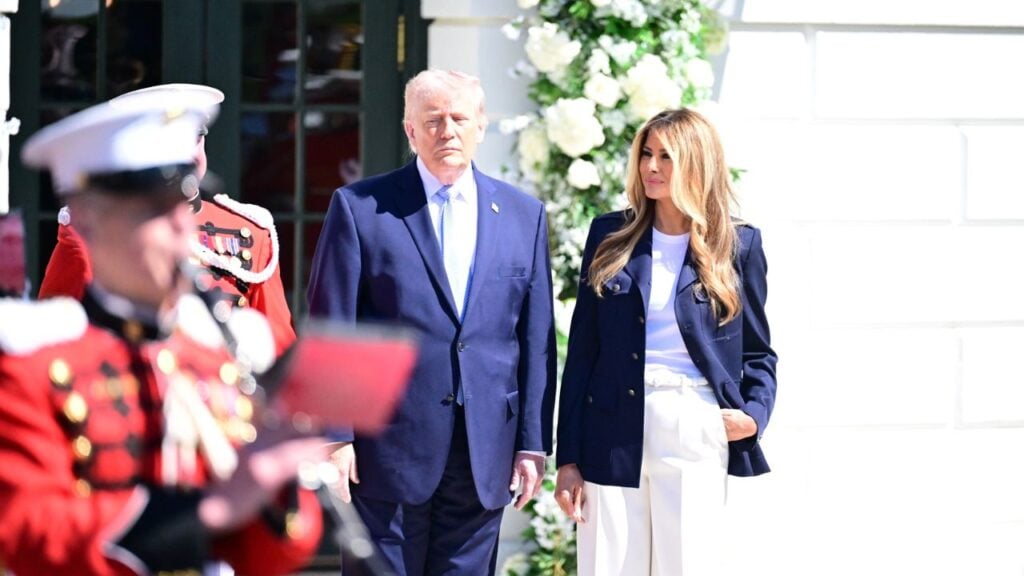
Living at 1600 Pennsylvania Avenue has obvious perks.
But the president of the United States still receives a monthly bill from the White House usher’s office, and what’s on that bill catches many Americans off guard.
10 Things U.S. Presidents Have to Pay for on Their Own That Americans Are Clueless About
12 Things Secret Service Agents Do That Aren’t What You Think
The real job of a Secret Service agent is way more complicated than the movies let on, and a lot of what agents actually do has nothing to do with jumping in front of bullets.
12 Things Secret Service Agents Do That Aren’t What You Think
