
12 Disappearing Things Pennsylvanians Won’t Get to Enjoy Much Longer

The things you grew up with usually don’t vanish overnight.
They just get a little harder to find each year.
Pennsylvanians may have noticed it in the woods, on back roads and even in their own towns.
Here’s what’s getting scarcer, and what the latest counts show.
Note: This is general information, not medical advice. Hospital services are subject to change.
1. Drive-In Theaters
Pennsylvania had 180 drive-in theaters by the 1950s, according to Keystone Edge.
Only 27 were left by 2020.
That’s about 15 percent of the 1950s total.
That count is from 2020, so today’s number may differ.
If you want to watch a movie from your car, check a drive-in’s schedule before you head out.
2. Ruffed Grouse
Have you ever startled a ruffed grouse on a woodland trail?
Hunters flush fewer birds per hour, the Game Commission reports, so your odds of startling a grouse on a trail have likely slipped too.
Grouse abundance hit record lows in the 2014-2016 license years.
Summer observations hit a record low in 2017.
The sharper drops began in the early 2000s.
There are no newer abundance figures, so today’s numbers may differ.
West Nile virus mortality also heavily affects grouse populations.
3. Dairy Farms
Dairy farms in Pennsylvania ended 2025 at 4,360, according to U.S. Department of Agriculture data reported by Farmshine.
That’s 320 fewer than a year earlier, by USDA’s revised 2024 count.
If you’re comparing states, Pennsylvania’s drop was the largest of any state.
4. Hibernating Bats
Hibernating bats face white-nose syndrome, an exotic fungus that infects wing membranes and other exposed skin.
Mortality has been severe, the Game Commission says, with an overall decline of 99 percent across the six hibernating species.
That includes the little brown bat, which is listed as endangered and protected.
Indiana bats fell to as few as 25 known hibernating in the state as of late 2015.
If you spend summer evenings in your backyard, the smaller hibernating species are estimated to consume nearly a million insects per bat per year.
5. Allegheny Woodrats
If you hike among rock outcrops and boulder fields, you may be crossing Allegheny woodrat territory.
The Game Commission says about 70 percent of the species’ known populations in Pennsylvania are now extirpated.
That figure comes from a statewide survey completed in 2022.
Less food, habitat fragmentation and loss, and disease are the three drivers.
Raccoons carry a parasite called raccoon roundworm that’s deadly to woodrats.
The species is listed as threatened and protected.
What Extirpated Means for Woodrats
Woodrats are extirpated from a place when the species vanishes there but survives elsewhere.
According to Britannica, some scientists use extirpation for local extinctions and reserve extinction for global loss.
The woodrat’s range once ran from southwestern Connecticut west to Indiana.
It’s now gone from Connecticut and New York.
In Pennsylvania, woodrats have nearly disappeared from the southeastern portion of the state.
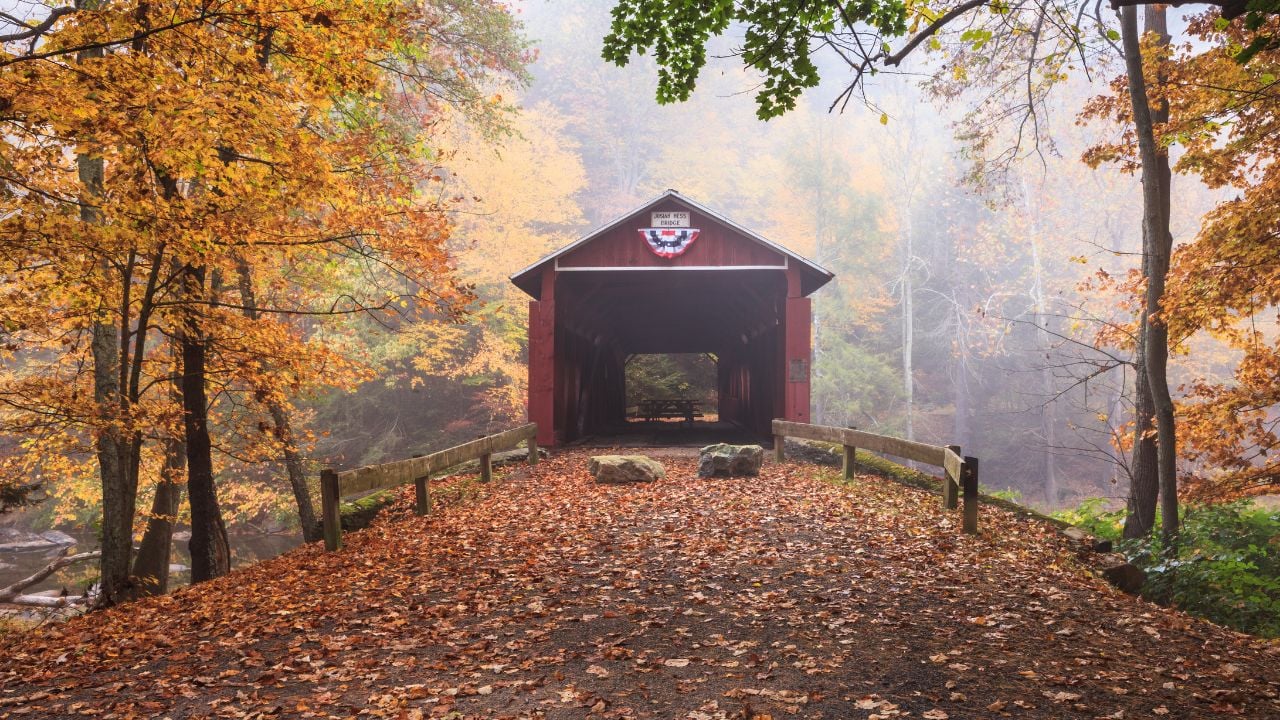
6. Covered Bridges
Covered bridges once numbered 1,526 in Pennsylvania, according to a 2010 Penn State University Libraries article.
Only 197 are left.
That’s about 13 percent of the original total.
That tally is old, so today’s number may differ.
If you spot a covered bridge on a back road, you’re looking at a survivor.
Hurricane Agnes washed Hunsecker’s Mill Bridge off its abutments in 1972.
The Pennsylvania Department of Transportation first planned to replace it with a concrete bridge, but people in the surrounding area wouldn’t hear of it.
7. Eastern Hemlocks
Eastern hemlocks face an insect called the hemlock woolly adelgid.
By the end of 2023, the Department of Conservation and Natural Resources had found it in all 67 counties.
That means any hemlock you pass in the state is in a county where the pest has been found.
The non-native insect has caused significant hemlock defoliation and mortality in Pennsylvania forests.
Infested trees show needle drop and branch dieback, and some die.
No acreage or percent is given for that loss, so you won’t find a figure there.
8. Volunteer Fire Companies
If you call 911 about a fire at your house, the engine that answers may come from a volunteer fire company.
More than 90 percent of the state’s roughly 2,400 fire companies were volunteer.
That comes from a 2018 report by a commission of Pennsylvania lawmakers, municipal officials and emergency service professionals, covered by Firehouse.
About 300,000 people volunteered as firefighters in Pennsylvania in the 1970s.
By 2018, that number was fewer than 38,000.
That’s a drop of roughly 87 percent.
Those figures are from 2018, so today’s numbers may differ.
Psst! How much do you know about Pennsylvania’s landmarks and state symbols? Take our quiz and see if you can ace it.
Quiz
Keystone State Trivia
Answer these questions on Pennsylvania’s landmarks and state symbols. We bet you can’t get them all right. Prove us wrong?
The first Liberty Bell, ordered from London’s Whitechapel Foundry in 1751, did what on its first test ring?
9. Wild Turkeys
Wild turkeys in Pennsylvania peaked at 280,000 in 2001, according to The Allegheny Front.
By 2021, the state had approximately 159,000 turkeys.
That's a 43 percent drop.
The Game Commission outfitted about 100 hens with global positioning system transmitters as part of its largest turkey research project.
If you spot a flock at the edge of a field on your drive, a 2021 estimate puts the statewide total about 121,000 birds below the 2001 peak.
10. Rural Maternity Units
Pennsylvania lost 42 percent of its rural maternity units, the hospital departments that deliver babies, between 2011 and 2024.
That figure comes from the Chartis Center for Rural Health.
The Center for Rural Pennsylvania reports that 23 of the state's 67 counties have no hospital offering labor and delivery services.
If you live in one of those counties, you'd travel an average of 27 miles to the nearest hospital with that service.
Eight counties without those services sit side by side in northern Pennsylvania: Cameron, Clarion, Clinton, Elk, Forest, McKean, Potter and Warren.
11. Organic Farms
Organic farms in Pennsylvania fell 11 percent in number between the 2017 and 2022 Census of Agriculture, according to Penn State Extension.
The total number of farms in Pennsylvania fell 8 percent over the same stretch.
If you buy organic, you're choosing among fewer farms than in 2017.
Organic sales fell from $708 million in 2017 to $628 million in 2022.
12. Licensed Hunters
Pennsylvania's licensed hunters bought 820,086 general hunting licenses from mid-June through November 30, 2024, according to Outdoor News.
That's 1.79 percent fewer than during the same stretch in 2023.
A Game Commission spokesman said the decline in hunting participation began in 1982.
If you bought a general hunting license between mid-June and November 30, 2024, you were one of those buyers.
CBS News Pittsburgh reported in 2017 that general adult hunting licenses statewide had declined by more than 10 percent over the previous decade.
General junior licenses were cut in half during that time.
Those 2017 figures are old, so today's numbers may differ.
Dunkin', Not Starbucks, Owns Pennsylvania's Coffee Scene
Dunkin' or Starbucks? Many Pennsylvanians have a side.
Which chain wins Pennsylvania's coffee scene might surprise you.
Dunkin', Not Starbucks, Owns Pennsylvania's Coffee Scene
8 Things Pennsylvanians Can't Legally Leave at the Curb
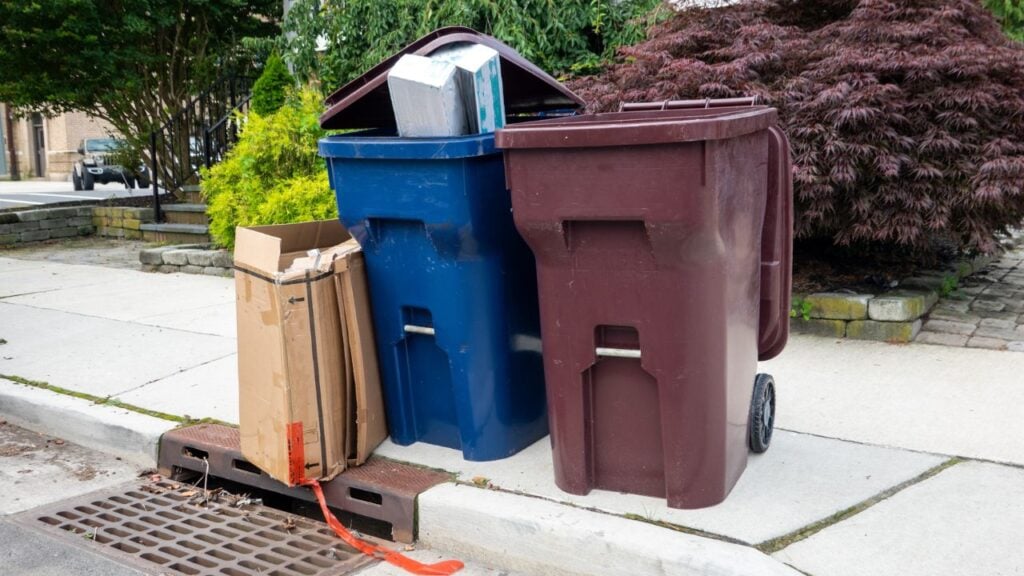
Setting the wrong item out on trash day can break your township's waste code before you notice.
These are the things Pennsylvanians can't legally leave at the curb.
