12 Electronics That Used to be Crazy Expensive in Virginia That Now Aren’t

Back in the day, if you bought a video camera or a home stereo system, you joined an unofficial club of big Virginia spenders.
Fast-forward to today, and those same gadgets are either dirt cheap or completely replaced by phones.
What was once high-end now feels outdated. Let’s dig into the electronics that used to come with sky-high price tags but now cost much less, if you can find them at all.
DVD Players
When DVD players first hit the shelves in the late 1990s, they felt like something out of a science fiction movie. Sleek, shiny, and promising a cleaner, clearer movie experience than VHS could ever deliver.
The only catch?
They cost anywhere from $400 to $1,000 when they first launched.
Having one meant you were an early adopter. People would gather around to watch movies like The Matrix or Titanic in “crystal-clear” digital quality.
Owning a DVD collection became a new status symbol, and weekend movie nights took on a whole new meaning.
These days, you can find DVD players for as little as $20 or less in consignment shops. Most people don’t even bother owning one anymore due to streaming.
And those massive DVD collections?
They’re packed away in boxes or donated to the local library.
Camcorders
Before smartphones could record every moment of your day, camcorders were the go-to gadget for capturing memories.
Whether it was a trip to Disney World or a cousin’s wedding, someone had to lug around a camcorder the size of a loaf of bread. And they weren’t cheap.
Buying a decent camcorder could set you back $500 to $1,200, especially in the 1980s.
They came with tapes, chargers, carrying cases, and a long manual that few people read. Learning to use one took patience, and playback required a TV and the right cables.
Now, nearly every phone comes with a high-quality video camera built right in. No tapes, no chargers, no extra weight.
The idea of paying that much for something your phone does better feels almost comical today.
Home Computers
Owning a home computer in the 1990s or early 2000s wasn’t common. And one of the reasons was that it was a major financial commitment.
A basic desktop setup with a monitor, tower, and printer could easily cost over $2,000.
Families treated them like shared resources. There were rules about screen time, limits on games, and printed instructions taped to the wall near the keyboard.
Having internet access was another monthly cost, and dial-up was far from fast.
Fast forward to today, and Chromebooks, tablets, and laptops are everywhere. Many are under $300, and some are even handed out for free in schools.
GPS Devices
Before smartphones made navigation easy, standalone GPS devices were the must-have car gadget. Brands like Garmin and TomTom ruled the dashboard, offering drivers turn-by-turn directions for hundreds of dollars.
Buying one often meant spending $300 or more, plus extra for map updates.
You had to plug it in, wait for it to find satellites, and hope the maps were still accurate. If you took a wrong turn, it might take a while to recalculate.
Now, most Americans rely on free apps like Google Maps or Apple Maps.
GPS units still exist, but they’re often sold at deep discounts. What used to be a high-end feature is now built into almost every smartphone for free.
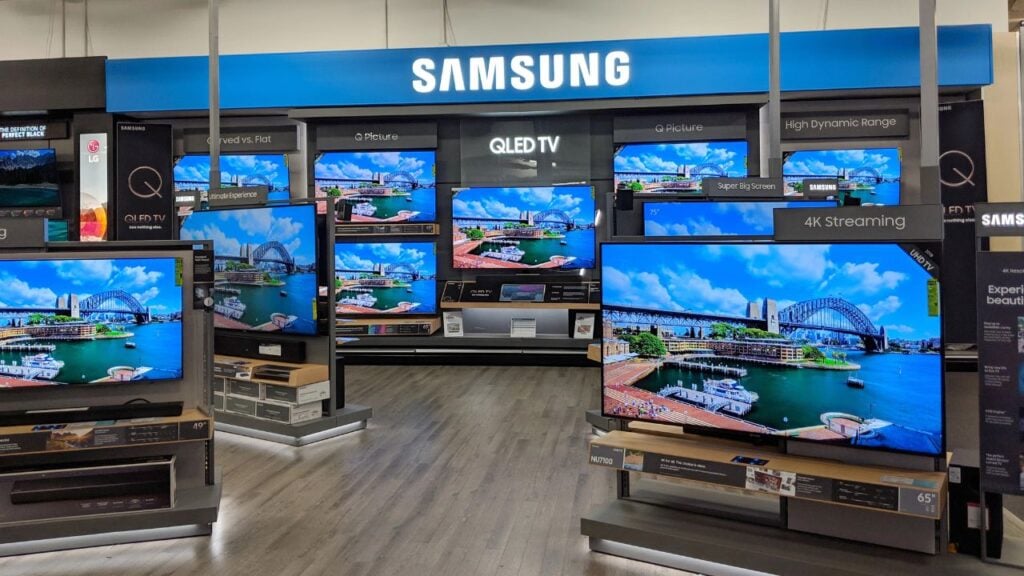
Flat-Screen TVs
It wasn’t that long ago when having a flat-screen TV meant you were the fanciest person on the block.
In the early 2000s, these sleek screens started popping up in stores with price tags that made people stop and stare.
Two thousand dollars for a television?
That wasn’t just a splurge. It was a statement.
Families used to save for months to afford one. They were wall-mounted with pride, and friends were invited over just to see how crisp the picture looked.
Today, you can buy a decent flat-screen TV for under $300.
Big-screen models that once cost more than a used car now sit in the electronics aisle at Walmart or arrive with free shipping from your phone. What was once a dream item is now a casual weekend purchase.
Printers
Once upon a time, every American home office had a big, clunky printer that cost a small fortune.
Not just to buy, but to keep running. Ink cartridges alone could eat up a monthly budget.
A decent printer in the early 2000s could cost between $150 and $400. If you wanted one that printed in color or handled photos, you had to expect to pay even more.
And don’t forget the constant need for ink, paper, and occasional tech support.
Today, you can pick up a compact all-in-one printer for around $60. Many of them scan, print wirelessly, and use affordable ink.
Digital Cameras
Before every phone had a camera, people saved up to buy a digital camera. They were sleek, pocket-sized, and felt like magic.
You could delete bad pictures, store hundreds at a time, and skip the trip to the photo lab.
But they weren’t cheap. In the early 2000s, a decent digital camera could cost between $300 and $600.
Higher-end models were even more expensive, especially those with fancy zoom lenses and editing features.
Now, most people take every photo with their phone. And the quality? Better than what those early cameras ever dreamed of.
Digital cameras still exist, but they’re usually reserved for professionals or photography buffs.
Stereo Systems
Back in the 1980s and 1990s, owning a full stereo system meant you were serious about music.
You had speakers, a receiver, a CD player, maybe even a tape deck, all wired together and taking up half a room.
Buying a high-quality stereo setup could cost over $1,000. And that was before you bought the music.
People showed off their sound systems the way folks today show off their smartphones or smart speakers.
Today, a single Bluetooth speaker under $100 can fill a room with sound. Music is streamed, not stacked on shelves.
Cell Phones
In the early 1990s, owning a cell phone was a status symbol. They were bulky, had antennas, and barely fit in your pocket.
But if you had one, people noticed and assumed you had a very important job.
Early models cost hundreds or even thousands of dollars. And the bills didn’t stop there. You paid for minutes, for texts, and for going over your limit.
Most people avoided using their cell phones unless it was an emergency.
Now, even budget phones come packed with features. You can talk, text, take photos, and use the internet without breaking the bank.
Prepaid phones, family plans, and discounts made something that was once a luxury feel completely normal.
Blu-Ray Players
When Blu-ray players first came out, they were supposed to be the next big thing. They offered high-definition quality and extra features that DVDs didn’t. But they came with a steep price tag.
A brand-new Blu-ray player could cost between $300 and $500. The movies were pricey, too.
People debated whether to buy Blu-ray or stick with DVDs. And let’s not forget the whole HD-DVD versus Blu-ray battle that confused everyone.
Now Blu-ray players are easy to find for $40 or less.
And with streaming taking over, most people skip physical discs altogether. It was a big leap in tech, but one that didn’t stay expensive for long.
MP3 Players
Before streaming changed everything, MP3 players ruled the world. Everyone wanted an iPod, even if it meant saving up for months.
There were cheaper versions out there, but Apple’s sleek design set the standard.
Early iPods could cost between $300 and $500. That didn’t include the cost of songs, headphones, or a case to keep it from getting scratched.
But being able to carry 1,000 songs in your pocket? That was groundbreaking.
Now, music lives on phones. There’s no need for a separate player. And while MP3 players still exist, they’re cheap, basic, and mostly used by people who want a break from phones, not a tech upgrade.
Video Game Consoles
In the 1980s and 1990s, video game consoles were a huge deal. Kids begged for them. Parents hesitated.
A Nintendo or Sega system could cost a few hundred dollars, and that was just the start.
Games were extra. Controllers were extra. And if something broke, repairs weren’t cheap.
For many families, getting a console meant choosing it as a major holiday gift.
Today, while high-end consoles still cost a few hundred dollars, there are far more affordable options. Mini retro consoles, mobile games, and even free-to-play platforms make gaming more accessible than ever before.
A Blast From the Past
Are you all about the latest gadgets, or do you miss the days of cassette players and clunky remotes? Let’s find out.
Take our Decade DNA Quiz to see which classic American decade your approach to electronics matches best.
Meet Your Match. Discover Your Decade DNA. (Your Vintage Roots Are Showing)

19 Gilligan’s Island Facts Even the TV Show’s Biggest Fans Don’t Know
For many Americans, Gilligan’s Island was a silly, beloved sitcom. But as it turns out, this little island paradise was hiding some juicy trivia.
19 Gilligan’s Island Facts Even the TV Show’s Biggest Fans Don’t Know
20 Classic American Motels That Look Like They’re Straight Out of the ‘60s

Whether you’re into neon lights, kidney-shaped pools, or tiki flair, these classic American motels will transport you straight back to the swinging ‘60s, no time machine required.
Best of all? They’re still operating today.
20 Classic American Motels That Look Like They’re Straight Out of the ‘60s