
12 Hurricane Supplies Florida Newbies Forget About Until It’s Too Late

Every new Floridian learns the same lesson eventually: Water and batteries are the easy part of hurricane preparation.
Here’s the list of things newcomers tend to forget, so you’re not the one scrambling when your first hurricane spins up.
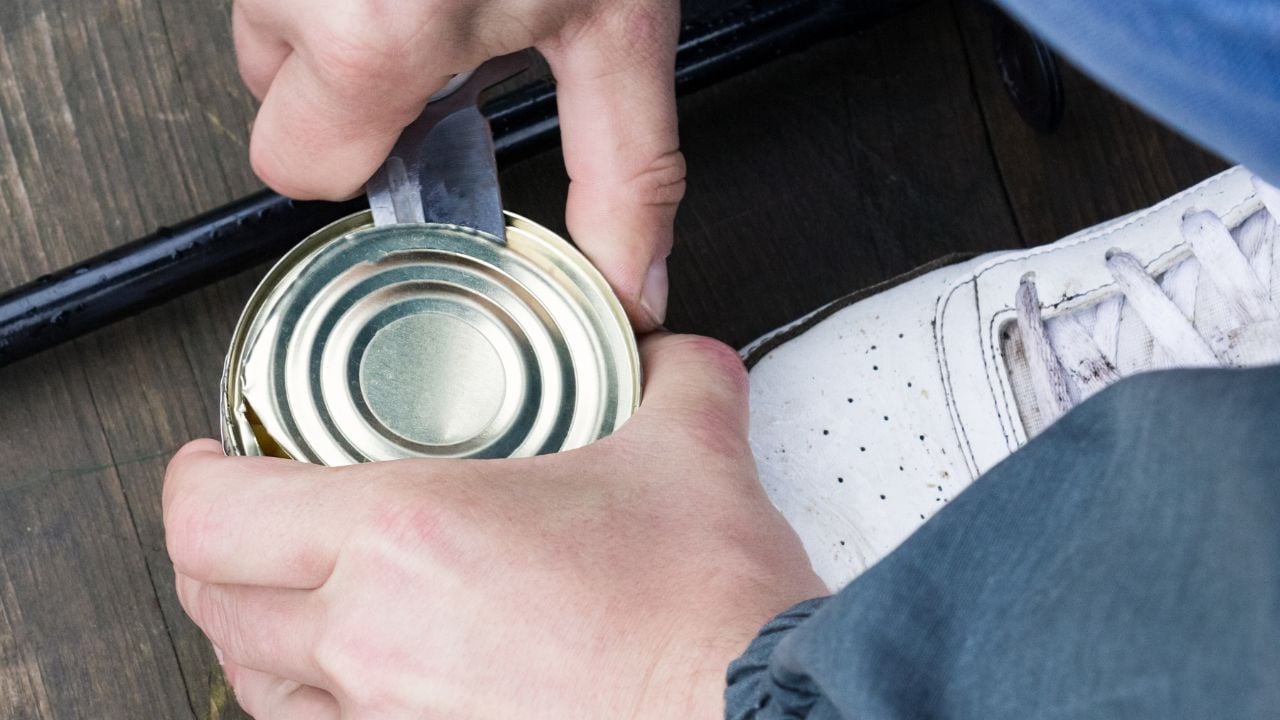
A Manual Can Opener
You bought the canned soup, the canned beans, the canned everything.
Now picture opening all of it without power.
The electric can opener on your counter is useless the moment the lights go out, and a surprising number of people don’t own a manual one.
After a storm, that $6 gadget becomes the most valuable tool in the kitchen.
Grab one now, while they’re sitting on the shelf.
A sturdy one handles bottles and stubborn jar lids too.
Cash in Small Bills
When the power goes down, so do ATMs and card readers.
Whole towns go cash-only overnight.
Newcomers who rely on tap-to-pay learn this the hard way, stranded at a gas station or roadside fruit stand that can’t run plastic.
The fix is simple: Pull out a few hundred dollars in small bills before the storm.
Keep singles, fives, and tens, since nobody’s making change for a fifty after a hurricane.
Stash it somewhere dry and safe with your other supplies.
It may sit untouched for months. The one time you need it, you’ll be glad it’s there.
A Two-Week Supply of Prescriptions
This is the one that matters most, especially for anyone managing a chronic condition.
Pharmacies close before storms and can stay shut for days afterward, with no power to fill orders.
If you wait until your bottle runs low, you could be stuck without the medication you depend on.
Refill early and aim to keep at least a one to two-week supply on hand heading into a storm.
Florida often allows early refills once a storm emergency is declared, so ask your pharmacist.
Keep the medicine, a printed list of what you take, and your doctor’s number together in your kit.
Charged Power Banks
Your phone is your lifeline after a storm: weather updates, family check-ins, insurance photos.
It’s also dead within a day once there’s no way to charge it.
Power banks solve that, but only if you remember to charge them before the outage. A drained battery pack helps nobody.
Buy a couple, top them off when a storm enters the forecast, and keep them with your hurricane kit.
A car charger makes a smart backup, since your vehicle becomes a charging station in a pinch.
Look for a power bank that can refill a phone two or three times over.
Capacity matters when the lights stay off for days.
A Battery or Hand-Crank Weather Radio
Cell towers fail. Internet drops.
When these things happen, a weather radio keeps you tied to what’s coming.
A NOAA weather radio broadcasts continuous updates straight from the National Hurricane Center, no signal bars required.
The hand-crank models need no batteries at all. Many include a USB port to charge your phone.
People assume their smartphone covers this.
Then the network goes down mid-storm, and they’re flying blind.
Pick one up, learn which station carries your local alerts, and keep it where you can reach it in the dark.
It’s old technology, but it works when the new stuff quits.
Coolers and Bags of Ice
Once your fridge dies, the clock starts.
A closed refrigerator keeps food safe for about four hours.
A packed freezer is safe for up to two days.
A good cooler buys you more time, and that includes any medication that needs to stay cold, like insulin.
Newcomers rarely think about cold storage until the power’s already gone.
Here’s the pro move: Days before a storm, freeze jugs and bottles of water.
They keep your cooler and freezer colder for longer, then melt into clean drinking water you can use.
Buy bags of ice when a storm is forecast, before the stores sell out, which they almost always do.
A Waterproof Folder for Important Documents
After a storm, you’ll want your insurance policy, IDs, deed, and medical records fast, and you’ll want them dry.
Flooding and roof leaks ruin paper, and a soaked policy makes a hard week harder when it’s time to file a claim.
Yet gathering these is the step almost everyone skips.
Slip copies of your key documents into a sealed waterproof bag or folder: insurance info, identification, prescriptions, and a list of emergency contacts.
Snap photos of them on your phone too, as a backup.
Do it once, before the next storm, and you can grab everything in seconds if you have to leave in a hurry.
Mosquito Repellent
Here’s a Florida twist newcomers never see coming: After the wind and rain pass, the mosquitoes arrive in unbearable quantities.
All that standing water becomes a breeding ground, and within days the bugs turn relentless, especially while you’re outside clearing debris or tending a generator.
It’s miserable. And it’s a health matter too.
Stock up on insect repellent, the kind with DEET or picaridin, plus a few citronella candles if you’ll be out on the porch.
It’s the supply that never makes the obvious lists, right up until you’re swatting your way through cleanup.
A Way to Cook Without Power
No power means no stove, and a week of cold canned food gets bleak fast.
A propane camp stove or an outdoor grill with a full tank lets you cook hot meals and boil water when the grid is down.
Just respect the cardinal rule: Never run a grill, camp stove, or generator indoors or in the garage.
The fumes can kill.
Keep extra propane or charcoal on hand, since you can’t refill once stations lose power.
Newcomers stock the food but forget the means to heat it. A hot meal after a rough day does wonders for morale.
Pet Supplies and Records
If you’ve got animals, their hurricane kit matters as much as yours, and it’s easy to overlook in the rush.
Pets need their own stash: A week or more of food, extra water, any medications, a leash, and a sturdy carrier for each one.
Bring vaccination records and a current photo, in case you’re separated or need to board them at a shelter.
Not every shelter takes pets, so find out which ones do before a storm threatens.
Plan for water at roughly a gallon a day per animal, the same as for people.
They’re counting on you.
Heavy-Duty Extension Cords and a Carbon Monoxide Alarm
If you own a generator, two cheap items make it safe and useful, and people forget both.
First, long, heavy-duty outdoor extension cords. They let you run the generator far from the house, which you must do.
A generator belongs outdoors only, at least 20 feet from any window, door, or vent, and never in a garage, even with the door open.
Second, a battery-powered carbon monoxide alarm inside the home.
Generator fumes are invisible and deadly, and carbon monoxide poisoning kills people after nearly every major hurricane.
The generator gets all the attention.
These two add-ons are what keep it from becoming a hazard.
Battery-Powered Fans
Lose power in a Florida summer, and your home turns into an oven within hours.
For older adults and anyone with health issues, that heat can be dangerous, even life-threatening.
Battery-operated or rechargeable fans help you ride out the worst of it, especially overnight.
Pair them with those frozen water jugs, and you’ve got a workable way to stay cool until the AC comes back.
Heat after a hurricane sends people to the hospital every year.
24 Facts No One Knows About Florida

Ask any American to describe Florida, and their responses will vary according to their experience or what they’ve heard.
But these are some of the biggest things many people don’t know about Florida.
Some are great, some aren’t ideal, and some are perfect for trivia night.
24 Facts No One Knows About Florida
11 Florida Programs for Seniors That Almost Nobody Signs Up For

Many Floridians assume senior benefits start and end with Medicare and Social Security.
But the state runs a second layer of help, and a startling amount of it sits untouched.
11 Florida Programs for Seniors That Almost Nobody Signs Up For
