
12 Old Pennsylvania Laws That Make No Sense Anymore

Pennsylvania has been making laws since before there was a United States to make them in.
Some never made much sense to begin with. Others made perfect sense in 1794 and look downright bizarre today.
Here are the Keystone State oddities that survived long past their expiration date.
Just for fun, and just for the record: This is general information, not legal advice. Laws get amended, repealed, and enforced differently from town to town, so a few of these may have already shifted. Always check the current laws before you count on them.
You Can’t Buy a Car on Sunday
Walk onto a Pennsylvania car lot on a Sunday, and you’ll find the salespeople gone and the doors locked tight.
The state flat-out bans the sale of vehicles on Sundays, a rule written into the law books and still enforced today.
Pennsylvania is one of only a handful of states that hangs onto it.
The dealers, oddly enough, mostly like the arrangement, since it hands everybody a guaranteed day off without losing business to a competitor.
So if Sunday is your only free day, you’re shopping in the other six.
The law was even tweaked along the way to let motorcycles slip through.
The Sunday Hunting Ban
For generations, one of the deepest-rooted laws in Pennsylvania was simple: No hunting on Sundays.
In a place where the first day of buck season is practically a holiday, you still couldn’t take to the woods on a Sunday for most game, a leftover from the old day-of-rest laws.
Hunters grumbled about it for decades, watching neighboring states allow what Pennsylvania would not.
The ban finally came down in recent years after a long fight in the legislature.
A three-hundred-year-old rule, gone at last.
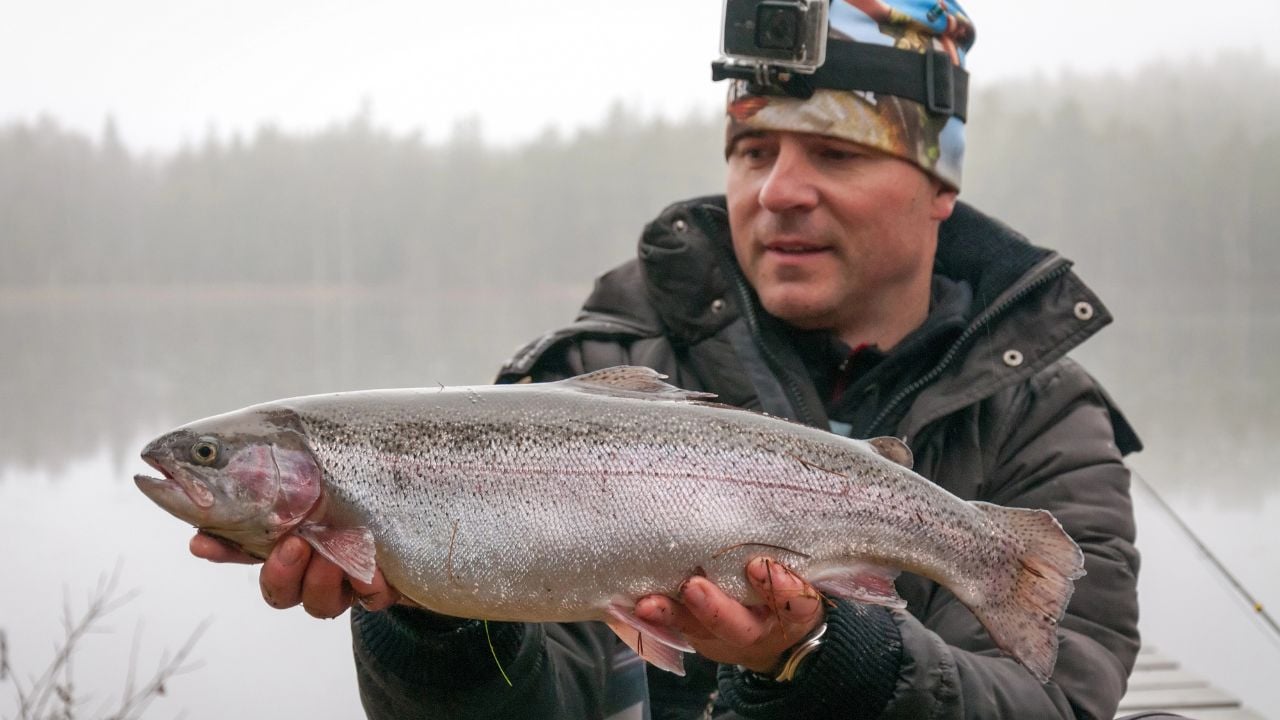
You Can’t Catch a Fish With Your Hands
Pennsylvania would like you to use a rod, thank you very much.
Under the state’s fishing rules, you’re not allowed to catch a fish with your bare hands, the sport some folks call noodling.
The fish also has to be hooked fair and square in the mouth, not snagged through the side.
It sounds fussy, but there’s logic buried in there about fair chase and protecting the fish population.
Still, telling a Pennsylvanian he can’t grab a trout with his own two hands carries a certain backwoods absurdity.
No Dynamite, and No Shooting the Fish
As long as we’re on the subject of fishing, Pennsylvania had to spell out a few more methods that are off the table.
You may not catch fish with explosives.
You may not catch them with a firearm.
You may not run electricity through the water or dump in poison to float dinner to the surface.
That the state felt the need to write all this down tells you somebody, somewhere, tried every one of those.
A fishing pole it is, then. The lake stays in one piece.
Fireworks Were for Out-of-Towners Only
Here’s one that drove Pennsylvanians up the wall for years.
The state happily sold powerful fireworks out of those roadside tents and warehouses. But for a long stretch, residents weren’t allowed to buy them.
You had to show an out-of-state ID to walk out with the good stuff.
So Pennsylvania merchants sold Roman candles to folks from Ohio and New York while telling their own neighbors to settle for sparklers.
The rule got overhauled back in 2017, finally letting residents buy what everyone else already could.
The absurdity of it still gets a laugh.
The Government Owns the Liquor Stores
In Pennsylvania, if you want a bottle of wine or whiskey, you buy it from the state itself.
Ever since Prohibition ended, the Commonwealth has run its own liquor stores, now branded Fine Wine and Good Spirits, with no private competition allowed.
The governor who set it up reportedly wanted buying a drink to be as inconvenient and expensive as possible.
Mission accomplished, for a long while anyway.
The system has loosened up and modernized over the years.
But Pennsylvania remains one of the last places where the government is your one and only liquor store.
Beer Comes by the Case
Buying beer in Pennsylvania used to require a map and a strategy.
For the longest time, if you wanted beer, you went to a distributor, and the distributor would only sell it to you by the full case.
Want a single six-pack?
That meant a separate trip to a bar or a deli, usually at a markup.
Want one case of one brand and a six-pack of another in a single stop?
Forget it.
The rules have eased lately, with more stores allowed to sell six-packs, but the old maze left a permanent mark on how Pennsylvanians shop for a cold one.
You Couldn’t Play Sunday Baseball
Pennsylvania’s old Sunday rules reached all the way onto the ball field.
Professional baseball on Sundays was illegal in the state until 1934, which meant the Phillies, the Pirates, and the Athletics simply couldn’t host home games on the one day most fans had off work.
It took a statewide vote to finally let the boys of summer play on Sundays.
And technically, certain restrictions on Sunday sports never got fully scrubbed from the books.
They’re the ghost of a blue law that lawmakers keep meaning to repeal and never quite do.
Telling Fortunes for Money Is a Crime
Set up a tent, gaze into a crystal ball, charge a few bucks, and in Pennsylvania, you may be breaking the law.
The state has a statute on the books that makes fortune-telling for pay a crime, the kind of rule aimed at palm readers, psychics, and anyone promising to reveal your future for a fee.
It dates from an era far more suspicious of such things, and courts have wrestled with whether it even holds up anymore.
On paper, though, it’s still there.
Predict the future in Pennsylvania at your own legal risk.
The Colonial Ban on Working on Sunday
All these Sunday rules trace back to one very old idea.
When William Penn’s colony got going in the 1600s, it outlawed “worldly employment or business” on Sundays, setting the day aside for rest and worship.
That single principle is the great-grandparent of nearly every blue law that followed.
Most of those old prohibitions got struck down by the courts back in the 1970s.
But the bones of that colonial rule are still rattling around in the car lots and the deer woods, three and a half centuries later.
The Legend of the Disassembled Car
Now for the most famous Pennsylvania law of all, and the one you should trust the least.
As the story goes, an old rule required any motorist who spooked a team of horses to pull over, take the car apart piece by piece, and hide the parts in the bushes until the horses calmed down.
It gets repeated constantly as the honest truth.
The trouble is, nobody has ever produced the statute itself. Historians peg it as a tall tale or a satirical jab that took on a life of its own.
The best-known weird Pennsylvania law may never have been a law at all.
The Pittsburgh Mule Rule
Pennsylvania’s cities cooked up their own peculiar rules over the years, and Pittsburgh gave us a memorable one.
Old city ordinances reportedly barred residents from driving certain animals, mules among them, through the public streets, a relic of the days when livestock and streetcars fought for the same cobblestones.
It made sense once, in a city powered by coal and muscle.
These days, you’d have a hard time finding a mule to walk down Pittsburgh’s streets in the first place, which may be the only reason nobody’s bothered to repeal it.
Weirdest Laws in Each State

Most Americans are clear on treating thy neighbor as they’d want to be treated to reduce the chance of fines and jail time.
But did you know you could be breaking the law by carrying an ice cream cone in your pocket?
These are the weirdest laws in each state, most of which courts (thankfully!) no longer enforce.
Weirdest Laws in Each State That’ll Make You Chuckle
18 Disturbing Facts You’ll Wish You Never Learned

The facts we’re about to share will make you set your coffee down and stare at the wall for a second.
Warning: You can’t unread these.
