
12 Polite Passenger Behavior Flight Attendants Wish Californians Would Stop Doing

You think you’re a considerate flyer. You hold your trash out for the crew, tidy your space, and you’d never dream of being a problem passenger.
How could you be wrong?
Here’s the twist: Some of Californians’ most polite airplane habits are the ones flight attendants wish you’d drop.
Here’s what the crew wishes you’d stop doing, even when your heart’s in the right place.
Handing Over Your Trash the Second They Pass
You finished your coffee, the flight attendant is walking by, so you hold out the empty cup.
Helpful, right?
Not quite. Unless the crew is running a trash collection, that cup has nowhere good to go.
During boarding especially, they’re focused on safety checks and seating, not garbage. An early handoff often ends up balanced on a cart or set down where it shouldn’t be.
The fix is patience.
Hold onto your trash until the crew comes through asking for it, then hand it over neatly so nothing tumbles onto your seatmate.
Tucking Trash Into the Seatback Pocket
This one feels like tidiness itself. The wrapper and the napkin go into the seatback pocket, out of sight, area clean.
Flight attendants wince at it.
No matter your good intentions, that pocket often gets forgotten, the trash rides along to the next flight, and somebody has to dig it out during a tight turnaround cleaning.
Worse, it tends to get left behind entirely, which is how a pocket ends up holding three strangers’ worth of old napkins.
Crumple your trash into your empty cup or snack bag and hold it for collection.
The seatback pocket is for the safety card and your book, not your garbage.
Trying to Hand Over the Gross Stuff
Here’s a well-meant gesture that puts a flight attendant in a tough spot.
You hand them the used tissue, the sick bag, the dirty diaper, figuring that’s the proper way to deal with it.
They can’t take it.
The same hands serving drinks and snacks to a hundred people can’t be handling biohazards, and a soiled item on the cart can shut down service entirely.
Anything gross goes to the lavatory trash, or travels off the plane with you to a bin in the terminal.
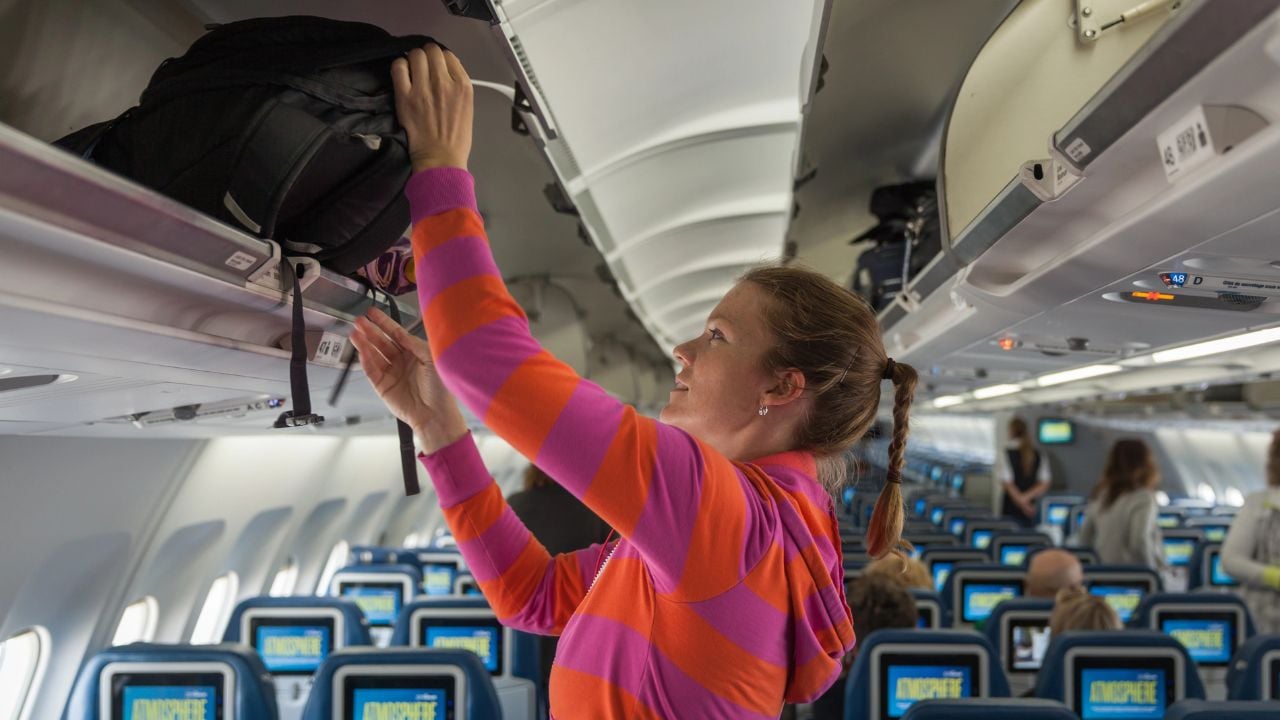
Rearranging the Overhead Bins
Boarding is chaos, the bins are filling up, so you start shuffling bags to make room. It’s a noble instinct.
The crew would rather you didn’t.
When passengers rearrange the overhead bins, luggage sometimes ends up far from its owner, people can’t find their bags at deplaning, and the careful loading the crew keeps track of gets scrambled.
Stow your bag in the nearest open bin, take your seat, and flag a flight attendant if there’s a real problem.
They’ll sort the puzzle during their final checks.
Tapping Them to Get Their Attention
You don’t want to shout across the cabin, so when a flight attendant passes, you reach out and give a gentle tap on the arm.
Polite, by your reckoning.
From their side, a sudden touch in a narrow aisle is startling at best, and they spend hours running that gauntlet.
A tap, a poke, a hand on the elbow, it adds up over a shift.
A soft “excuse me” and a moment of eye contact does the job. So does the call button.
Save your hands for waving hello. Words work better.
Suffering Instead of Pressing the Call Button
Plenty of considerate flyers treat the call button like an alarm they must never pull. They’d rather wait an hour, or get up and go hunting for the galley, than “bother” anybody.
Flight attendants wish you’d push it.
That button exists so you can reach them without wandering the aisle during service or tapping a passing arm.
Need water, a hand, a question answered?
Press it and wait. That’s the system working the way it was built to.
Getting up to find them is the bigger imposition, not the smaller one.
Springing Up the Instant the Wheels Touch Down
The plane lands, and you pop up to grab your bag and be ready, so as not to hold anyone up. It feels considerate.
But it’s a safety problem.
The aircraft is still moving, a sudden stop can throw a standing passenger, and you end up hunched under the bins waiting just the same.
Stay seated and belted until the plane reaches the gate and the sign goes off.
Nobody deplanes faster because one person stood up early. They just stand longer.
Getting Up While the Drink Cart Is Out
You need to stretch or hit the restroom, and you figure a quick trip won’t trouble anyone.
The cart is halfway down the aisle, though, and that changes everything.
When the crew has to stop service, back the cart up, and let you squeeze past, it ripples down the whole cabin. Everyone behind the cart waits on your detour.
If the aisle’s blocked by service and you’re not totally crossing your legs, give it a few minutes.
Rearranging the Cabin for a Family
You spot a family split across rows, so you volunteer your seat and start orchestrating a swap with the folks around you.
Your heart is in the right place.
The trouble is that seat assignments tie into the aircraft’s weight balance and the crew’s paperwork.
A freelance reshuffle can create knots they then have to untangle.
Offering your own seat is kind. The better move is to loop in a flight attendant and let them coordinate the switch, rather than pressuring other passengers into it.
Calling Them “Honey” or “Sweetie”
This one stings a little, because for many, it comes from pure warmth.
A friendly “thanks, honey” or “you’re a doll, sweetie” can be meant with real affection, especially from folks raised to talk that way.
Flight attendants know you mean well. Still, a pet name from a stranger can land as a touch condescending in what is, after all, their workplace.
A simple “thank you,” or better yet, their name off the badge, carries the same warmth without the wince.
You can be every bit as kind. Just trade the “hon” for a “thank you.”
Playing Hall Monitor on Other Passengers
You notice the fellow in front reclining into someone’s knees, or a seatmate hogging the bin, so you speak up to help the crew keep order.
Surely they’d appreciate the backup.
They’d rather you didn’t. Passenger-on-passenger policing tends to spark exactly the conflict the crew is trained to defuse, and now they’ve got a squabble to manage on top of everything else.
See a real problem?
Mention it to a flight attendant and let them handle it with their training and their authority.
Asking for a Drink or Your Pills During Boarding
The moment you sit down, you flag a passing flight attendant for a glass of water to take your medication.
A small ask, surely.
But boarding is the busiest, most safety-packed stretch of the whole flight. The crew is counting passengers, checking bags, and securing the cabin, not yet set up to run the galley.
If you’ll need water for pills, grab a bottle at the gate before you board.
Then you’re covered the moment you sit down, no waiting on a crew that’s mid-checklist.
How to Travel Without ATM Fees—Really!

How does never paying an ATM fee when you travel sound?
Discover the trick to doing just that from a traveler who’s saved hundreds of dollars in ATM fees.
How To Never Pay an ATM Fee Abroad
10 Coastal Cities Sinking Into the Ocean, One in the U.S.

Residents in certain coastal cities are all too familiar with the concept of sinking land. Buildings that are too heavy for the ground to support and people extracting too much groundwater are among the worst offenders.
These are the world’s fastest-sinking coastal cities.
