
12 Southern Sayings South Carolinians Use That Northerners Hear Completely Wrong

In 1984, South Carolina lawmakers spent floor time voting a dance style into law as the state’s official dance.
Few transplants know that.
They hear a neighbor mention it, picture something else, and spend the rest of the conversation confused.
These are the sayings South Carolinians use that newcomers hear completely wrong.
1. Upstate
South Carolinians throw around “the Upstate” like everyone already knows where it is.
Northerners hear it and picture upstate New York.
Wrong state.
Ten at the Top, the regional group that organizes the area’s business and civic leaders, draws the Upstate as ten counties in South Carolina’s northwest corner, anchored by Greenville and Spartanburg near the Blue Ridge foothills.
Other groups draw the boundary tighter or wider, but ten counties is the number South Carolinians reach for most.
Ask a South Carolinian for driving directions to it, and Albany never comes up.
2. Piazza
South Carolina’s Charleston started calling its porches “piazzas” back around 1730, and the habit never faded.
Northerners hear the word and picture Italy, a plaza with pigeons and cafe tables.
Nothing like that.
A Charleston piazza is the long, columned porch running the length of a Charleston single house, built to catch the sea breeze decades before air conditioning arrived.
A Charleston host invites you to sit on the piazza, and they mean the porch, not a town square.
3. Pluff Mud
South Carolina’s Lowcountry has a name for its marsh sludge that catches newcomers off guard: Pluff mud.
A dock owner warns a first-time boater to stay off the pluff mud at low tide, and the visitor pictures something soft and harmless, maybe loose beach sand.
Wrong texture.
Pluff mud is the black, sulfur-smelling marsh mud that built the region’s economy, thick enough to swallow a boot past the ankle and hold it there.
The name is often said to come from “plough mud,” the term planters used when they spread the nutrient-rich muck as fertilizer, though nobody can prove which spelling came first.
Wander off the dock expecting a soft landing, and the mud that grabs back is the surprise nobody warned about.
4. Lowcountry
South Carolinians talk about “the Lowcountry” as if the phrase draws a hard line on a map.
Northerners hear two ordinary words describing flat land.
It’s a proper name.
Not a description.
The Lowcountry refers to the marshy coastal region south and east of the fall line, the point where harder Piedmont rock gives way to the sandy coastal plain.
What Counts as the Lowcountry
South Carolina has no single official map of the Lowcountry.
The narrowest definition covers four counties: Beaufort, Colleton, Hampton, and Jasper.
Broader versions stretch the label to about a dozen counties, folding in Charleston, Berkeley, Dorchester, and the counties around them.
Ask three South Carolinians where the Lowcountry ends, and expect three different borders.
5. Frogmore Stew
South Carolina’s Lowcountry serves up a dish with a name that panics first-timers: Frogmore stew.
Northerners hear “frog” and brace for amphibian.
Relax.
Similar seafood boils turn up all along the Southern coast, but the name and its origin story belong to South Carolina alone.
The dish takes its name from Frogmore, a small fishing community on St. Helena Island, where a local seafood company owner coined the name in the 1960s for a pot of shrimp, sausage, corn, and potatoes.
Not one frog leg makes it into the pot.
6. She-Crab Soup
South Carolinians in Charleston built their signature soup around a name that raises eyebrows outside the state.
Northerners hear she-crab soup and wonder if that’s a typo.
It isn’t.
A Charleston butler named William Deas added a cluster of crab roe to a cream-based soup in the early 1900s, and roe only comes from female crabs.
The roe is the whole reason for the name.
Psst! How much do you know about South Carolina’s dialect and culture? Tap through these cards and see how many you get right.
7. Sandlapper
South Carolinians call each other “Sandlappers,” and out-of-staters usually assume it’s an insult.
It isn’t anymore.
One long-documented theory ties the nickname to poor rural whites of the Sand Hills, a sandy belt that also runs through Georgia and North Carolina.
Their habit of eating clay to stretch a meager diet got them branded “sand-lappers” in 19th-century writing, and it carries none of that sting today.
Any South Carolina native answers to it without flinching, and the state named a statewide magazine after it for decades.
8. Shag
South Carolina turned “the shag” into state law back in 1984, and the phrase still trips up visitors.
Northerners hear a very different word.
Different meaning.
The 1984 law declares the shag “native to this State” and names it the official dance.
It’s a smooth, footwork-heavy swing style that grew up along the shared North Carolina-South Carolina coast in the 1940s, with dance halls on both sides of the line claiming a piece of its birth.
Show up expecting scandal, and a room of dancers gliding across a wood floor is what greets you instead.
9. Holy City
South Carolina’s Charleston answers to “the Holy City,” and newcomers hear a judgment about how devout the place must be.
Wrong guess.
A Charleston newspaper columnist popularized the nickname in the 1950s, picking up a private joke a friend had made decades earlier about a local historian’s devotion to the city.
Historians who have traced the phrase say the popular explanation, tying the name to Charleston’s steeples and its religious tolerance, is a 20th-century marketing story invented long after the fact.
The name started as an inside joke, not a verdict on the congregation.
10. Catawba
South Carolinians near Rock Hill still call the river running past their backyards “the Catawba,” and that name reached Ohio’s vineyards only after stopping in South Carolina first.
A transplant from Ohio wine country hears a neighbor mention growing up “on the Catawba” and pictures a vineyard tour.
Grapes came second.
Catawba first named a South Carolina river and the Catawba people who have lived along its banks for centuries.
Generations later, a wild grape found growing near that river became the parent of Ohio’s wine industry, carrying the river’s name north with it.
The Catawba Indian Nation, South Carolina’s only federally recognized tribe, still holds its reservation along that same river near Rock Hill.
11. Grand Strand
South Carolina brands its northern coastline “the Grand Strand,” and Northerners assume it’s just flowery talk for a nice beach.
There’s nothing flowery about it.
Local newspapermen Claude and Harry Dunnagan are credited with the name, coining it for their Grand Strand News Bureau after World War Two.
It now names 60 uninterrupted miles of coastline running from Little River down to Georgetown.
Mention the beach to a South Carolinian from Columbia, and this exact stretch is probably what they mean.
12. Oonuh
South Carolina’s Sea Islands carry their own language, Gullah, and one everyday word trips up almost every out-of-stater.
Northerners hear pure nonsense.
It isn’t nonsense.
That word is “oonuh,” and it means “you all” in Gullah, a creole language that grew out of West African languages and English among Sea Island communities stretching from South Carolina down into Georgia.
St. Helena Island’s isolation by marsh and water for generations let the language take deep root there.
Penn Center on St. Helena Island still works to preserve the language today.
Psst! How much do you know about South Carolina’s history? Take our quiz and see if you can ace it.
Quiz
South Carolina History IQ
Answer these questions on South Carolina’s flag, founders, and firsts. We bet you can’t get them all right. Prove us wrong?
Why does a palmetto tree appear on South Carolina’s state flag?
Newcomers Behind the Confusion
South Carolina's population grew faster last year than any other state's, at a rate of 1.5 percent, and people moving in from other states were the primary driver.
The state netted 66,622 more residents from other states than it lost between July 2024 and July 2025.
Every one of those new residents starts at zero on the local vocabulary.
Zero.
Longtime South Carolinians rarely notice the gap because none of these words ever sounded strange to them in the first place.
Congress designated the Gullah Geechee Cultural Heritage Corridor in 2006, a 12,000-square-mile stretch of coast and sea islands running from North Carolina down into Florida.
Penn Center's original school, founded on St. Helena Island in 1862, was one of the first in the South built to educate people just freed from slavery.
9 Strange Ingredients South Carolinians Can Add to Eggs That Make Them 100% Better
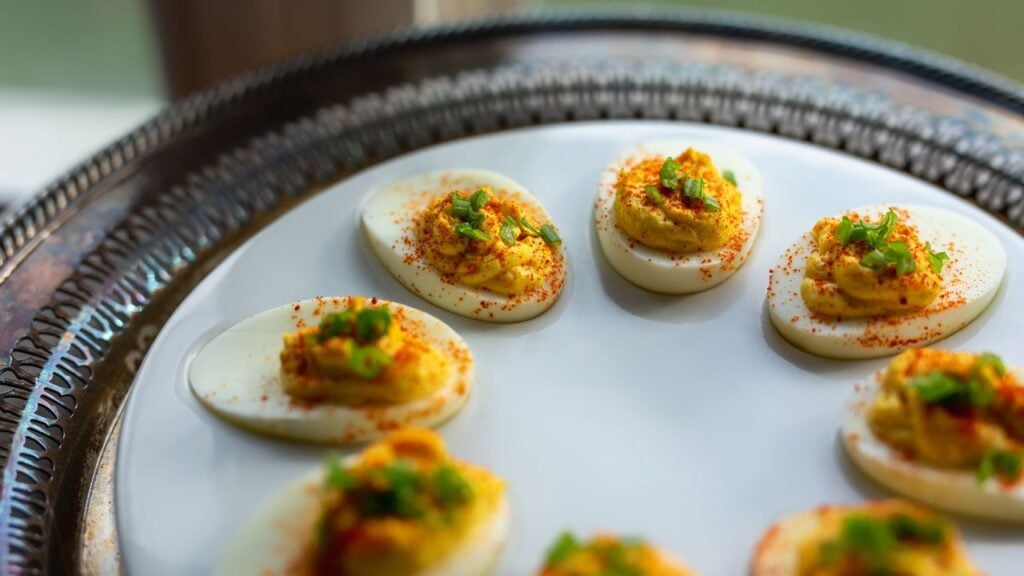
South Carolina's tourism office has tracked a dozen different restaurant twists on the deviled egg, and paprika barely makes the list.
These are the ingredients South Carolinians reach for that turn a carton of eggs into something worth bragging about.
9 Strange Ingredients South Carolinians Can Add to Eggs That Make Them 100% Better
8 Things You'll Never Catch a South Carolinian Doing in the August Heat

South Carolina's hottest day on record hit 113 degrees, logged at the University of South Carolina back in June 2012.
These are the small habits locals build their whole August schedule around instead of fighting the heat head-on.
8 Things You'll Never Catch a South Carolinian Doing in the August Heat
