
12 Things About Florida Houses That Confuse Everyone Who Moves Down From Up North

New to Florida? You might be hunting for basement stairs to store your holiday decorations.
That search could take a while.
These are the things about Florida houses that confuse everyone who moves down from up north.
Note: This is general information, not legal or health advice. Building codes and septic and well rules are subject to change.
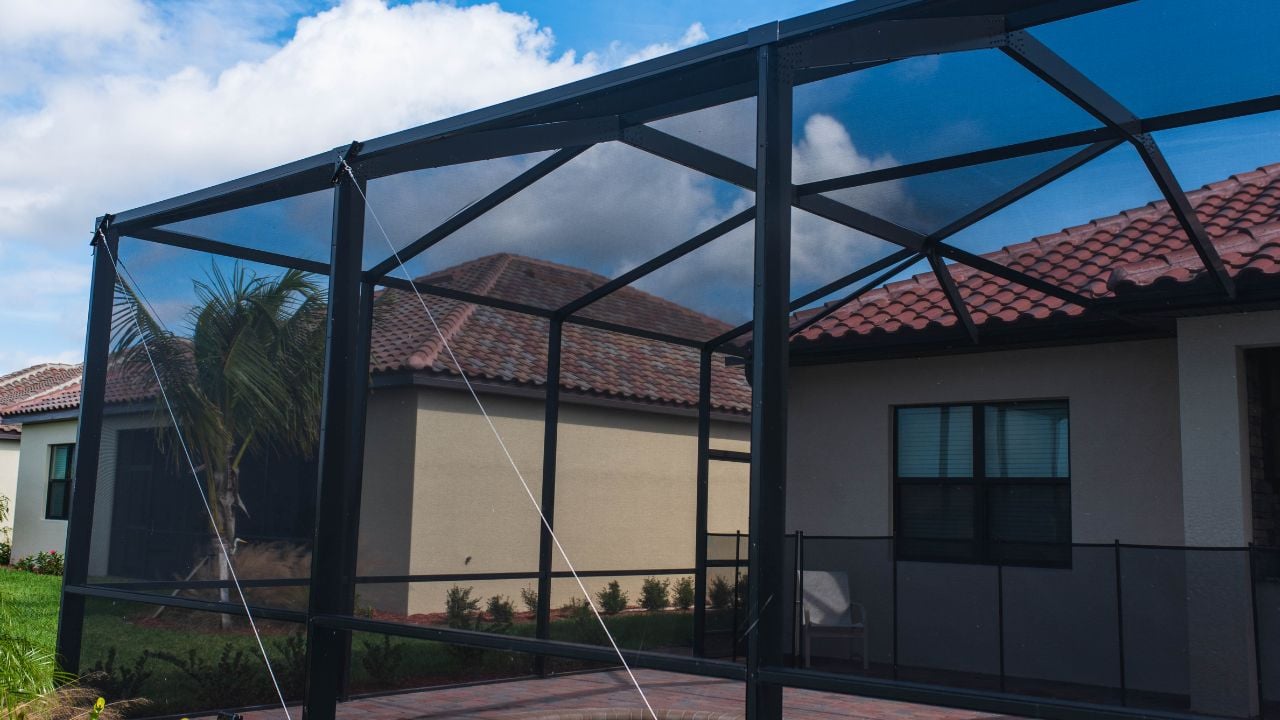
1. Pool Cages
Many people who move down from up north ask about the pool cage right away.
A pool cage is the screened enclosure built over a pool and its deck.
Outdoor living became a significant design consideration for Florida’s postwar houses, according to a University of Florida historic preservation survey of homes built from 1945 to 1975.
Swimming pools with adjoining outdoor living space were a commonplace part of many of those homes.
A 1960 House & Home magazine article quoted in the survey said the new Florida house puts screening over large parts of the outdoors.
Put those together, and it’s easy to see where the idea of a screened pool deck came from.
It’s an outdoor room.
2. Florida Rooms
The Florida room is the part of a house that many newcomers mistake for an extra living room.
A Miami museum exhibit on houses from 1945 to 1965 calls the screened porch, or Florida room, the most conspicuous feature of the tropical home.
Those rooms were typically unconditioned, with walls of glass or screen, a University of Florida survey of postwar housing found.
Older ones often have no air conditioning.
Central air-conditioning got cheaper in the 1960s, and that led people to favor sealed houses over the tropical model.
If your guests are headed for that room, check for vents before you move the bed in.
3. Concrete Block Walls
Concrete block was the preferred, primary building material for Florida houses built from 1945 to 1975.
If you grew up around wood-framed houses, block walls are a different build.
If you’re touring an older house, ask your agent early whether the exterior walls are block or wood frame.
4. Clay Tile Roofs
Florida quickly took to Mediterranean Revival houses, and those houses come with tile roofs.
The roof is covered in terra cotta tile, either C-shaped mission tile or S-shaped Spanish tile.
It’s low-pitched, with little or no eave overhang.
A University of Florida survey of postwar housing lists tiled roofs, often clay or concrete, as a feature of the style.
For that style, think terra cotta, not shingles.
If you’re used to steep shingled roofs, a low tile roof can look odd to your eye at first.
5. Jalousie Windows
Jalousie windows became commonplace in Florida’s postwar houses.
A jalousie is a window made of adjustable glass louvers that control ventilation.
Builders wanted cross ventilation because the houses originally had no air conditioning.
Look for the louvers.
If you’re touring an older house with jalousie windows, test a few before you count on them to cool your living room.
6. Terrazzo Floors
A 1960 House & Home magazine article quoted in the survey described the typical Florida house as built on slabs, with terrazzo or resilient tile floors.
Houses built on slabs don’t have basements.
No stairs down.
Terrazzo itself is made of marble chips set in Portland cement, then ground and polished to a smooth surface.
If you spot flecks of stone in a smooth floor, you’re looking at terrazzo.
7. Hurricane Shutters and Impact Glass
Houses in wind-borne debris regions often need protection for their windows.
Florida’s building code requires glazed openings in those regions to be impact resistant or covered with an impact-resistant covering.
Older houses may not have either.
That’s why many houses have hurricane shutters or impact glass.
Impact-resistant glazing is often laminated glass, which tends to hold the glass together when something hits it.
Not every address needs it.
Your local building official can tell you whether a house sits in one of those regions.
8. Carports and Converted Garages
Many postwar houses in Florida came with a carport or a garage.
A service door from either one into the kitchen or laundry room became standard.
Surveyors who record Florida’s postwar houses list the conversion of a carport or garage into living space as an alteration to note.
Some garages become dens.
If you’re buying an older house, ask to see the paperwork before you count on that room.
9. Septic Tanks
Is the house you’re touring on a city sewer line or a septic tank?
Many houses in Florida use a septic tank instead.
The Florida Department of Environmental Protection estimates 2.6 million septic systems are in operation, serving approximately 30% of the state’s population.
That’s a lot of tanks.
Ask your agent before you fall for the kitchen.
10. Private Wells
Many houses in Florida get their drinking water from a private well instead of a city water line.
As of 2022, an estimated 2.5 million Floridians relied on private wells for home drinking water.
If you buy a house with a well, you’ll be the one testing the water.
That’s your job now.
Testing Your Private Well
The Florida Department of Health strongly recommends that private well owners test their water for bacteria and nitrate at least once a year.
County health departments typically charge about $20 to $30 for each sample.
A private well also has to sit at least 75 feet from a septic system in Florida.
11. Termite Tents
Drywood termites are a common reason a house ends up wrapped in a tent.
Pest control companies seal the tent around a gas called sulfuryl fluoride.
The University of Florida’s Institute of Food and Agricultural Sciences (IFAS) describes the treatment as a reset button that kills everything in the structure.
You’ll be leaving.
Because the gas is highly toxic, no one goes back inside until the house has aired out and been cleared.
If you’re buying an older house, ask your inspector whether it has ever been tented.
Psst! How much do you know about the odd side of owning a house? Flip these cards and see if you can ace them.
12. Frogs in the Plumbing
Cuban treefrogs enter houses in a variety of ways, according to a University of Florida publication.
They find a way.
If you leave a door or window open, a Cuban treefrog can jump right in.
From your roof, they can also climb into a house’s plumbing through vent pipes.
They gather on windows near lighted areas to feed on the insects the lights draw.
Frogs that come in through the pipes usually end up in a bathroom, so lift the toilet lid first.
2 Things Florida Home Sellers Don’t Have to Tell You, and 2 They Now Do

Photos online can hide a few surprises in a house.
Here’s what a seller can skip and what they can’t.
2 Things Florida Home Sellers Don’t Have to Tell You, and 2 They Now Do
9 Things a Florida Library Card Gets You Free That Residents Rarely Use

There’s a lot more to a Florida library than books.
Here’s what it can get you, and how to use it.
9 Things a Florida Library Card Gets You Free That Residents Rarely Use
