
12 Things Californians Can’t Legally Haul Back Across the State Line

Bringing sweet potatoes home from a Thanksgiving trip? From some states, California won’t let them in without paperwork.
It’s an easy thing to miss.
Here’s what Californians can’t legally haul back across the state line.
Note: This is general information, not legal advice. Quarantine rules, wildlife permits and firearms laws are subject to change.
1. Unapproved Fireworks
Fireworks the State Fire Marshal hasn’t classified and registered are unlawful to transport within California.
Before July 4, 2025, the California Department of Food and Agriculture (CDFA) and San Bernardino County Fire seized about 13 tons at one border station.
Firefighters issued 105 citations during that operation.
A violation involving under 25 pounds is a misdemeanor with a fine of $1,000 to $2,000, up to a year in county jail, or both. Larger loads carry steeper fines.
If you’re hauling a trunk of fireworks home, you could pay far more than they cost.
That’s an expensive souvenir.
2. Ferrets
Ferrets are on California’s restricted animal list, so you can’t bring one across the border without a permit.
The California Department of Fish and Wildlife (CDFW) issues those permits.
California’s border stations commonly encounter ferrets, gerbils and several other restricted pets.
Your ferret can be tame and healthy, and the permit rule still applies.
Tame doesn’t change that.
3. Sweet Potatoes
Sweet potatoes grown, packed or stored in ten states are prohibited entry into California under a state quarantine.
The states are Alabama, Arkansas, Florida, Georgia, Hawaii, Louisiana, Mississippi, South Carolina, Tennessee and Texas.
The rule also covers sweet potato plants, vines, cuttings and slips, along with morning-glory plants.
Tubers can enter with a certificate from an agricultural official in the state of origin, and it must say the tubers were treated for the sweet potato weevil.
That certificate can instead state that the shipment came from a noninfested county or parish.
If you’re bringing home a sack from a relative’s farm, your paperwork needs to come first.
Paperwork comes first.
4. Large-Capacity Magazines
California law bars importing a large-capacity magazine into the state.
The state defines that as a magazine capable of holding more than 10 rounds of ammunition.
Bringing one in can mean up to a year in county jail.
Possessing one, regardless of when you bought it, can bring a fine of up to $100 per magazine.
A federal appeals court upheld the ban in March 2025.
A petition asking the Supreme Court to review the case has been pending since August 2025.
As of this writing, the Supreme Court hasn’t acted on that petition, and the Ninth Circuit’s ruling stands.
When you’re buying gear out of state, a magazine’s capacity matters before you drive home.
Check the capacity first.
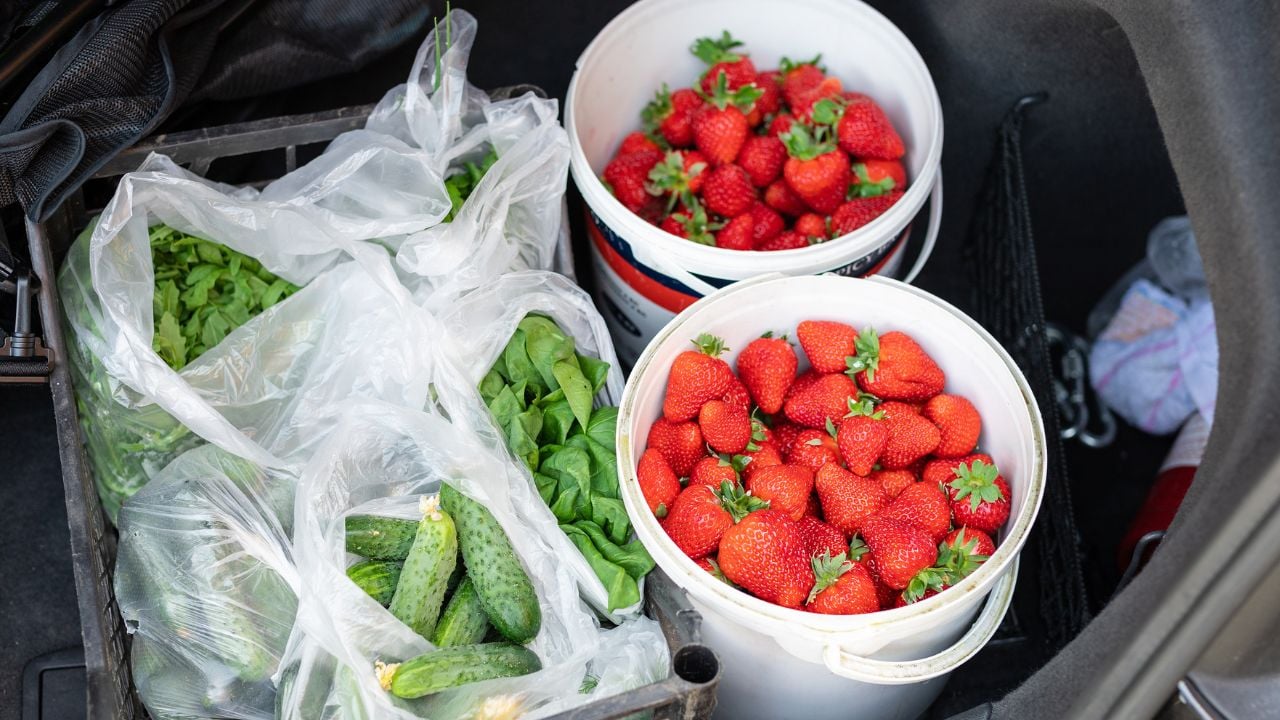
5. Citrus
Citrus fruit is hard to bring in legally because it’s prohibited entry from the quarantine area except as the rule allows.
That area covers every state, district and territory except Arizona.
Citrus plants need a permit from the state’s agriculture department.
Inspectors can hold your vehicle, baggage or camping gear until it’s found free of citrus.
The fruit exceptions cover commercial packing-house shipments from Florida and Texas, not a bag from your trunk.
Buy citrus at home.
6. Hedgehogs
Hedgehogs can’t legally come across the border without a permit because they’re on California’s restricted animal list.
A new restricted species permit application costs $155.53.
The application fee is nonrefundable.
If you’re moving here with a pet hedgehog, you’ll want that permit before the drive.
Paperwork isn’t free.
Psst! How much do you know about California’s border checks? Take our quiz and see how many you can get right.
Quiz
Border Check Trivia
Answer nine questions on California’s border stations, pests, and fireworks. We bet you can’t get them all right. Prove us wrong?
Which insect, known as Apis mellifera, is exempted from California’s rules on bringing in live insects?
7. Boats Carrying Mussels
A person can't possess, import, ship or transport invasive mussels in California.
Inspectors can stop a boat that may carry adult or larval mussels on any roadway or waterway.
They can also impound or quarantine the boat at a location the department designates.
CDFA says protecting the state from quagga and zebra mussels is an important part of its job.
If you tow a boat across the line, your hull, bilge and engine may get a close look.
They can impound it, too.
8. Pecans and Walnuts
Pecans and hickory nuts in the shell are refused entry from 15 states unless a certificate comes with the shipment.
Those states are Alabama, Arkansas, Florida, Georgia, Kansas, Kentucky, Louisiana, Mississippi, Missouri, North Carolina, Oklahoma, South Carolina, Tennessee, Texas and Virginia.
Unhusked walnuts and butternuts face the same restriction from every state except Arizona.
Walnuts and butternuts with every husk and hull removed aren't restricted.
If you shell your pecans before the drive, your nut meats aren't restricted under this rule.
Husks are the catch.
9. Dogs Bought Out of State
Dogs changing owners can't cross the state line into California without a health certificate.
The rule took effect January 1, 2026.
The certificate must be dated no more than 10 days before the dog enters the state.
Puppies under three months old are exempt from the rabies vaccination requirement.
The certificate must list a physical origin and destination address for the dog, and a post office box, airport or parking lot doesn't count.
A dog that enters for any reason other than a change of ownership doesn't need a certificate submitted.
If you're picking up a puppy from a breeder in another state, your paperwork has to be ready before the drive.
Ownership is the trigger.
10. Firewood
Firewood and unpeeled logs of oak and chestnut are refused admittance at the state line when they come from the quarantine area.
That area includes every state and district except Arizona.
Treated wood can come in with a certificate, but the state must approve the treatment method in advance.
Wood from the part of the quarantine area west of Montana, Wyoming, Colorado and New Mexico can enter with a certificate of origin.
CDFA also says wood may be rejected if inspectors find insects or disease symptoms.
If you're packing wood for a campsite, an inspection station may turn your trunk around.
Burn local wood.
11. Sugar Gliders
Sugar gliders are another pet you can't haul back, since California's restricted animal list includes marsupials.
If you've fallen for a sugar glider video, check the permit rules before you buy one out of state.
The border FAQ names sugar gliders among the restricted species inspectors encounter.
CDFW's fee page lists $79.83 for Animal Care (Welfare Species).
Cute doesn't count.
How California Sorts Restricted Animals
Each species on the state's restricted list carries a letter code, D or W.
D marks detrimental animals, which pose a threat to native wildlife, agriculture interests, or public health or safety.
W marks welfare animals, which are mammals listed to prevent depletion of wild populations and to provide for animal welfare.
Ferrets carry a D, while sugar gliders carry a W.
12. Pets and Horses From Screwworm Zones
Since June 12, 2026, horses and companion animals from states with an active New World screwworm zone face extra entry requirements.
They need an inspection within seven days before arrival in California.
They also need an electronic health certificate with a screwworm statement.
A California entry permit is required as well.
Animals must be inspected again when they reach their destination in the state.
CDFA says Zavala County, Texas, had the first confirmed screwworm detection in animals in the continental United States.
If you're traveling with a dog or horse from an affected state, your vet visit has to fall within a week of arrival.
Book the vet early.
Other Restricted Pets
Gerbils can't cross the state line either because they're on the restricted list with squirrels, chipmunks and prairie dogs.
Domesticated guinea pigs, chinchillas and golden hamsters aren't restricted.
Quaker parrots, also called monk parakeets, are restricted too.
Before you buy a small pet out of state, check its species against the list.
If you're moving with a gerbil or a Quaker parrot, your pet needs a permit first.
Know the list.
Skipping the Inspection
The operator of a vehicle must stop at a state inspection station.
Skipping one is a misdemeanor.
State law can put the cost of destroying a shipment on its owner.
Stopping is cheaper.
If the load is yours, you could pay to destroy a crate of citrus or a bundle of firewood.
In 2025, California's border stations logged 33,845 shipments that ended in an interception, a warning notice or a rejection.
12 Things Californians Do That Out-of-Staters Always Get Wrong
A native Californian does a dozen ordinary things a day that make a visitor from Ohio do a double take.
None of it is showing off.
12 Things Californians Do That Out-of-Staters Always Get Wrong
9 Ways to Spot a California Transplant Anywhere in America

A mother in Minneapolis reapplies sunscreen on her son in December under a flat, overcast sky.
Some habits don't check the calendar or the forecast.
