
12 Things Georgians Should Toss From Their Closet Before Fall

A faded Bulldogs T-shirt from three tailgate seasons ago still hangs in your closet like it might make it to another kickoff.
We’re willing to bet it won’t.
By the time a cotton game-day shirt pills and its color goes chalky, the fabric itself is breaking down, not just fading.
These are the closet items worth pulling out in Georgia before your fall clothes need the room.
1. Wool Sweaters With Moth Holes
Still have a wool sweater hanging in the back of your closet since that last cold snap in March?
That’s enough time for clothes moths to move in.
Webbing clothes moths stay active year-round inside a warm or air-conditioned home, so a sweater folded away since spring isn’t automatically safe.
The damage usually starts somewhere nobody checks first: The underside of a collar, or a folded cuff.
Hold every wool piece up to a window before it goes back into fall’s rotation.
A thin, papery patch or a cluster of tiny holes means the moths already ate their fill.
Not worth keeping.
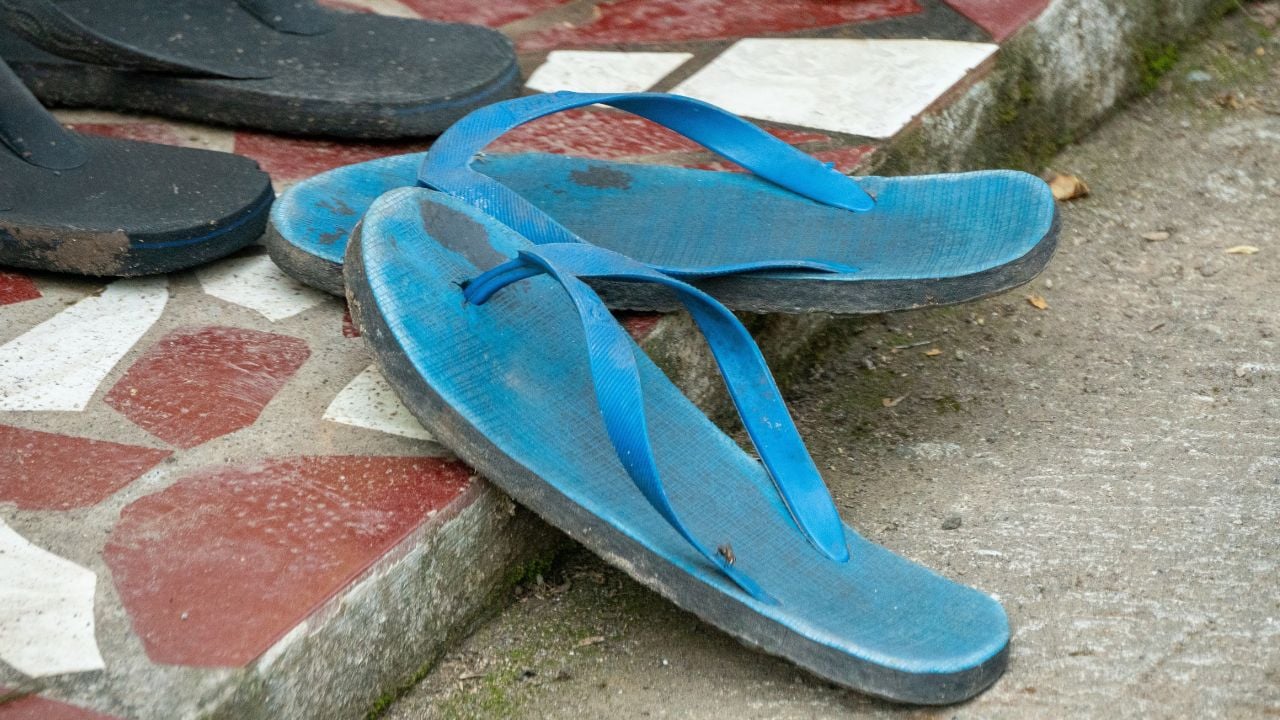
2. Cracked, Crumbling Flip-Flops and Sandals
Flip-flops and rubber sandals spend a Georgia summer working pool decks, hot pavement, and humidity that never lets up.
A pair that sat in the closet the whole time isn’t automatically safer.
Rubber soles break down through a slow reaction with air and sunlight called oxidation, which stiffens and cracks the rubber whether the shoes ever left the house or not.
The foam midsole underneath fails a different way, through compression set.
Heat, UV light, and harsh cleaning products flatten the foam’s cell structure until it stops springing back.
A hot closet or attic gives that process plenty to work with.
A cracked, hardened sole and a flattened one that’s lost its spring are both the tell.
Neither one heals.
A cracked sole can slice a foot open mid-step, so this is one closet item worth pitching the moment it shows the signs.
Why Sandals Fail Two Different Ways
A flip-flop’s rubber sole hardens and cracks through oxidation, a reaction with air and sunlight that keeps working on a shelf just as well as on a foot.
The foam midsole underneath breaks down separately, through compression set, where heat and UV light flatten its cell structure for good.
That’s why a closet full of barely worn sandals can still show up cracked and flat come fall.
3. Chlorine-Faded Swimsuits With Blown-Out Elastic
Georgia’s pool season runs long, and every trip to the lake or the community pool works chlorine deeper into a swimsuit’s fibers.
Chlorine breaks down the elastane inside the fabric, not just the surface, so the stretch doesn’t come back once it’s gone.
A suit that sags at the leg or won’t snap back after a stretch has already lost that fight.
Washing won’t fix it.
Faded color usually shows up right alongside the stretched-out elastic, since the same chemical exposure fades dye and breaks down fiber at the same time.
A swimsuit that’s done its job all summer earns a spot in the donation pile, or the trash if the elastic’s shot, instead of another season taking up closet space it won’t use.
4. Rain Boots and Rain Jackets Gone Sticky or Cracked
Rain in Georgia doesn’t take the summer off, and neither do the boots and jackets that handle it, then get stuffed in a closet corner to bake.
Polyvinyl chloride (PVC) and polyurethane coatings fail two separate ways.
PVC rain boots stiffen through plasticizer loss and dehydrochlorination, where heat and UV pull chlorine out of the plastic and leave it brittle.
Polyurethane jacket coatings fail through hydrolysis instead, the same slow reaction with moisture that eats away at a shoe’s polyurethane sole from the inside.
A jacket that’s gone tacky or sticky to the touch, or boots with cracks spidering across the fold lines, have already failed the one job they have.
Sticky isn’t waterproof.
Georgia’s fall season still brings regular storms, and gear that can’t keep water out is just extra weight in a bag headed for donation.
5. Sun-Yellowed White T-Shirts
Your white T-shirts don’t stand a chance against a Georgia summer of sun and antiperspirant.
Aluminum-based antiperspirant salts react with sweat and build up in the fabric with every wear.
That’s chemistry, not laundry.
Once the yellow ring sets into the underarms or the collar, it’s part of the shirt for good.
Bleach can’t reverse a reaction that already happened, so a closet full of yellowed tees just crowds out the fall layers that need the space.
6. Peeling Faux-Leather Bags and Sandals
Georgia’s heat is rough on faux-leather bags and sandals that spent the summer riding around in a hot car or baking on a porch.
The polyurethane coating that gives faux leather its shine and texture dries out and cracks with enough heat and age, then starts flaking off in little pieces.
It never stops there.
A bag shedding a fine plastic dust onto everything else on the closet shelf, or sandals with a peeling strap, are past saving.
Wipe it down, and the crack just spreads faster.
7. Sports Bras and Bralettes With Blown-Out Elastic
A workout season that runs from March through October puts a sports bra through more washes and more sweat than almost anything else in a woman’s closet.
Elastic fatigues with every wash and wear, the same way a swimsuit’s does, until the band stops snapping back and the support goes with it.
A band that rides up, or straps that won’t tighten past a certain point, have already stretched past the point of return.
That’s not support anymore.
A worn-out bralette doubling as a base layer under a fall sweater won’t do its one job, so it belongs in the toss pile, not the dresser.
8. Ball Caps With Salt-Ringed Sweatbands
A ball cap’s sweatband bears the brunt of a Georgia summer, leaving behind a permanent white ring.
That ring is dried salt and body oil worked deep into the fabric, and it stays there even after a run through the wash.
Bacteria settle in, too.
That’s the musty smell that comes back within a day of the next sweaty walk, no matter how recently the cap went through the laundry.
A cap that still smells after a wash is one a fall tailgate doesn’t need hanging around.
9. Workout Tees With Permanent Odor
A summer of workouts turns into a lot of sweat, and synthetic tees trap more of it than expected.
Polyester is hydrophobic, so it grabs onto oily, odor-causing compounds from sweat and resists the water that’s supposed to rinse them back out in the wash.
Bacteria feeding on that trapped oil are what create the smell in the first place, and chemists call the result permastink.
Cool water won’t release it.
A shirt that smells sour right out of the dryer, every single time, has crossed from a laundry problem into a replace-it problem before fall’s workouts start back up.
10. Tarnished Costume Jewelry
Open a jewelry box that’s spent a summer in a warm drawer.
The tarnish is often the first thing to catch the light.
Base metals like brass, copper, and cheap plating oxidize fast when they’re exposed to moisture in the air, and sweat’s salt speeds the reaction along.
A green ring on the skin after wearing a piece, or a dull black film across the surface, both mean the same thing.
The plating’s breaking down.
A quick polish brings some pieces back, but a piece that’s tarnished black through the base metal, not just the surface, isn’t worth the effort before fall’s jewelry comes back into rotation.
Psst! How much do you know about donating, storing, and washing the clothes you’re clearing out? Flip each card and find out.
11. Faded Game-Day Tees
Georgia’s tailgate season puts a cotton game-day shirt through wash after wash, sun after sun, from the first Bulldogs kickoff through the last Braves game of summer.
Cotton fibers pill and thin with repeated washing, and the dye fades a shade paler every trip through the machine.
A shirt that’s gone see-through at the shoulders, or one whose red has faded to a chalky pink, is more lint than fabric at this point.
That’s not vintage.
That’s worn out.
A faded game-day shirt belongs in the rag pile before the next tailgate, not back on a hanger.
12. Compressed Down Jackets and Vests
A packed closet crams a down jacket or vest into the same corner all summer, flattened under swimsuits and beach bags.
Down loses its loft when it stays compressed for months, and loft is what traps warm air and keeps a jacket working.
A vest that’s been crushed since April can look fine on a hanger in September and still fail to keep anyone warm on the first cold morning.
Pull it out now.
Not in November.
Shake it out, run it through the dryer on low with a couple of clean tennis balls, and watch whether the loft puffs back up.
If clumps of feathers stay flat no matter how long it tumbles, the fill has broken down for good.
No dryer cycle brings a dead jacket back before Georgia’s first cold front rolls through.
9 Things Georgia Shoppers Should Never Buy Secondhand
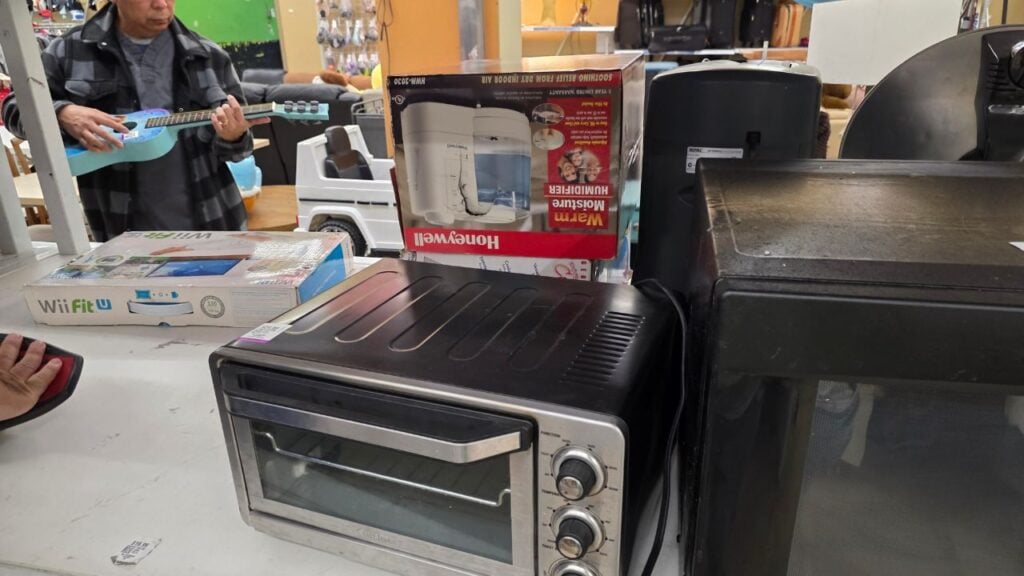
A federal recall doesn’t stop applying just because an item changed hands at a Georgia yard sale.
Atlanta’s Scott Antique Markets pulls in thousands of bargain hunters every month, and a few tables hide a fire risk or a recall the price tag never mentions.
9 Things Georgia Shoppers Should Never Buy Secondhand
7 Georgia State Parks Locals Keep to Themselves (and 3 Everyone Swarms)

Every fall, a line forms at the base of Amicalola Falls before the leaves even finish turning.
Meanwhile, a Georgia lake that bans private docks altogether barely fills its own parking lot.
7 Georgia State Parks Locals Keep to Themselves (and 3 Everyone Swarms)
