
12 Things Tennesseans Over 50 Remember About Nashville Before the Boom

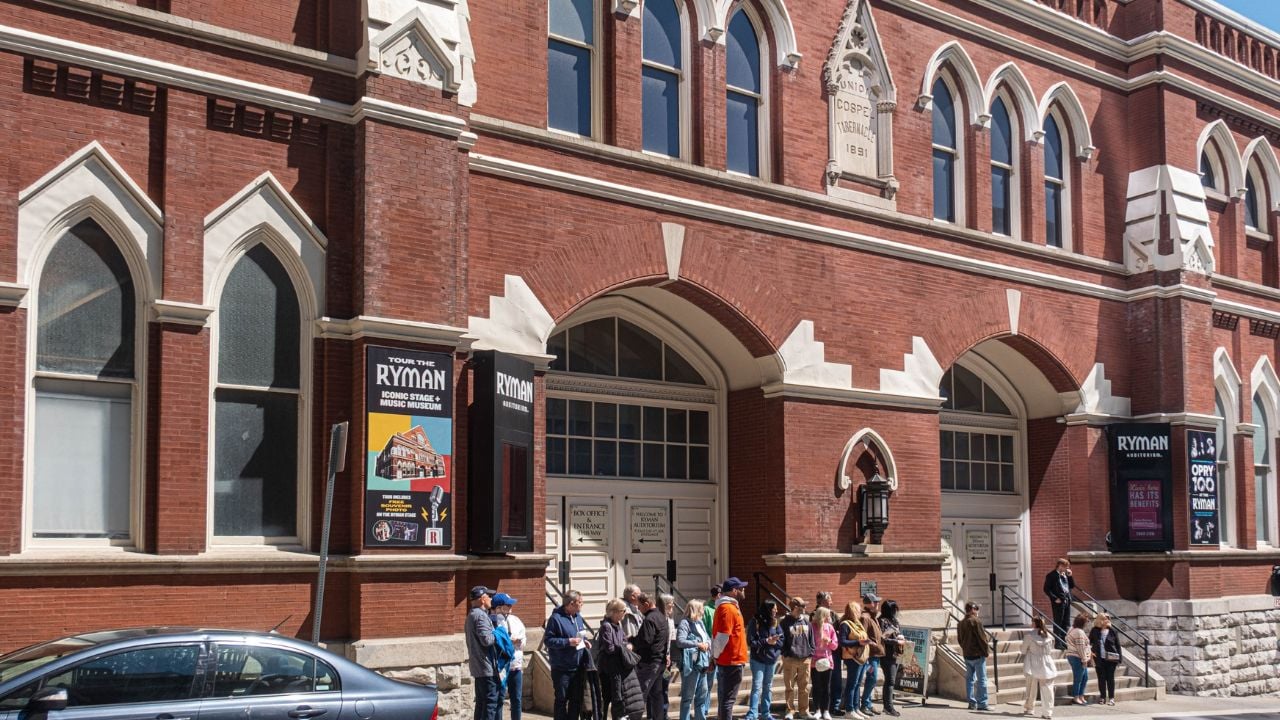
If you’ve lived in Nashville long enough, you probably remember the year the Grand Ole Opry left the Ryman.
A lot of that Nashville is gone now, or wearing a new name.
Here’s what Tennesseans over 50 remember about Nashville before the boom.
1. Church Street Department Stores
Downtown Nashville’s three main department stores, Harvey’s, Cain-Sloan and Castner-Knott, were all on Church Street.
You could visit all three without leaving that one street.
Cain-Sloan was known for its more upscale merchandise.
Castner-Knott stayed downtown until 1996.
Dillard’s bought the four Cain-Sloan stores in 1988, and the downtown location closed and was later torn down.
2. Nashville Banner Newspaper
The Nashville Banner published its first edition on April 10, 1876.
It ceased publication on February 20, 1998, after 122 years of continuous operation.
It ran 122 years.
In 1938, the Banner and the Tennessean built a new publishing facility at 1100 Broadway, which the two papers shared for sixty years.
From then on, if you picked up the Banner, you held a paper that shared its building with the Tennessean.
The Gannett Company, which owned the Tennessean, then bought out the Banner’s owners from their joint operating agreement.
3. Ryman Without the Opry
Nashville’s Ryman Auditorium lost the Grand Ole Opry in 1974, when the Opry’s owners left for new quarters at the Opryland complex.
The Opry had broadcast weekly from the Ryman since 1943.
Once threatened with demolition, the building was saved, but it was used only for tours and for occasional concerts, television tapings, videos and movies.
The Ryman slowly deteriorated.
In 1993, Gaylord Entertainment commissioned a restoration of the building.
4. Country Music Hall of Fame on Music Row
On Nashville’s Music Row, Columbia bought Owen Bradley’s studio in 1962 and made it the label’s headquarters.
Five years later, in 1967, the original Country Music Hall of Fame building opened at the head of Music Row.
It moved downtown in 2001.
5. Union Station Before the Hotel
Built between 1898 and 1900, Nashville’s Union Station was condemned and closed in 1975.
Amtrak passengers kept using the train shed until 1979.
Metropolitan Nashville officials acquired the rapidly deteriorating station in 1985, and by the following year it had been restored as a hotel and restaurant.
After a fire damaged the shed, and no viable preservation alternatives were identified, the shed was razed in late 2000.
6. Football at Dudley Field
The Tennessee Oilers played their first season in Memphis, not Nashville.
In 1998, the team moved to Nashville and played its home schedule at Dudley Field at Vanderbilt University.
That lasted one season.
In November 1998, owner Bud Adams announced the team would become the Tennessee Titans.
For 1999, the team moved into the new Adelphia Coliseum.
7. Predators’ First Season
Nashville’s Predators began play in the 1998-99 season, as the first professional hockey team in Tennessee to join the National Hockey League.
Professional ice hockey had been played in Nashville since the early 1960s, in a minor league.
If you went to a game that first season, you watched a team that won 28 games and earned 63 points.
Attendance averaged 94 percent of capacity over the first three seasons.
8. Sounds Baseball at Greer Stadium
After a one-year stay in the Sally League in 1963, Nashville had no professional baseball team until 1978.
That year, the Cincinnati Reds placed the Nashville Sounds baseball team at Herschel Greer Stadium.
If you saw the Sounds in 1979, you saw a Cincinnati Reds affiliate.
In 1980, the Sounds changed affiliation and became a New York Yankees farm team.
In 1985, the team moved to the Triple-A American Association.
9. Fan Fair at the Fairgrounds
The first International Country Music Fan Fair was held April 12-15, 1972, at Nashville’s downtown Municipal Auditorium.
Growth spurred a move to the Tennessee State Fairgrounds in 1982.
In 2000, the Country Music Association (CMA) announced that the event would move back to downtown Nashville in 2001.
Renamed the CMA Music Festival, the event scheduled concerts for the new Tennessee Titans football stadium and Riverfront Park, and autograph sessions moved to the Nashville Convention Center.
10. The Nashville Network
The Nashville Network (TNN) was founded in 1983 in Nashville as a country lifestyle channel designed to complement the Grand Ole Opry.
If you flipped to TNN in the 1980s, you found a channel that began in Nashville.
CBS acquired TNN from Gaylord in 1997.
After Viacom bought it from CBS in 2000, the network’s name changed to The National Network only four months later.
TNN’s headquarters were later relocated to New York City.
Spike TV followed in 2003.
TNN’s headquarters were later relocated to New York City.
Spike TV followed in 2003.
11. Opryland’s Last Season
Nashville’s Opryland theme park opened in 1972.
At the end of its 1997 season, the park’s owner closed it and announced that a large shopping mall, Opry Mills, would replace it.
Opry Mills opened in 2000.
12. Parthenon Before Athena
Work on Nashville’s Parthenon continued haltingly until it was completed in 1931, after the decision came in 1920 to rebuild it in lasting materials.
When it opened to the public, the statue of Athena was still missing from the interior.
In 1982, the Park Board commissioned Nashville sculptor Alan LeQuire to recreate the forty-two-foot statue.
It took almost eight years.
The statue was unveiled on May 20, 1990.
Before that day, you could visit the Parthenon, but you couldn’t see LeQuire’s Athena.
Psst! How much do you know about Nashville’s history? Take our quiz and see if you can ace it.
Quiz
Nashville Pop Quiz
Answer these questions on Nashville history and landmarks. We bet you can’t get them all right. Prove us wrong?
Which U.S. president dedicated the new Grand Ole Opry House on March 16, 1974?
Nashville's Census Growth
Nashville-Davidson's census count rose from 601,222 in 2010 to 689,447 in 2020.
That's a gain of 88,225 residents, or about 15 percent.
The Tennessee Encyclopedia lists the city's 2000 population at 545,524, so the 2010 count was about 10 percent above that.
8 Food City Deals Tennesseans Only Get With Their Card Scanned First

Tennessee taxes groceries at a reduced 4 percent state rate, and local taxes can add more on top.
A Food City ValuCard can't change that, but it can cut down your bill.
8 Food City Deals Tennesseans Only Get With Their Card Scanned First
8 Things a Tennessee Camera Ticket Can't Legally Do to a Driver
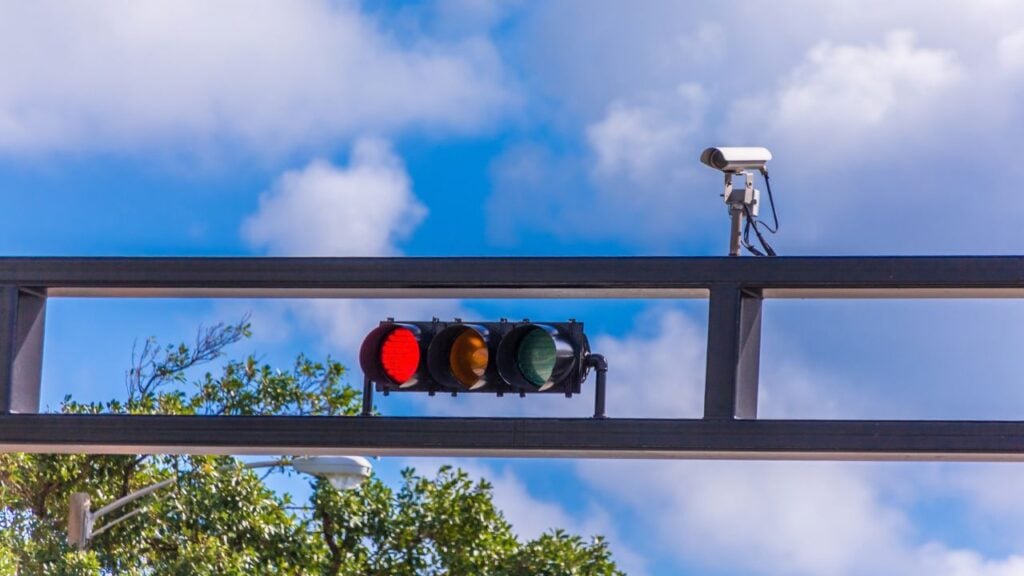
A camera at a Tennessee intersection can catch a driver running the red light and mail a citation days later.
Tennessee law puts hard limits on that citation once it reaches a driver's mailbox.
8 Things a Tennessee Camera Ticket Can't Legally Do to a Driver
