
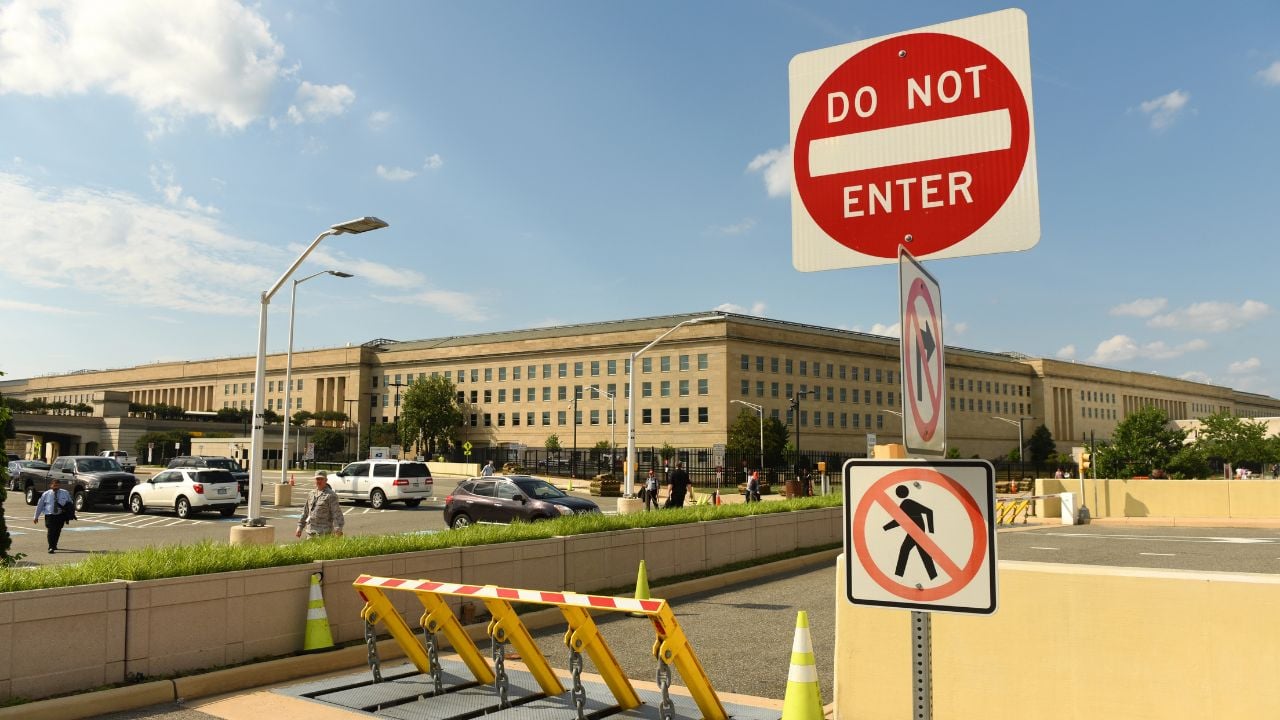
12 Things That Happen at the Pentagon That Many Virginians Have Never Thought About

The Pentagon has more daily commuters than most American small towns have residents.
Almost all of it operates quietly behind the security checkpoints, just a few miles from neighborhoods where people are walking their dogs and waiting for their morning coffee.
Here are 12 things that happen at the Pentagon that many Virginians never knew.
You Can Walk Anywhere in 7 Minutes
The Pentagon has 17.5 miles of corridors.
Read that again. Seventeen and a half miles.
That’s longer than the entire C&O Canal towpath section between Georgetown and Great Falls. It’s the distance from Arlington to Reston.
But here’s the part most people don’t realize: Because of the way the building is designed, you can walk from any office in the Pentagon to any other office in less than seven minutes.
The five concentric rings, the inner courtyard you can cut through, and the radial corridors that connect them all.
The building is essentially a giant geometric efficiency machine.
A messenger in 1943 could walk faster across the Pentagon than a modern employee can walk across most office parks today.
The Land Was Originally Owned by Robert E. Lee
Here’s a Virginia history fact most Virginians have never connected.
The Pentagon was originally going to be built on a plot of land that was once part of the Arlington estate of Confederate General Robert E. Lee.
The plot was roughly pentagon-shaped, which is where the building’s distinctive design came from.
Construction plans changed when officials decided they didn’t want to build the country’s military headquarters right next to Arlington National Cemetery.
The site moved. But the pentagon shape stuck.
The building’s foundation actually contains sand dredged from the Potomac River.
Concrete made from Virginia river sand, on land that connects back to the Lee family, became the headquarters of the United States military.
Most Virginians know the Lee Mansion sits on the hill above the cemetery. Most don’t realize the Pentagon’s footprint is part of the same Arlington estate.
A Hot Dog Stand Once Sat in the Center Courtyard
For about 30 years, there was a small white building in the middle of the Pentagon’s center courtyard. It sold hot dogs.
That’s it.
But during the Cold War, Soviet intelligence reportedly noticed groups of high-ranking U.S. military officials entering the small structure at the same time every day.
The Soviets concluded it had to be a top-secret bunker entrance. According to legend, they kept two nuclear missiles aimed at it at all times.
The building earned the nickname “Cafe Ground Zero.” Pentagon tour guides used to point it out and call it “the deadliest hot dog stand in the world.”
The original stand was torn down in 2006 and replaced with a new dining facility built in roughly the same shape.
The Pentagon courtyard itself is a national historic landmark, so the layout couldn’t change much.
Pentagon employees still eat lunch out there on nice days. Tourists on official tours still hear the Cold War story.
The Pentagon Has Six Zip Codes
The building is so big that it needs multiple zip codes just to handle the mail.
The Pentagon has six different zip codes assigned to it, depending on which branch of the military or which department you’re sending mail to.
The Army has its own zip. The Navy has its own zip. The Air Force has its own zip. So do the offices of the Secretary of Defense and a few other branches.
Despite being in Arlington, Virginia, all of the Pentagon’s zip codes are officially listed as Washington, D.C.
That’s right. A building physically located in Virginia has D.C. mailing addresses.
It’s one of those quiet bureaucratic quirks that Virginians don’t realize until they’re filling out a form.
If you’ve ever sent something to a Pentagon employee and wondered why the address says D.C., that’s why.
The 9/11 Memorial Is the Only Place You Can Take Photos
The National 9/11 Pentagon Memorial sits on the west side of the building, on the spot where American Airlines Flight 77 hit on September 11, 2001.
The memorial is two acres. It opened to the public on September 11, 2008.
There’s a bench for every person who died at the Pentagon that day. 184 benches in total.
Some point toward the building, marking those who died inside. Others point away, marking those on the plane.
Each bench sits over a small pool of water. The wall at the edge of the memorial ranges in height from 3 inches to 71 inches, marking the ages of the youngest and oldest victims.
It’s open seven days a week. There’s no admission fee.
And it’s the only place on the entire Pentagon grounds where photography is allowed.
Everywhere else, cameras are off.
The Pentagon Pizza Index Is Real
This one is so weird it almost can’t be true. But it is.
For decades, journalists and intelligence analysts have noticed that pizza orders to restaurants around the Pentagon spike right before major military events.
The theory is called the Pentagon Pizza Index.
The pattern goes back to the Cold War. Pentagon orders doubled the night before the U.S. invasion of Grenada in 1983.
The same thing happened the night before the invasion of Panama in 1989. On August 1, 1990, the CIA placed a record 21-pizza order in a single night.
Iraq invaded Kuwait the next morning.
These days, OSINT analysts use Google Maps’ “popular times” data to track pizza shop traffic in real time.
In June 2025, a surge in activity at four pizzerias near the Pentagon was flagged at 6:59 p.m. Eastern. At 8 p.m. Eastern, Israel launched a bombing campaign against Iran.
The Pentagon officially denies the theory and points out that there are pizza places inside the building. Defense Secretary Pete Hegseth has joked about ordering pizza on random nights to throw off the trackers.
But the pattern keeps holding.
Northern Virginia pizzerias might be the most-watched restaurants in American intelligence.
27,000 People Show Up Every Day
The Pentagon employs around 27,000 military and civilian personnel.
That’s a small American city showing up to work at the same spot every weekday.
It’s the whole population of Lexington, Virginia. It’s more people than live in Williamsburg.
Many of them are Virginians. They live in Arlington, Alexandria, Falls Church, Fairfax, Springfield, and Loudoun County. Some commute from as far as Stafford or Prince William.
The Pentagon was built to handle 40,000 employees. The 16 parking lots can hold around 8,770 cars. The Metro stop has its own dedicated entrance into the building’s shopping concourse.
So, the next time I-395 traffic crawls to a stop near the 14th Street Bridge in the morning, know that a chunk of that traffic is people headed to or from the Pentagon.
VIPs Land on a Helipad Right Outside
On the north side of the Pentagon, there’s a single pentagon-shaped helipad called the Pentagon Army Heliport.
The helipad is for VIPs. Senior military leaders, foreign defense ministers, the Secretary of Defense himself, and other dignitaries land there on Black Hawks and tilt-rotor aircraft.
They can be inside the building within minutes of touching down.
The original helipad was on the west side of the building, right next to the spot where Flight 77 hit on 9/11.
After the attacks, that helipad was closed and turned into part of the 9/11 memorial. The new helipad opened on the north side.
Virginians driving on the GW Parkway sometimes look up and see military helicopters moving through the airspace around the Pentagon.
Those helicopters often have a foreign defense minister, a four-star general, or a cabinet secretary on board.
Anyone Can Take an Official Tour
The Pentagon offers free public tours.
You go through a security check, hand over your ID, and a uniformed service member walks you through the corridors and tells you stories.
The tour takes about an hour. You see the chapel, the Hall of Heroes, the 9/11 indoor memorial, exhibits on each branch of the military, and historical displays.
You have to book at least 14 days in advance through the Pentagon’s website.
Tours are popular and fill up fast, especially in summer when school groups dominate the schedule.
Most Virginians never bother. They figure the Pentagon is closed off and unapproachable.
It’s not. It’s actually one of the most accessible major government buildings in the country, as long as you plan ahead.
If you’ve got out-of-town relatives visiting Northern Virginia and you’ve already done the Smithsonian, the Pentagon tour is a great option.
The Building Has Its Own Gym, Florist, and Bank
The Pentagon Athletic Center is a 130,000-square-foot gym with a swimming pool, an elevated running track, basketball courts, racquetball courts, squash courts, saunas, spas, and steam rooms.
It sits in the basement of the Pentagon. Most employees can use it.
The shopping concourse has a Bank of America branch, a barber shop, a beauty salon, a florist, a post office, and a food court with Subway, Starbucks, Popeyes, McDonald’s, Taco Bell, Panda Express, and a Lebanese chain.
There’s also a child development center, a chapel, a library, and a network of hallways that double as museum exhibits.
The Pentagon is essentially a self-contained small town.
An employee could arrive in the morning, work out, eat three meals, get a haircut, deposit a check, send mail, buy flowers for an anniversary, and never leave the building.
A lot of them do exactly that, especially in winter when the Virginia weather is miserable.
The Pentagon Has Its Own Police Force
The Pentagon Force Protection Agency, or PFPA, is the dedicated law enforcement agency that handles security at the Pentagon and the surrounding facilities.
It has its own officers, its own K-9 units, its own vehicles, and its own jurisdiction over the Pentagon Reservation.
PFPA officers aren’t Arlington County police. They’re not Virginia State Police. They’re not federal Defense Department civilians.
They’re their own thing, with badges that say “Pentagon Force Protection Agency” and patches you won’t see anywhere else in the country.
The agency was created in 2002 after 9/11, replacing the previous Defense Protective Service.
If you’ve ever seen patrol cars near the Pentagon Metro station with a logo you didn’t recognize, those are PFPA officers.
They have full police powers within their jurisdiction. They run the security checkpoints, the canine units, and the protective details for high-ranking visitors.
It’s a police department that exists for one single building. And almost no Virginian outside the immediate area knows it exists.
It Was Built in 16 Months During World War II
The Pentagon broke ground on September 11, 1941. It opened for business on January 14, 1943.
Sixteen months. From bare ground to a fully functional headquarters for the Department of Defense.
At one point during construction, 15,000 people were working on the building three shifts a day, around the clock, with floodlights running through the night.
The first employees moved in before construction was even finished.
The reason the building was built so fast is that the United States had just entered World War II, and the War Department was scattered across 17 different buildings in Washington.
Officials needed everyone under one roof. Now.
The construction crews delivered.
There’s a strange historical coincidence here that almost nobody mentions in casual conversation. The Pentagon broke ground on September 11, 1941.
Sixty years later to the day, on September 11, 2001, American Airlines Flight 77 hit the building. The Pentagon was nearly burning down on its birthday.
A Building Hiding in Plain Sight
The Pentagon is one of the most photographed buildings in the world from the air. From the ground, many Virginians barely register it.
The next time you’re crossing the 14th Street Bridge or driving on I-395, take a second to look.
The Pentagon has been sitting there since 1943, doing its job, hosting state visitors, hiding hot dog stands, defending zip codes, and pacing 17.5 miles of corridors a day.
It’s the most Virginia thing in Virginia that few people talk about.
12 Things Secret Service Agents Do That Aren’t What You Think

The real job of a Secret Service agent is way more complicated than the movies let on, and a lot of what agents actually do has nothing to do with jumping in front of bullets.
12 Things Secret Service Agents Do That Aren’t What You Think
13 Things That Happen Inside Air Force One That Nobody Sees
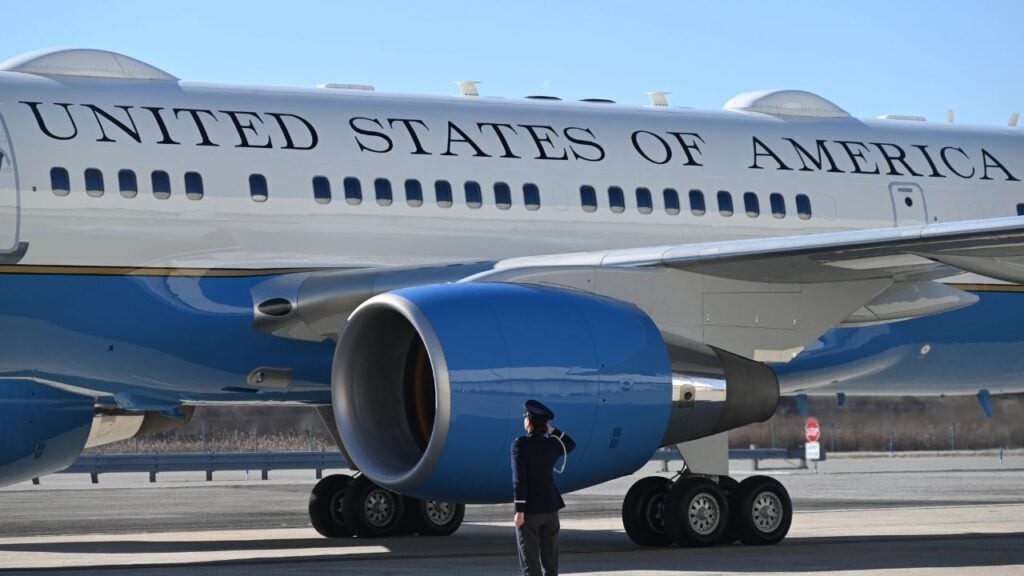
Hollywood has done a number on the public’s idea of what Air Force One is like.
Here’s what really happens on board.
