
12 Things Virginians Brag About That Confuse Everyone Else

Do you think you could pass as a Virginian just by studying a map?
Try saying Staunton out loud first.
Locals say Stan-ten, not Stawn-ton, and getting it wrong marks you as an outsider before you finish the word.
These are the things Virginians brag about that leave everyone else scratching their heads.
1. A Commonwealth, Not a State
Ask a Virginian to describe their home, and “state” is rarely the word they reach for first.
Virginia has called itself a commonwealth since its first constitution in 1776.
The founders picked the word to describe a government built for the common good, not a fancier label for the same thing.
Only three other states share it: Massachusetts, Pennsylvania, and Kentucky.
Legally, nothing changes.
Virginia pays the same federal taxes and sends the same two senators to Washington as anywhere else.
Try telling a Virginian that the word doesn’t matter.
The word still matters to them.
2. Mother of Eight Presidents
Virginia claims a nickname most states can’t touch: The Mother of Presidents.
George Washington, Thomas Jefferson, James Madison, and James Monroe came first, four of the nation’s first five presidents born on Virginia soil.
William Henry Harrison, John Tyler, Zachary Taylor, and Woodrow Wilson round out the list.
Eight is the record.
No other state has produced as many, and a Virginian will list every name before you finish asking the question.
3. Cities That Answer to No County
Virginia runs on a setup almost no other state uses: A city that isn’t part of any county at all.
Richmond, Norfolk, Roanoke, and dozens of others collect their own taxes, run their own schools, and pave their own roads, answering to no county government whatsoever.
The setup traces to Virginia’s 1871 constitution, adopted after the Civil War, which made every incorporated city its own legal equal to a county.
Only a handful of other cities anywhere in the country work this way.
Virginia has 38 of them.
Try explaining that setup to a friend from Ohio, and watch them ask the same follow-up question three times.
4. Thanksgiving Before Plymouth
Virginians will tell you the first Thanksgiving didn’t happen in Massachusetts at all.
On December 4, 1619, Captain John Woodlief and 35 English settlers held a service of thanks at Berkeley Hundred, a plantation along the James River, almost two years before the Pilgrims’ famous 1621 feast.
It wasn’t a feast.
The settlers’ charter ordered the day of their ship’s arrival kept holy every year afterward, a prayer service, not a table of food.
President John Kennedy didn’t put the federal government’s stamp on that claim until 1963, more than three centuries after the fact.
Plymouth still gets the postcard.
5. The Colony That Split in Two
Virginia’s western counties broke away from the rest of the commonwealth in the middle of the Civil War.
When Virginia seceded in 1861, the mountain counties to the west wanted no part of it and set up their own loyal government in Wheeling.
A rebellion within a rebellion.
Congress admitted West Virginia to the Union on June 20, 1863, splitting Virginia in half while the war still raged.
No other state was created that way.
Bring up West Virginia at a Virginia dinner table, and someone always has an opinion about the breakup.
6. A Ham With Its Own Law
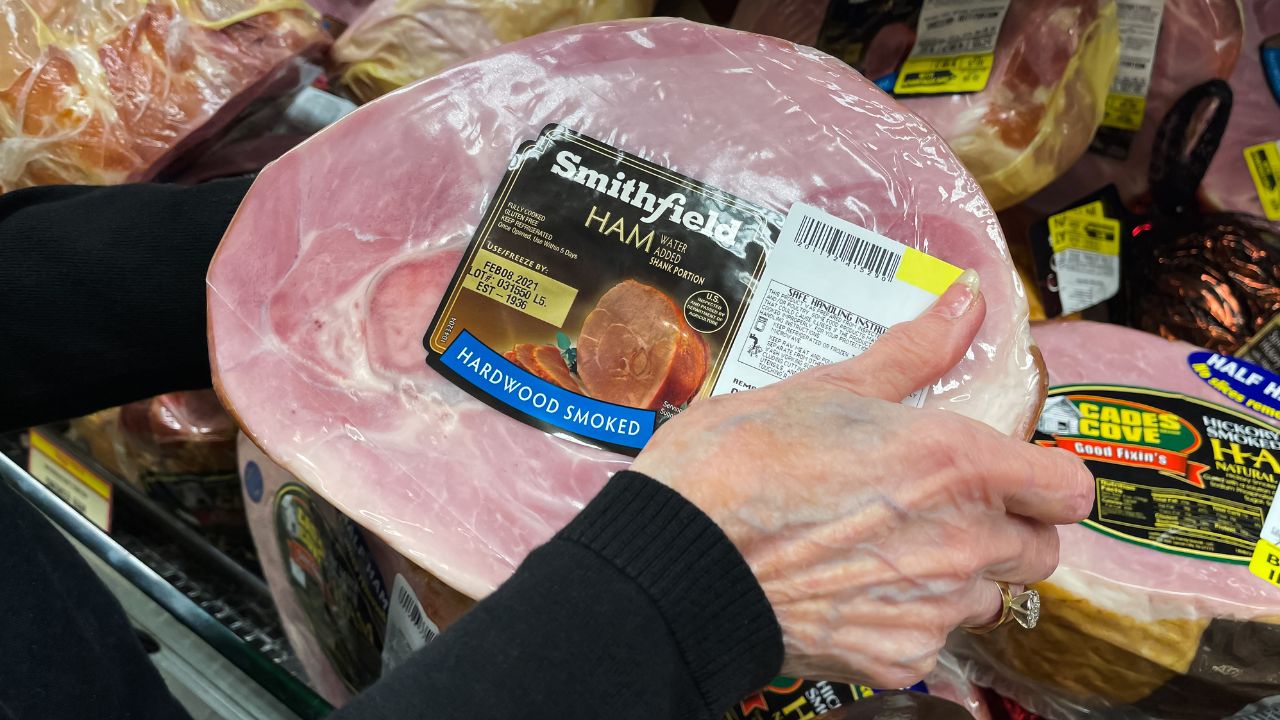
Virginia has a food fight nobody outside the state understands: What counts as a Smithfield ham.
State law says a ham can only carry that name if it’s salted, smoked, and aged for at least six months inside the town limits of Smithfield, Virginia.
Cure it a mile outside town, and the label doesn’t apply, no matter how it tastes.
The Virginia General Assembly locked that rule in back in 1926, when lawmakers worried outsiders would crowd into the ham business.
One town.
One name.
Psst! How much do you know about Virginia’s stranger history? Take our quiz and see how many you can get right.
Quiz
Old Dominion Trivia
Answer these questions on Virginia’s firsts, founders, and landmarks. We bet you can’t get them all right. Prove us wrong?
The first English child born in the Americas in 1587 was named Virginia. In which present-day state was she born?
7. Grapevines by Act of Law
Long before California had a single vineyard, Virginia's lawmakers ordered every household to grow one.
In 1619, the House of Burgesses passed a law requiring every male colonist to plant and tend ten grapevines, hoping to build a wine industry to rival Europe's.
The vines mostly failed.
European grapes couldn't survive Virginia's climate and pests, and even Thomas Jefferson's attempt more than a century later fell apart the same way.
A Richmond doctor finally cracked the formula in 1817 by crossing native rootstock with European vines.
One of the country's oldest wine regions grew out of that stubborn start, and Virginians pour it for guests who assumed the good wine only came from California.
8. Ponies on a Deadline
Every summer, Chincoteague's wild ponies swim across a saltwater channel because a volunteer fire department needs the money.
On the last Wednesday in July, Saltwater Cowboys drive the herd from Assateague Island across the channel to Chincoteague, where the foals go up for auction.
The tradition has run since 1925, funding the same all-volunteer fire company that started it after two fires nearly wiped out the island.
The auction also caps the herd size and pays for the ponies' vet care all year.
Firefighters run the herd.
9. An Accent Nobody Can Pin Down
Ask about Tangier Island, and Virginians will tell you the locals still sound like Elizabethan England.
That part isn't quite true.
Tangier's accent traces back to Cornish and English settlers who arrived in the 1600s and stayed isolated on the island for centuries.
Linguists say the real story is messier than the legend, a blend of old regional dialects rather than one preserved court accent.
The rolled Rs and stretched vowels are real, even if the Elizabethan label isn't.
More people repeat the legend than the truth.
10. One Main Street, Two States
Bristol splits its own Main Street in half, and Virginians brag about which side matters more.
The state line runs down the center of State Street, so a shopper can stand in Virginia and Tennessee within the same step.
In 1927, talent scout Ralph Peer set up recording equipment on the Virginia side and captured the Bristol Sessions, the recordings historians call the Big Bang of country music.
Congress made it official in 1998, naming Bristol the birthplace of country music.
Half a street.
A whole industry.
11. A Stew Two States Claim
Virginia and a Georgia town of the same name have argued about Brunswick stew for generations.
Virginia traces its version to 1828, when a camp cook named Jimmy Matthews stirred squirrel, butter, and onions in an iron pot for a Virginia legislator.
Georgia's Brunswick says its own version dates to 1898 and put up a monument to prove it.
The two versions don't even taste alike, Virginia's built on chicken or rabbit with a buttery base, Georgia's built on tomatoes.
Neither side is backing down.
12. A Motto With a Dark Postscript
Virginia's state motto reads Sic Semper Tyrannis, Latin for "Thus Always to Tyrants," adopted in 1776 to celebrate throwing off a king.
Then, on April 14, 1865, John Wilkes Booth shouted the same phrase after he shot Abraham Lincoln at Ford's Theatre.
Virginians didn't ask for that.
The motto still sits on the state seal, the state flag, and the state quarter, unchanged since long before that April night.
Virginians explain that history the moment a stranger asks about the motto, and the story never gets any shorter in the retelling.
9 Virginia Squatter Rules That Leave Homeowners Powerless

An inherited house sits empty on Virginia's Eastern Shore, checked once a season if that.
By the next visit, there's a mattress in the back bedroom and a stranger's name on the mail in the box.
9 Virginia Squatter Rules That Leave Homeowners Powerless
9 Scams Hitting Virginia Retirees Hardest in 2026

A stranger sits in a parked car outside a Roanoke home, waiting for an elderly man to walk out and hand over an envelope of cash.
The caller who arranged it all swore it was the only way to keep that money safe.
