

12 Things Washingtonians Say That Leave the Rest of the Country Lost

Say Sequim with two syllables, and a Washingtonian knows you’re visiting.
Washingtonians pick up words like that early, and they stump just about everyone else.
Here’s what Washingtonians say that leaves the rest of the country lost.
1. The Mountain
When you hear “the mountain’s out,” it means Mount Rainier is visible again after the clouds, fog or rain clear.
A university folklore archive records the saying from an informant who grew up in Puyallup.
The informant described it as what you say when you can finally see the mountain after the rain clears, and explained the nickname as a matter of Rainier being the main mountain around.
2. Sequim
Sequim is pronounced “Skwim,” one syllable, according to a HistoryLink essay, so a local may notice you’re visiting if you say it with two.
The name comes from a poor English approximation of the Klallam word for a hunting ground.
The Northwest Indian Fisheries Commission’s 2010 correction says the name apparently means a place for going to shoot.
Both sources treat the popular translation of the name as a mistake.
3. Seattle Freeze
The Seattle Freeze is a reputation, and a 2020 Mossback’s Northwest column describes newcomers getting smiles and nods, then wondering whether an invitation will ever follow.
If you’ve ever waited for a neighbor to knock first, you’ve felt it.
The phrase didn’t appear until the early 2000s.
A 1920 Seattle Times story already described Seattle people as too cold and distant.
That story covered a Chamber of Commerce plan called Talk to Your Neighbor Day, which the column says appears to have been a flop.
4. Puyallup
If you’re sounding out Puyallup, it’s pronounced “pew-AL-up,” according to Seattle Met’s pronunciation guide, which adds that nobody gets it exactly right.
The Lushootseed original sounds closer to “pooh-AL-up,” but that language can’t be fully written in the Roman alphabet.
5. Geoduck
If you’ve only seen geoduck in print, Dictionary.com gives the American pronunciation as “GOO-ee-duck.”
The Encyclopedia of Puget Sound says the word has been spelled several ways, including gooeyduck and gweduck.
It traces the word to a Lushootseed term meaning dig deep, though the meaning is uncertain.
Merriam-Webster dates the word to 1881 and traces it to Lushootseed, a Salishan language of the Puget Sound region.
6. Cascade Curtain
A 2004 magazine essay says Eastern Washingtonians wryly call the divide across their state the Cascade Curtain.
If you’re crossing the Cascades, you’re crossing that curtain.
The curtain is imagined to divide two vastly different peoples.
Psst! How much do you know about Washington? Take our quiz and see if you can ace it.
Quiz
Washington Pop Quiz
Answer these questions on Washington’s mountains, lakes and history. We bet you can’t get them all right. Prove us wrong?
Mount St. Helens erupted on May 18, 1980. According to the Washington Secretary of State’s office, how many people died?
7. Spokane
Spokane rhymes with "pan," not "cane," according to the same Seattle Met guide.
The common mistake, spo-KAINE, isn't far off from the original Native name.
What Spokane Means
HistoryLink's thumbnail history gives the commonly agreed meaning of Spokane as Children of the Sun.
There are varying theories about the name.
8. Sunbreaks
Sunbreak is a Western Washington weather term for "a small window of sunshine on an otherwise cloudy day," according to KING 5's weather terms guide.
If your forecast promises sunbreaks, expect clouds with small windows of sun, not a sunny day.
A FOX 13 Seattle forecast from September 30, 2026, ran under the headline "Seattle weather: Morning clouds to afternoon sunbreaks Wednesday."
The forecast itself calls for more sunbreaks into the afternoon, along with dry skies.
9. Eastside
The Eastside is an informal term for the towns east of Seattle across Lake Washington.
According to Seattle Met, Bellevue, Kirkland, Redmond, Mercer Island, Sammamish and Issaquah are the obvious members.
If a friend invites you to the Eastside, ask which Eastside they mean.
King County Council Member Claudia Balducci said by email that residents elsewhere in Washington use Eastside to mean the eastern half of the state.
She often avoids the mix-up by saying East King County.
10. Puget Sound Without "The"
When you say Puget Sound like a local, there's no "the" in front, according to a 2016 story from Seattle public radio station KUOW.
A columnist quoted in the story says the extra "the" sounds wrong to him. He calls it a California habit that came in through broadcast, and says people have said Puget Sound since early settlement.
11. Convergence Zone
If you're new to Western Washington, the same KING 5 guide defines a convergence zone as localized rain from wind circling the Olympic Mountains and meeting over Puget Sound.
The National Weather Service calls it the Puget Sound Convergence Zone.
The zone generally forms north of Seattle, though it may move as far south as Boeing Field or SeaTac Airport.
It can produce a narrow band of showers, thunderstorms or snow.
A 2018 FOX 13 story quotes a meteorologist on the Puget Sound convergence zone and says the rain is usually more intense right over Snohomish County.
12. Evergreen State
If you call your state the Evergreen State, you're repeating a nickname Gov. John H. McGraw used in his 1893 inaugural address, according to a Senate bill report.
C.T. Conover, a Seattle realtor and historian, gets credit for the nickname, which he gave the state for its abundant evergreen forests.
The Legislature has considered the nickname for official designation but never adopted it.
The Senate passed a bill to change that 49-0 in February 2025 and again in January 2026.
On March 12, 2026, the bill went back to the Senate Rules Committee, where the Legislature's website still listed it in October 2026, with no House passage.
9 Reasons People Are Leaving Washington, According to Those Who Left
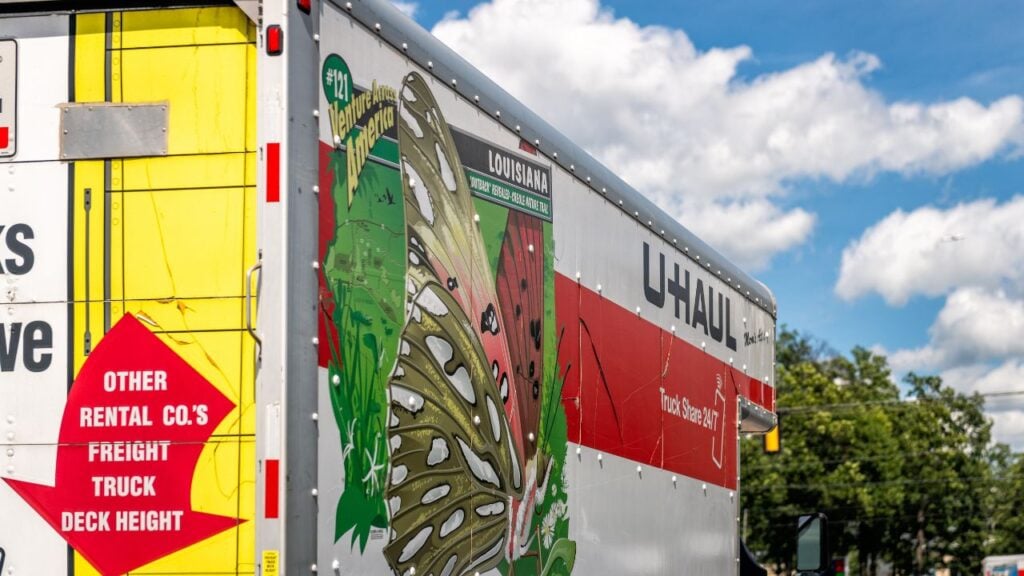
Some Washingtonians who left the state are explaining why.
A spring 2026 survey from the Association of Washington Business found that some employers are weighing a move out of state, too.
9 Reasons People Are Leaving Washington, According to Those Who Left
7 WinCo Checkout Rules New Washingtonians Find Out About at the Worst Moment
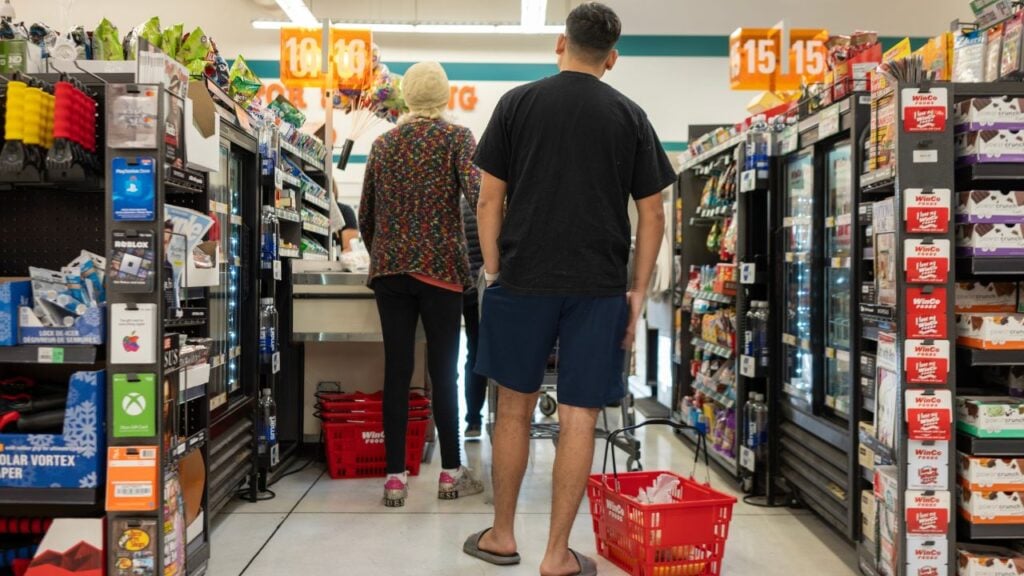
Shoppers new to the state often learn WinCo's payment rules with a full cart already on the belt.
The checkout line is a bad place to find out.
7 WinCo Checkout Rules New Washingtonians Find Out About at the Worst Moment
