

12 Words Wisconsinites Used in the 1960s That Nobody Under 50 Understands

Have you ever used a word from your 1960s Wisconsin childhood and gotten a blank look from your grandkids?
Some of those words were about something as ordinary as what went on your toast.
Here are the words Wisconsinites used in the 1960s that nobody under 50 understands.
1. Trackless Trolley
Milwaukee County’s transit history says trackless trolleys, the rubber-tired electric buses, were substituted for streetcars beginning in 1936.
Many younger people wouldn’t know the name.
You could still ride one until June 1965, when the last two trackless trolley routes were converted to diesel buses.
2. Oleo
Oleo is short for oleomargarine, and the Wisconsin Historical Society says the oleo wars raged in the dairy state from 1881 to 1967.
From 1895 until the repeal, you couldn’t legally buy yellow margarine in Wisconsin, and some residents once had to bootleg their margarine from bordering states.
Wisconsin was the last state to repeal its ban, in 1967, which left the 1895 law standing for 72 years.
Thirty-two states passed anti-color laws against margarine tinted yellow to look like butter.
Oleomargarine’s Name and Its Last Tax
Oleomargarine takes its name from oleum, the Latin word for beef fat, and margarites, the Greek word for pearl.
The 1967 repeal still included a tax of five and a quarter cents on every pound.
That tax expired in 1973.
3. Bubbler
A 1963 editorial in the Racine Journal-Times said why Milwaukee used the term bubbler for a drinking fountain was hard to say.
One of the first uses of the word for a drinking fountain appears in Kohler Co. material from 1914.
You’d hear it chiefly in eastern Wisconsin, especially the southeastern corner.
Rhode Island does too.
4. Nike Site
A Nike site held anti-aircraft missiles, and Milwaukee’s defense ring consisted of eight sites, including the lakefront Maitland airstrip, the Encyclopedia of Milwaukee says.
The sites were equipped with launching stations for Nike anti-aircraft missiles during the 1950s and 1960s. Each one housed up to twelve radar-controlled rockets.
Beginning in 1958, the Maitland, Waukesha and River Hills stations acquired the more lethal Nike Hercules weapons.
In 1971, the army announced it would close all of its Wisconsin missile facilities.
If you’ve been to Summerfest, you’ve been where the abandoned Maitland station stood.
5. Intact Busing
The Milwaukee School Board used intact busing to ease overcrowding in inner-city schools, taking entire classes of students and their teachers from an overcrowded school to one with space.
The classes stayed together as a unit, and often the students rode back to their regular schools for lunch and for dismissal.
The practice began in the late 1950s and lasted until 1971.
Starting in the mid-1960s, the Milwaukee United School Integration Committee (MUSIC) opposed it, saying the policy was discriminatory and helped maintain segregation.
6. Freedom Day
On May 18, 1964, about 11,000 students stayed out of Milwaukee Public Schools in a boycott.
Picture roughly 11,000 empty desks on a single morning.
MUSIC sponsored the boycott to highlight the poor education Black students received and the segregation within the school system.
Several North Side churches and community centers hosted alternative classes called freedom schools, with lessons that centered on freedom, brotherhood, justice and equality.
Psst! How much do you know about Wisconsin in the 1960s? Take our quiz and see if you can ace it.
Quiz
Sixties Wisconsin IQ
Answer these questions on Wisconsin life in the 1960s. We bet you can’t get them all right. Prove us wrong?
A mayoral panel reportedly floated a German name for the festival that became Summerfest in 1968. What did it mean?
7. Beat Coffeehouse
Beat coffeehouses were hangouts tied to the 1950s Beats, and Milwaukee's Purple Eye was a little storefront next to Riverside High School.
The Purple Eye was short-lived, but a number of similar beat coffeehouses and restaurants followed and lasted into the mid-1960s.
The Encyclopedia of Milwaukee counts the Avant Garde among the few establishments that made the transition from 1950s Beats to 1960s hippies.
It ran from 1962 to 1968 on the East Side.
8. Teach-In
A teach-in was an extended meeting, usually on a college campus, for lectures, debates and discussions, and the word dates to 1965.
On April 1, 1965, a crowd of over 1,000 students attended a 10-hour teach-in against the Vietnam War at the University of Wisconsin-Madison. Twenty-five faculty members led it in the Social Science Building.
9. Be-In
Milwaukee's first be-in took place in April 1967, three months after the initial be-in in San Francisco.
Many younger people picture the hippie era as a California story. Milwaukee hippies had gained public notice around 1965.
10. Love-In
A love-in was a gathering for the expression of mutual love, and the word dates to 1967.
At least three love-ins were held in Milwaukee during the summer of 1968, the Encyclopedia of Milwaukee says.
11. Open Housing
Milwaukee's open housing marches began in August of 1967 and went on for 200 consecutive nights, ending in March of 1968.
The marches and the ordinance they pushed for went by two names, open housing and fair housing.
The NAACP Youth Council Commandos, formed in 1966, were a unit of primarily young men.
12. Underground Paper
Underground papers were countercultural newspapers, and Milwaukee's first, the typed and mimeographed The Advocate, appeared as early as 1961, the Encyclopedia of Milwaukee says. It lasted less than a year.
John Kois returned from San Francisco in 1967 and, with a few friends, began publishing Kaleidoscope.
It published 105 biweekly issues between October 1967 and November 1971.
The Bugle later replaced Kaleidoscope as a major countercultural paper.
4 Things Wisconsin Cranberry Growers Do After the Bogs Are Flooded
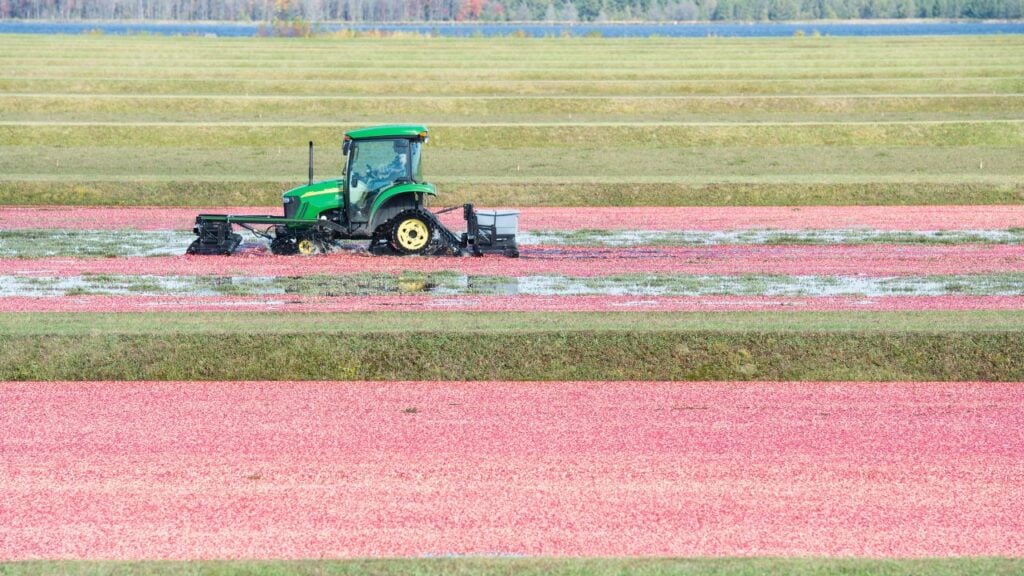
A flooded bog full of red berries is one of fall's best sights in central Wisconsin.
For growers, that pretty picture is where some of the hardest work begins.
4 Things Wisconsin Cranberry Growers Do After the Bogs Are Flooded
7 Woodman's Policies Employees Wish Wisconsinites Understood Before Their First Trip
Woodman's can feel like a lot the first time you walk in.
Wisconsinites who've shopped there for years know the house rules, but first-timers can get caught off guard.
7 Woodman's Policies Employees Wish Wisconsinites Understood Before Their First Trip
