
13 Accidents That Changed History for Illinoisans

An engineer drops a spring on the floor, and a government spokesman fumbles his notes on live television.
Neither of them had any idea they were about to change the world.
That’s the strange thing about history. Some of the best things from it come from clumsy mistakes.
So, the next time you feel like a screwup, remember the company you’re in.
These are the accidents that completely changed history for Illinoisans.
A Forgotten Dish Gave Us Penicillin
In 1928, a Scottish scientist named Alexander Fleming came home from holiday to a sink’s worth of neglected lab dishes.
One petri dish of bacteria had grown a patch of blue-green mold, and all around that mold, the bacteria had died.
Plenty of scientists would have scrubbed the dish and forgotten it.
Fleming got curious.
That mold was making the world’s first true antibiotic.
Before penicillin, a simple scratch could turn deadly. After it, infections that once killed routinely became a quick prescription.
One messy workbench changed medicine forever.
A Melted Candy Bar Built the Microwave
In 1945, engineer Percy Spencer was working on radar equipment for Raytheon when he noticed something strange.
The chocolate bar in his pocket had melted into a mess, even though he hadn’t felt any heat.
Curious, he held some popcorn kernels up to the same gear.
They popped.
An egg came next, and it burst in a coworker’s face.
Spencer had stumbled onto the fact that microwaves could cook food.
The first ovens were the size of a refrigerator. But within a couple of decades, the microwave landed in nearly every kitchen in America.
A Wobbly Spring Became the Slinky
In 1943, naval engineer Richard James was trying to invent a spring that could keep delicate instruments steady on rolling ships.
One day, he knocked a tension spring off a shelf by accident.
Rather than clattering into a heap, it stepped gracefully end over end, from the shelf to a stack of books to the floor, where it stood right back up.
His wife, Betty, flipped through the dictionary and named it the Slinky.
The couple sold 400 of them at a Philadelphia department store in 90 minutes, and a toy legend was born.
Wallpaper Cleaner Turned Into Play-Doh
This one started life as a cleaning product.
Back when homes were heated with coal, a Cincinnati company sold a soft putty to wipe soot off wallpaper.
Then America switched to gas heat, walls stopped getting sooty, and the company was staring down bankruptcy.
A nursery school teacher noticed how much the children loved molding the leftover putty into shapes.
She suggested selling it as a toy. They tweaked the recipe, added color and a scent, and Play-Doh hit shelves in 1956.
A failing cleaner became a childhood staple.
Super Glue Was a Wartime Reject
During World War II, a chemist named Harry Coover was trying to make clear plastic for gun sights.
The goo he created stuck to absolutely everything, which made it hopeless for precision lenses.
The team tossed it aside.
Nine years later, Coover was working on heat-resistant canopies for jets when a colleague rediscovered that same sticky formula.
This time, Coover saw the gold mine in front of him.
He had cyanoacrylate, better known as Super Glue.
It hit stores in 1958, and later helped seal soldiers’ wounds on the battlefields of Vietnam.
A Failed Glue Made the Post-it Note
In 1968, a 3M chemist named Spencer Silver set out to invent a super-strong adhesive.
He got the exact opposite, a glue so weak it could be peeled off and stuck down again without leaving a trace.
For years, it sat around looking useless.
Then a colleague named Art Fry, tired of paper bookmarks slipping out of his church hymnal, smeared a little of Silver’s weak glue on a slip of paper.
The bookmark stayed put, then peeled off clean.
Today, the world buys tens of billions of Post-it Notes every year.
A Chef’s Revenge Maybe Invented Potato Chips
Here’s a tale that’s equal parts history and legend.
As the popular story goes, in 1853, a chef named George Crum was working at a resort in Saratoga Springs, New York, when a fussy diner kept sending back his fried potatoes for being too thick.
Annoyed, Crum sliced them paper-thin, fried them crisp, and salted them heavily out of spite.
The customer loved every bite.
Historians are skeptical of the details, since crispy fried potatoes show up in Saratoga before Crum’s day.
True or not, the Saratoga Chip took off, and the rest is snack history.
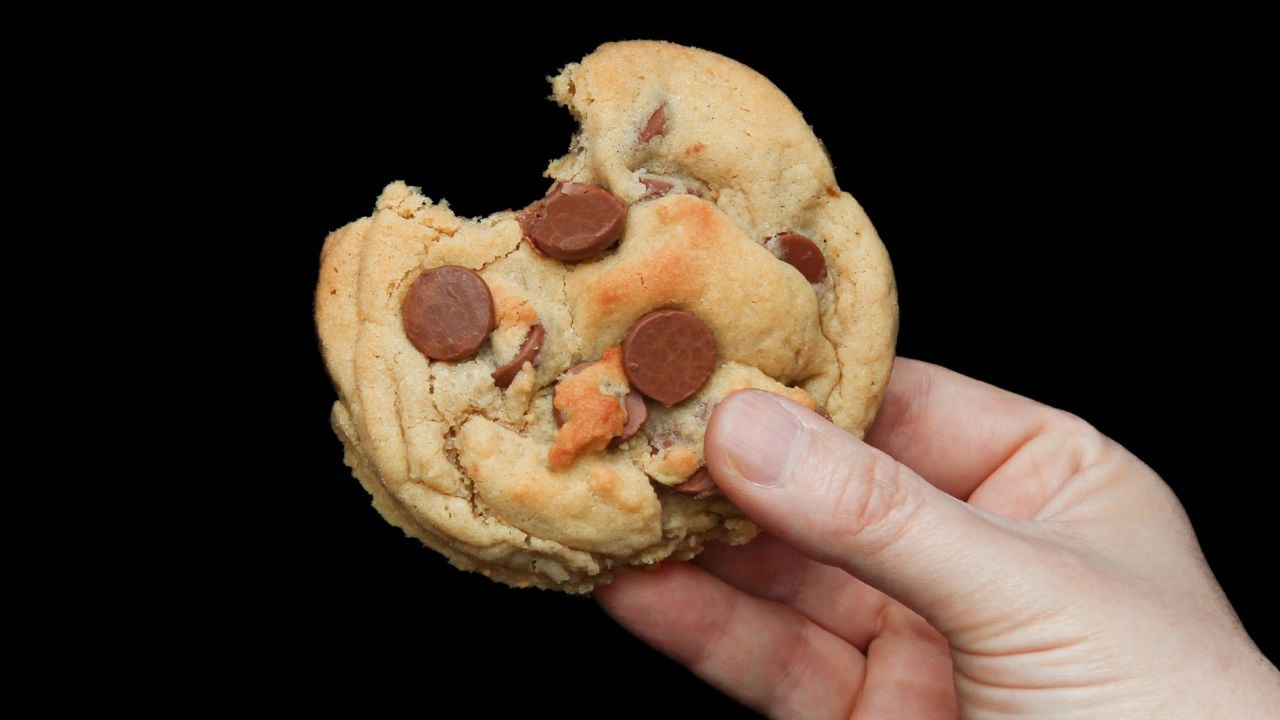
A Baking Hunch Created the Chocolate Chip Cookie
In the 1930s, an innkeeper named Ruth Wakefield was baking for guests at the Toll House Inn in Massachusetts.
As the story usually goes, she chopped up a bar of Nestle chocolate and stirred the bits into her cookie dough, expecting them to melt and spread into chocolate cookies.
They didn’t.
The chunks held their shape, and she pulled the first chocolate chip cookies out of the oven.
The recipe grew so popular that Nestle started printing it right on the package.
Wakefield reportedly sold them the rights for a single dollar and a lifetime supply of chocolate.
A Headache Remedy Became Coca-Cola
In 1886, an Atlanta pharmacist named John Pemberton was tinkering with a medicinal syrup meant to ease headaches and fatigue.
An assistant mixed the syrup with carbonated water by mistake, instead of the plain water he meant to use.
The fizzy result tasted far better than anyone expected.
Pemberton began selling it at a local pharmacy soda fountain for five cents a glass, billing it as a brain tonic.
His bookkeeper dreamed up the name and penned the flowing script logo still in use today.
A drugstore remedy grew into a household name in nearly every country on Earth.
A Mysterious Glow Revealed the X-Ray
In 1895, German physicist Wilhelm Rontgen was experimenting with a vacuum tube wrapped in black cardboard.
Across the room, a coated screen began to glow, even though the cardboard should have blocked any light.
Puzzled, Rontgen realized invisible rays were passing right through solid objects.
He named them X-rays, with the X standing for unknown.
When he held his hand in the beam, he could see the bones beneath his own skin.
Within months, doctors were using X-rays to spot broken bones and bullets, and medicine gained the power to see inside the living body.
Pigeon Droppings Helped Prove the Big Bang
In 1964, two Bell Labs astronomers, Arno Penzias and Robert Wilson, kept picking up a faint hiss in their giant antenna.
The noise came from every direction, day and night, and they couldn’t make it stop.
They blamed pigeon droppings inside the antenna, so they trapped the birds and scrubbed it clean.
The hiss remained.
It turned out they were hearing the afterglow of the Big Bang itself, the oldest light in the universe.
That stubborn hiss earned them a Nobel Prize and confirmed how the cosmos began.
A Wrong Turn Sparked World War I
On June 28, 1914, Archduke Franz Ferdinand of Austria was riding through Sarajevo when a bomb was thrown at his car.
It bounced off and wounded others instead.
Shaken but unhurt, he decided to visit the wounded in the hospital.
His driver, who was never told the route had changed, made a wrong turn onto a side street, then stopped to reverse.
Standing right there was Gavrilo Princip, one of the assassins from earlier that morning.
Princip stepped forward and fired.
Within weeks, the tangled alliances of Europe collapsed into the First World War.
A Fumbled Announcement Opened the Berlin Wall
By November 1989, East Germany was cracking under mass protests and a flood of citizens slipping away to the West.
On the 9th, an official named Gunter Schabowski was handed a note about loosened travel rules, with no briefing on the fine print.
At a televised press conference, a reporter asked when the new rules took effect.
Schabowski shuffled his papers, paused, and guessed: “immediately, without delay.”
Within hours, thousands of East Berliners swarmed the checkpoints.
The overwhelmed guards opened the gates.
The collapse had been building for years, but one fumbled sentence handed it a date.
19 Gilligan’s Island Facts Even the TV Show’s Biggest Fans Don’t Know
For many Americans, Gilligan’s Island was a silly, beloved sitcom. But as it turns out, this little island paradise was hiding some juicy trivia.
19 Gilligan’s Island Facts Even the TV Show’s Biggest Fans Don’t Know
18 Disturbing Facts You’ll Wish You Never Learned
The facts we’re about to share will make you set your coffee down and stare at the wall for a second.
Warning: You can’t unread these.
