
13 Florida Problems Floridians Pretend Don’t Exist

Welcome to the Sunshine State, where lovebugs arrive twice a year and many drivers around you are uninsured.
Few of these problems make it onto travel blogs.
Here are the Florida problems many locals prefer to pretend don’t exist.
Note: This is general information, not insurance advice. Coverage, rates and figures are subject to change, so check the specifics with your insurer or agent.
1. Home Insurance Bills
The average home insurance premium in Florida rose 34 percent from the fourth quarter of 2022 to the first quarter of 2025, by Insurance Journal’s calculation from Florida Office of Insurance Regulation data.
The average premium reached $3,023 in that last quarter.
That average comes from dividing about $23 billion in premiums by nearly 7.6 million policies.
Among the state’s largest insurers, average annual premiums ran from about $1,685 to about $5,600.
Your bill can differ a lot depending on which company writes your policy.
In 2026, home insurance rates have decreased in 51 counties as of July 30.
If you haven’t checked your renewal quote lately, your county may be one of them.
2. Uninsured Drivers
Uninsured drivers may account for about one in five cars around you, and you can’t tell which drivers.
The Insurance Research Council estimated 20.6 percent of Florida drivers were uninsured in 2023, according to the Insurance Information Institute.
The national rate was 15.4 percent.
Florida ranked seventh highest on that list.
3. Pedestrian Deaths
Pedestrian deaths in Florida reached 3,726 from 2020 to 2024, according to the Dangerous by Design report.
That’s the third-highest total in the country, behind California and Texas.
The rate for Florida was 3.32 deaths per 100,000 residents.
Only four states had a higher rate, which makes Florida the fifth most dangerous state for walking.
Nine of the 27 most dangerous metro areas on the list are in Florida.
If you walk in Tampa Bay or Jacksonville, you’re in two of them: Tampa Bay ranked eighth overall, and Jacksonville ranked sixteenth.
4. Condo Reserve Gaps
Condo reserve gaps can run deep, and the Champlain Towers South association in Surfside shows how deep.
The association was projected to have about $706,000 in reserves by January 2021, according to a March 2020 reserve study.
The firm that wrote it recommended nearly $10.3 million.
That would have left the association with 6.9 percent of the recommended amount.
The building collapsed in June 2021, and the state has added inspection and reserve requirements since.
More than 16,000 condominium associations, covering over 900,000 of Florida’s 1.5 million condo units, fall under those requirements.
If you own a condo, the costs can reach your wallet, such as the $3,000 special assessment a Kissimmee owner faced for new electrical panels, Orlando station FOX 35 reported.
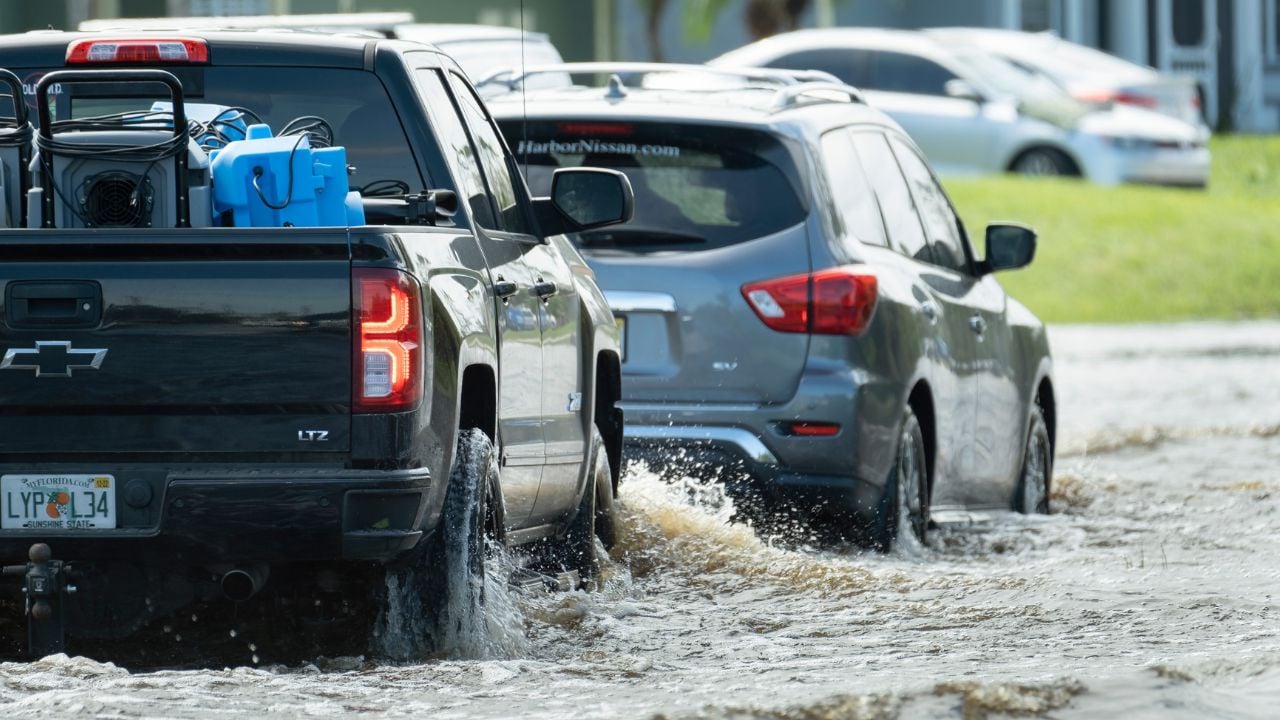
5. Sunny-Day Flooding
Sunny-day flooding, which the National Oceanic and Atmospheric Administration (NOAA) calls high tide flooding, can occur on sunny days and in the absence of storms.
The 2026-2027 outlook says Clearwater is the only East Gulf station predicted to meet or exceed its record number of high tide flood days.
Mayport, Florida is predicted to see up to 22 high tide flood days.
A 2024 WLRN report said St. Petersburg tied or broke its record for high-tide flood days in the last year.
You can look up the station nearest you in the outlook.
What Counts as a Flood Day
NOAA marks a high tide flood day when a station’s water level passes a set threshold.
You may see NOAA’s outlook call high tide flooding “recurrent” or “nuisance flooding.”
6. Sinkholes
Sinkholes are a built-in risk in Florida, since the Department of Environmental Protection says the entire state sits on top of several thousand feet of limestone.
Thousands of naturally occurring sinkholes can be seen throughout the state.
Wherever you live in the state, you live on that limestone.
Insurers handled 2,360 sinkhole claims in 2006, according to a 2010 report from the Florida Office of Insurance Regulation.
By 2009, the count had grown to more than 7,200.
Hernando, Pasco and Hillsborough counties made up about two-thirds of the claims.
7. Citrus Greening
Citrus greening has weighed on Florida’s orange crop since the disease was first found in 2005.
In a 2016 report, University of Florida economists said orange acreage was down 26 percent and yield was down 42 percent since 2005.
Production dropped from 242 million boxes to 104.6 million boxes by 2014.
The bacterial disease damages a tree’s vascular system and keeps it from taking in nutrients.
As of January 2016, there was no cure and no economically viable way to manage infected trees.
The USDA’s final forecast for the 2025-26 season is 12.92 million boxes of oranges.
Florida Citrus Mutual reported improved tree health and fruit quality during that season.
8. Burmese Pythons
Almost 28,000 wild Burmese pythons have been removed from Florida and reported to the Fish and Wildlife Conservation Commission since 2000.
More than 19,000 of them came out through contractors for the agency and the South Florida Water Management District since 2017.
The 2026 Florida Python Challenge alone removed 280.
Burmese pythons prey on birds, mammals and other reptiles in the Everglades.
If you visit the Everglades, you’re in the area where they’re found.
9. Green Iguanas
Some green iguanas dig burrows that erode and collapse sidewalks, foundations, seawalls, berms and canal banks.
If you have a seawall or a canal bank, you have reason to care.
Their droppings can end up on docks, boats, seawalls, porches and pool areas.
Your lawn can take a hit too, since iguanas damage residential and commercial landscape vegetation.
The prohibited species list includes green iguanas, which the state wildlife agency considers invasive because of their impacts on native wildlife.
Under a special order on Feb. 1 and 2, 2026, 5,195 green iguanas were removed.
Psst! Think you can spot the myths behind these headaches? Tap each card and see how many you can call.
10. Red Tide
Red tide has hit Florida’s Gulf coast since at least the 1840s, when blooms were documented there.
Red tides can last as little as a few weeks or longer than a year.
The longest documented Gulf coast bloom lasted 31 months, from 2001 to 2004.
The organism behind red tide produces brevetoxins that can affect the central nervous system of fish and other vertebrates, causing these animals to die.
About 3.5 tons of dead fish and marine life were collected in Manatee County in the two weeks before March 10, 2023, public radio station WUSF reported.
The Fish and Wildlife Conservation Commission’s Oct. 2, 2026 status update found only background to very low concentrations of Karenia brevis in samples from Northwest and Southwest Florida.
Blooms can fade and then return.
Before you plan a Gulf coast beach trip, you can check that status page.
11. Lovebugs
Lovebugs hit Florida’s roads twice a year, with outbreaks in April and May and again in August and September, according to University of Florida researchers.
Adults live only about three to four days.
The insects’ remains can pit a car’s finish if you don’t remove them within a few days.
They clog radiator fins during flights, which can make cars overheat.
Remains on your windshield can obstruct your vision.
12. Summer Heat Records
Summer heat set a Tampa record on July 27, 2025, when the city hit 100 degrees for the first time.
The National Weather Service confirmed the reading at Tampa International Airport.
Official records there began on April 1, 1890, about 135 years earlier.
Until then, the city’s high was 99 degrees, reached earlier that same day and in June 1985 and June 2020.
Heat indexes approached or exceeded 110 degrees, and a heat advisory covered the region.
Summer 2025 was the third-hottest on record in Tampa.
The city had 29 mornings when the low never fell below 80 degrees, the third-most on record.
If you were up early in Tampa that summer, 29 mornings started at 80 degrees or warmer.
Psst! How much do you know about Florida’s weather, wildlife and waterways? Take our quiz and see if you can ace it.
Quiz
Extremes Quiz
Answer these questions on Florida’s weather, wildlife and waterways. We bet you can’t get them all right. Prove us wrong?
Florida’s all-time record high temperature, set in 1931, is how many degrees?
13. Lightning Fatalities
Lightning has killed six people in Florida in 2026, as of the National Weather Service's Sept. 22, 2026 update.
That's the most of any state, and Wisconsin and Utah followed with two each.
Nationwide, 16 lightning deaths are listed for 2026 as of that update.
Across the country, lightning kills about 20 people each year.
The 2026 table counts direct fatalities only, and the data is preliminary.
Storm Data has the official numbers.
8 Things Floridians Notice the Week Seasonal Rentals Reopen
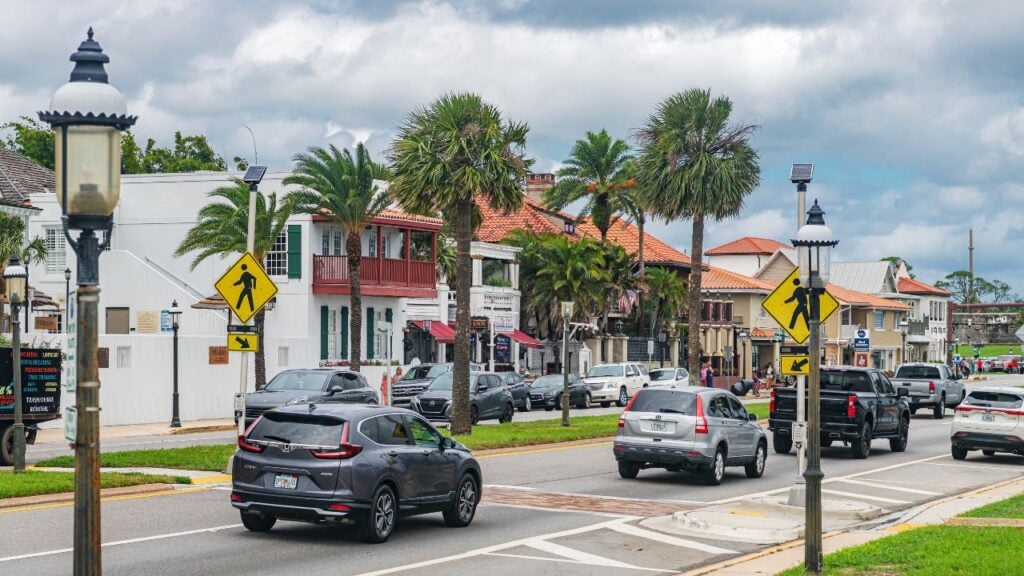
Florida fills up every winter.
The surge starts the week the seasonal rentals reopen, and locals feel it fast.
8 Things Floridians Notice the Week Seasonal Rentals Reopen
8 Pool Rules Florida Homeowners Break Without Realizing It

A backyard pool can be perfectly legal in Florida.
What often isn't legal is the safety barrier nobody finished.
