

13 Phrases North Carolina Baby Boomers Still Say Even If Nobody Else Does

Ask one linguist how many dialects North Carolina has, and his answer is anywhere from two to 200.
Your family’s way of talking may be part of that mix, especially if your parents or grandparents grew up there.
Here are the sayings many boomers still use that leave younger folks confused.
1. Co’ Cola
Co’ Cola is what some older generations in the state say for soda, according to Our State.
Many boomers still say it, so you might hear it at a family table.
In Appalachia, some folks drink dope instead of soda.
2. Mashing the Button
Mash the button is the older way to say push it.
A 2009 Farm Bureau roundup of state dialect terms says older residents more frequently use mash instead of push.
When someone tells you to mash a button, you’re hearing the older of the two verbs.
3. Carrying the Kids to the Movies
Did your parents carry you to the movies, or take you?
In rural areas, parents carry their kids to the movies, according to Our State.
Before bed, those parents cut off the lights, while city folk take their kids and turn off the lights.
4. Might Could
Might could is a double modal, which means it stacks two helper verbs.
North Carolina State University’s news site says the phrase is so common in the state that it’s barely noticeable, unless you moved from up North.
When you say she might could do it, you’re making a less forceful statement than a single modal like may would.
5. Fixin’ To
Fixin’ To means getting ready to or being about to do something, according to the Southern Appalachian glossary.
The phrase apparently developed in the United States in the early 19th century.
Cataloochee, North Carolina, supplies a 1939 example in which a storyteller sees a large panther lying on a log, fixing to jump on him.
If you stop at the State Fair dialect booth, you’ll find Fixin’ To on a button next to Bless Your Heart and All Y’all.
6. Laying Out of School
Lay out of school is a Western North Carolina phrase for playing hooky, according to a 2009 Farm Bureau roundup of state dialects.
Western North Carolina speech is heavily influenced by Scotch-Irish settlers.
If your family comes from the mountains, the phrase may sound familiar.
7. Whistle Pig
Whistle pig is a Western North Carolina name for what you may call a groundhog.
The roundup also says the state used to split in half over the sound a horse makes, with horses wickering in the east and nickering in the west.
8. Granny Woman
If you hear granny woman, you’re hearing a word for a midwife, according to the Southern Appalachian glossary.
The earliest citation is an 1812 Haywood County, North Carolina, entry recording a payment to Granny Judy.
The newest citation, from a 2002 book of remembrances, credits a granny woman with bringing a child into the family.
9. Talking to Buncombe
When you call something bunkum, you’re using a word that Merriam-Webster traces to Buncombe County, North Carolina.
NCpedia says Congressman Felix Walker, who represented western North Carolina, gave a speech on a militia pension bill to a nearly empty chamber.
Asked about it, he reportedly said he was speaking to Buncombe.
The speech dates to 1820 and the respelled bunkum to 1838, and the word means insincere or foolish talk.
10. A-Huntin’ and A-Fishin’
A-huntin’ and a-fishin’ is how some folks in the western part of the state say they’re going out, according to Our State.
A PBS page on a-prefixing says some dialects of English put an a- sound before words that end in -ing.
It gives a-hunting as an example.
If you’ve said you’re going a-huntin’, you’ve used the a- prefix.
11. Hoi Toide
Hoi Toide is the Outer Banks way of saying high tide, and Our State says that vowel sound came down from the Chesapeake Bay area.
If you spend time on the Outer Banks, you may hear the vowel in high tide stretch into Hoi Toide.
A 2014 report on linguists Walt Wolfram and Jeffrey Reaser’s dialect book mentions the Outer Banks pronunciation, hoi toid.
The research behind the book drew on more than 3,000 recorded interviews statewide.
12. North Cackalacky
North Cackalacky is a nickname for the state, and North Carolina State University’s news site has traced where it likely came from.
It likely developed from a sound-play utterance once used to parody the rural ways of people from Carolina.
Servicemen at rural bases used the word in a somewhat derogatory way in the 1940s, and natives later reappropriated it.
If you use the nickname today, you’re using a word natives reclaimed.
Other proposed roots include the Cherokee word tsalaki, the German word kakerlake and a Scottish soup.
It calls the I Speak North Cackalacky pin-back button one of the most popular items given away at North Carolina State University’s annual State Fair exhibit.
13. Fine in the World
Fine in the World is a phrase Our State says is popular among members of the Lumbee community.
If you stop at the State Fair dialect booth, you can grab a button that reads Fine in the World.
Wolfram and three co-authors used the phrase as the title of a 2021 book on Lumbee English from the Language and Life Project at North Carolina State University.
The Lumbee of Robeson County, North Carolina, carved out a unique dialect of English after losing their ancestral languages generations ago.
Five Dialect Regions
Our State’s profile of Wolfram names five main dialect regions, starting with the Southern Appalachian Highlands and the Coastal Plain.
The other three are Pamlico Sound, the Virginia Piedmont along the northern border counties and the North Carolina Piedmont in the central counties.
If you grew up in North Carolina, your home county falls in one of the five.
Ask Wolfram how many dialects the state has, and his answer is anywhere from two to 200.
The State Fair Dialect Booth
A 2013 report from North Carolina State University said about 40 of Wolfram’s students staffed the booth in four-hour shifts across the fair’s 11 days.
That year was the fourth in a row for the project at the fair.
Visitors were tested on how to pronounce the town names Corolla, Fuquay-Varina, Pinetops and Conetoe, so you can quiz yourself the same way.
Psst! How much do you know about North Carolina talk? Take our quiz and see if you can ace it.
Quiz
North Carolina Talk IQ
Answer eight questions on North Carolina words and where they come from. We bet you can’t get them all right. Prove us wrong?
In the North Carolina mountains, what’s a “boomer”?
Regional Vowels
If you say raht as rain, Wolfram knows you're from either Appalachia or the Coastal Plain.
A University of North Carolina Press Q&A with Wolfram and his co-author Jeffrey Reaser says tahm for time is very common in the Piedmont.
Tahm is much more common in rural areas than cities, and among older people than younger ones.
Rahs for rice tends to be more common in the western part of the state and the Coastal Plain.
8 Things North Carolina Small Towns Still Do That the Rest of the Country Gave Up On
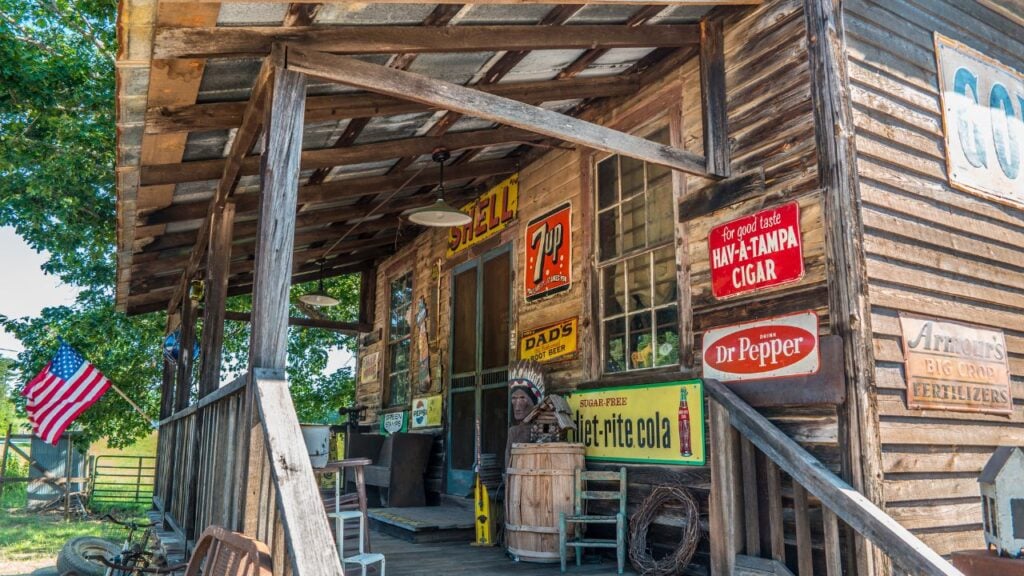
A bull named Old Buck crashes a village dance on Hatteras Island.
Rodanthe wouldn't have it any other way.
8 Things North Carolina Small Towns Still Do That the Rest of the Country Gave Up On
8 Things North Carolinians Are Tired of Hearing From Virginians
Virginia is right next door, so a Tar Heel hears plenty from the neighbors.
Some of those remarks wear thin quickly.
8 Things North Carolinians Are Tired of Hearing From Virginians
