

13 Phrases Virginia Baby Boomers Still Say Even If Nobody Else Does

Still in bed at nine on a Saturday? An older Virginian might tell you you’re burning daylight.
Sayings like that stuck around in parts of the state long after younger folks stopped using them.
Here are the phrases Virginia baby boomers still say, even if nobody else does.
1. If the Creek Don’t Rise
“If the Lord is willing and the creek don’t rise” is a closing phrase that Waterford historian Eugene Scheel collected from people native to the Virginia Piedmont and Tidewater.
You’d either say it right after a goodbye or use it to finish a sentence that began “I’ll see you if.”
The first half means staying alive until you meet again.
The second half is an allusion to the few area bridges of the 19th century.
Many older folks still use it to close a conversation.
2. Fair to Middlin’
“Fair to middlin'” is a Piedmont expression for how someone feels.
The phrase was first applied to the quality of grains and only later to how a person feels.
Ask a friend how the week went, and if the answer is “fair to middlin’,” you know it was neither a disaster nor a party.
3. Pay No Mind
Southeast Virginia folks used to pay no mind to gossip, columnist John Edwards wrote in the Smithfield Times.
Many of these sayings are used in parts of the South, not just in Southeast Virginia.
Tell a friend to pay it no mind, and you’re using the same words.
Pay it no mind.
4. Come-Heres
The Dictionary of American Regional English lists come-here as a term for someone who doesn’t have roots in a community.
The word turns up chiefly in the South Midland, especially on Delmarva, with Virginia citations from the Eastern Shore, Lancaster County, and Newport News.
The Piedmont used the same word for a person or family recently moved to an area.
New in town? You qualify.
How Long You Stay a Come-Here
On the Eastern Shore, a come-here is someone whose family has lived there fewer than four generations, more or less, per a 1983 citation.
In the Piedmont, the label went to families who had settled there after the Civil War.
Even families who arrived in the 1870s were often still called that through the 1960s.
5. Burning Daylight
If you’re still in bed at nine on a Saturday, you’re burning daylight.
In Piedmont talk, the expression means wasting the daytime hours, lounging around when you could be doing something useful.
Many Piedmont areas lacked electricity until the late 1930s to early 1950s, so daytime was work time.
6. Make a Crop
In Southeast Virginia, farmers talk of “making” a crop rather than growing one.
Whether farmers make a crop depends on the weather.
If your tomatoes have survived a dry July, you’ve made a crop.
7. Katy, Bar the Door
When someone you’d rather not see comes up the walk, Scheel recorded a joke for that visitor: “Katy, bar the door.”
You’ve met the neighbor who promises five minutes and stays an hour.
If you see that car pulling in, you know the line.
8. Snake-Bit
“Snake-bit” is how Piedmont talk describes a person plagued with hard luck.
You can be snake-bit without ever seeing a snake, and a flat tire, a dead battery, and a missed bus in one week will do it.
9. Near ‘Bout
In Southeast Virginia talk, “near ’bout” means nearly.
Nearly never quite covered it, but near ’bout did.
If you’ve ever told someone you’re near ’bout done, you’ve used it.
Say it fast, and the two words run together.
10. Up With the Chickens
Roosters often crow at the first glimpse of light on the eastern horizon, and Piedmont talk ties “up with the chickens” to them.
The phrase came to describe someone who gets out of bed very early.
The hour depends on the sunrise, so you get a break in winter.
11. Wear Out
In Southeast Virginia talk, “wear out” meant to whip.
A “hissy,” a fit of anger, sits right above it on the same list.
If a relative threatens to wear you out, you now know what that means.
12. Down the Country
“Down the country” was the phrase people in western Loudoun County and the Leesburg area used for eastern Loudoun.
Before the 1960s, that meant eastern Loudoun and western Fairfax County, which had few people and only one town, Herndon.
Which way was down depended on where you lived in Loudoun.
Down meant east.
13. Taken Down
Southeast Virginia talk used “taken down” for being stricken by an illness, such as the flu.
Had the flu flatten you lately? Then you were taken down, and the rest of the week was no picnic.
Right after it on the list comes a bumpy road that can shake your gizzard loose.
Road Talk
The Piedmont list includes a full vocabulary for bad roads.
A pig path is an impassable or nearly impassable back road, or a little-known route.
Featherbed Lane was the name for the roughest roads in a county, and Loudoun had three of them.
Stepping on bear paws means you’re driving too close to the edge of a country road.
Drivers on rural roads also have “the hand,” raising one hand off the steering wheel to greet an approaching vehicle.
Wave back.
If you’ve ever lifted a finger off the wheel for a stranger, you’ve given it.
Psst! How much do you know about how Virginia sounds? Take our quiz and see if you can ace it.
Quiz
Say It Like Virginia
Answer nine questions on how Virginia places are said. We bet you can’t get them all right. Prove us wrong?
Virginia Tech’s Speech Lab mapped how people across Appalachia say the region’s name. Which pronunciation was concentrated in the middle of the region?
Single Words From Southeast Virginia
Single words fill out the Smithfield Times column's list of Southeast Virginia speech.
Snaps are green beans.
A passel is a great many, and a mess is enough to eat for supper.
A swivet is a hurry, especially the rush to clean up before company.
Goozle is the throat, and skuse is an excuse.
Firewood is often cut from laps, the limbs left over from trees cut for lumber.
Offer a neighbor snaps for supper and you know what you're handing over.
4 Things That Set a Virginia County Fair Apart
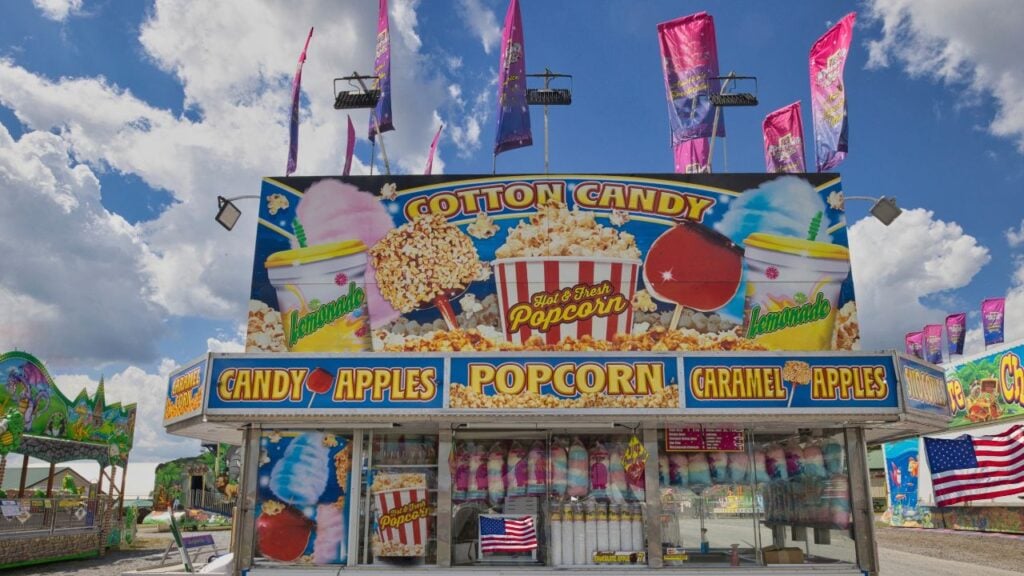
Virginia's county fairs have more going on than rides and funnel cake.
These are the details that set them apart.
4 Things That Set a Virginia County Fair Apart
NPR Tracked 114 Walmart Items for a Year. These 9 Price Jumps Should Worry Virginia Shoppers

NPR checked 114 items at one Walmart for a year, and a dozen eggs dropped 30% by December.
Almost half the items on the list got more expensive in 2025, and some may be in your cart.
NPR Tracked 114 Walmart Items for a Year. These 9 Price Jumps Should Worry Virginia Shoppers
