
13 Things People From Pittsburgh Do That the Rest of Pennsylvania Can’t Stand

Ask someone from Philadelphia, Harrisburg, or Lancaster what they think about Pittsburgh, and you’ll get an answer worth hearing.
Here are the thirteen things that answer consistently includes that the rest of Pennsylvania can’t stand.
1. The Yinzer Dialect as a Full Identity
Pittsburgh’s distinctive dialect, the yinzer, with its n’at and yinz and jagoff and specific vowel patterns, is one of the most recognizable regional accents in the country.
Pittsburghers carry it with a pride that’s genuine… albiet occasionally becomes a performance.
The rest of Pennsylvania has regional speech patterns too. Philadelphia has a strong accent that its residents are equally proud of. Central Pennsylvania has its own patterns.
The difference is that Pittsburgh sometimes turns the dialect into a personality category in a way that the rest of the state finds annoying.
2. The Steelers as Pennsylvania’s Default Football Team
Pittsburgh Steelers fans exist across Pennsylvania in numbers that Steelers fans take as evidence that the team belongs to the whole state.
Philadelphia disagrees with this assessment strongly and with six decades of evidence.
Eagles fans in eastern Pennsylvania, which is a significant portion of the state’s population, have never once considered themselves part of the Steelers family.
They find the assumption that Pennsylvania defaults to Pittsburgh football a specifically western Pennsylvania perspective that hasn’t made it through the mountain passes yet.
3. The Bridge Count as a Conversation Topic
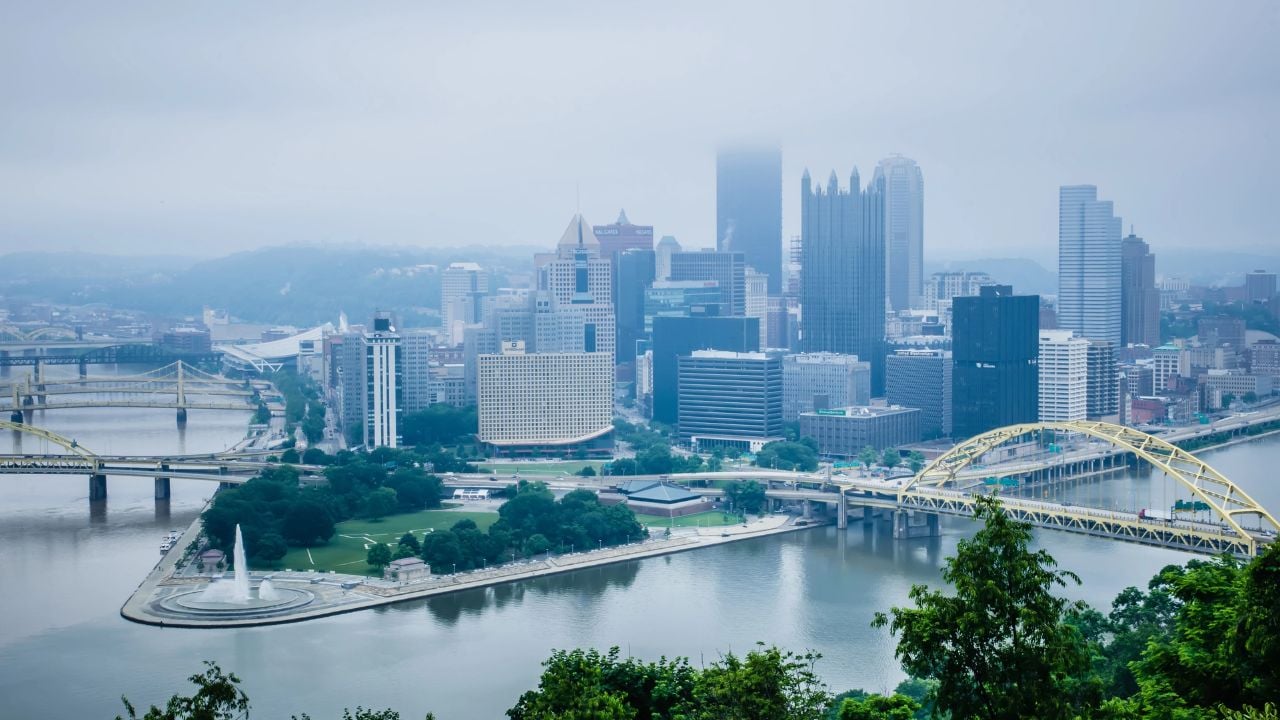
Pittsburgh has more bridges than any city in the world, and Pittsburghers know this and rave about it.
The bridge count is a genuine fact and a legitimate point of civic pride.
The rest of Pennsylvania has absorbed this information across enough separate conversations to have it memorized and to have developed a response that acknowledges the fact without encouraging a longer discussion about the specific bridges, their histories, and their engineering characteristics.
4. The Primanti Brothers Loyalty That Travels
Primanti Brothers is Pittsburgh’s iconic sandwich shop, famous for putting french fries and coleslaw directly on the sandwich.
Pittsburgh’s relationship with Primanti Brothers is deep and travels with Pittsburghers when they leave the city.
Philadelphians who’ve encountered the Primanti Brothers conversation in a context where they were discussing cheesesteaks find the interruption specifically Pittsburgh in its confidence.
Both sandwiches are real. The conversation about which one deserves more national attention has never been resolved and keeps happening.
5. The Three Rivers Geography as a Conversational Frame
Pittsburgh’s position at the confluence of the Allegheny, Monongahela, and Ohio Rivers is a defining geographic feature that Pittsburghers reference regularly as an explanation for the city’s character, layout, and history.
The three rivers come up. A lot.
They come up in conversations about Pittsburgh traffic, Pittsburgh neighborhoods, Pittsburgh history, and Pittsburgh weather.
The rest of Pennsylvania has its own rivers and geographic features that it doesn’t reference with quite the same frequency.
So, the three rivers geography sometimes feels to non-Pittsburghers like a recurring chapter in a book they’ve been reading for years.
6. Calling Pennsylvanians East of Harrisburg “Philly People”
Pittsburgh’s geographic frame sometimes collapses everything east of the center of the state into a Philadelphia-adjacent category that the residents of Lancaster, York, Reading, Allentown, and a dozen other significant Pennsylvania cities find inaccurate and dismissive.
Those cities aren’t Philadelphia.
They have their own identities, their own cultures, and their own relationships with both Pittsburgh and Philadelphia that don’t reduce to being on the Philadelphia side of a binary.
Pennsylvania has a lot of middle that Pittsburgh occasionally skips over in its mental map of the state.
7. The Industrial Heritage as Perpetual Narrative
Pittsburgh’s steel industry history is real, significant, and has shaped the city and the region in ways that deserve acknowledgment and remembrance.
Pittsburgh’s relationship with that history, the mills, the steel workers, the economic transition, shows up in conversations with a regularity that the rest of Pennsylvania, which has its own industrial histories, sometimes finds repetitive.
The coal mining heritage of Central and Eastern Pennsylvania shaped those regions just as profoundly.
The industrial history of Philadelphia’s manufacturing era is equally significant.
Pennsylvania’s industrial story is broader than the steel mills of the Mon Valley, and Pittsburghers who’ve absorbed their chapter as the whole story occasionally forget the rest.
8. The Carnegie Museums Mention
Pittsburgh’s Carnegie Museums, the natural history museum, the art museum, the Carnegie Science Center, and others, are genuinely excellent cultural institutions that Pittsburgh is right to be proud of.
The frequency with which Pittsburghers mention the Carnegie museums in conversations about culture, education, and what the city has to offer produces a reaction in the rest of Pennsylvania that acknowledges the museums’ quality while noting that the rest of the state also has cultural resources that aren’t in Pittsburgh.
Philadelphia’s art museum. The Pennsylvania Academy of the Fine Arts. The Barnes Foundation.
The rest of Pennsylvania has a culture that doesn’t need Carnegie’s name on it.
9. The Pittsburgh Left
The Pittsburgh Left is a driving custom unique to the city in which the driver turning left at a green light goes before oncoming traffic, based on an informal understanding that the first car turning left gets to go ahead of the first oncoming car.
It’s a real thing. It has a name.
Pittsburghers know it and use it.
Drivers from other parts of Pennsylvania who encounter it for the first time experience it as a near-miss that requires an explanation they weren’t ready to need.
10. Treating Heinz as a Pittsburgh Product Rather Than a National One
H.J. Heinz was founded in Pittsburgh, and Pittsburgh’s pride in this is understandable and legitimate.
The degree to which Pittsburgh claims Heinz ketchup as specifically Pittsburgh’s contribution to American culture is something the rest of the country, which also uses ketchup and doesn’t think of it as a regional product, receives with some puzzlement.
The ketchup is everywhere.
Pittsburgh’s ownership of it in conversation is specifically local in a way that the product itself hasn’t been for over a century.
11. The Rust Belt Resurrection Story That Precedes Every Conversation About Pittsburgh
Pittsburgh has undergone a genuine and significant transformation from an industrial city in decline to a healthcare, technology, and education hub, and this transformation is a real story worth telling.
The rest of Pennsylvania has heard it enough times to have it memorized in outline form.
The frequency with which Pittsburghers introduce the transformation narrative as context before discussing anything else about the city produces a reaction that’s part acknowledgment and part readiness to get to the actual conversation.
The story is good. It’s been told.
12. The Specific Pittsburgh Winter Complaints
Pittsburgh’s winters are gray, overcast, and long in ways that Pittsburghers discuss with the detail of people who’ve been tracking the weather data personally.
The cloud cover statistics. The number of gray days per year. The specific quality of Pittsburgh winter that differs from Philadelphia winter or Harrisburg winter or the winter elsewhere in Pennsylvania.
Pennsylvania winters are generally difficult.
Pittsburgh’s conviction that its specific winter is the most characterful and conversation-worthy winter in the state is a position that the rest of Pennsylvania, which is also cold, hasn’t fully adopted.
13. The Assumption That Philadelphia Doesn’t Understand Pittsburgh
Pittsburgh and Philadelphia have a state-long relationship built on mutual misunderstanding that both cities contribute to equally.
Pittsburgh’s version of this is a conviction that Philadelphia doesn’t get Pittsburgh, doesn’t appreciate Pittsburgh, and doesn’t have adequate respect for the western part of the state.
Philadelphia has a corresponding conviction running in the other direction.
The middle of the state, which deals with both cities regularly and belongs fully to neither, observes this dynamic with the tired patience of people who’ve been the buffer zone in this particular disagreement for their entire lives.
7 Ways You Can Totally Tell Someone Is From Pennsylvania

These are our favorite “I’m from Pennsylvania” traits. Do you agree? If you’re from Pennsylvania, let us know your favorite giveaways that someone is a Pennsylvanian.
7 Ways You Can Totally Tell Someone Is From Pennsylvania
17 Life Hacks That Are Harder Than the Non-Hack

Life hacks are supposed to make your life easier, and sometimes they really do. However, the internet is rife with hacks that aren’t actually effective.

This is just a litany of complaints. Pittsburgh has always been treated as a “less than” area by our neighbors to the East.
They ALL have their own boastful images of why theirs is the most cultured sophisticated area in which to live.
What ELSE is good about Pittsburgh? We help each other out. We tend to be honest and direct and kind and helpful and nonjudgmental..
Forgive me if I got a little disturbed about seeing my hometown being discouraged by some ignorant knucklehead, who just decided he had a bone to pick with this area of the state