
14 Everyday Habits That Only Make Sense to Washingtonians

You can leave Washington for a while and still find yourself doing things the Washington way.
What feels natural back home can earn you a curious look elsewhere in the U.S.
These are the everyday habits that only make sense to Washingtonians.
1. Skipping the Umbrella
Out of habit, Washingtonians walk through a rainy afternoon with a hood up and no umbrella in sight.
A late-2024 Axios Seattle reader poll of 287 respondents found that 60% reach for a rain jacket alone, while only 6% carry an umbrella and use it.
Even the 82% who own an umbrella mostly leave it in a drawer.
Western Washington’s rain typically falls as a fine, wind-driven drizzle instead of the sudden downpours an umbrella is built to block.
The umbrella flips inside out before it does any good.
2. Chasing a Sunbreak
There’s a local word for the sun breaking through a solid wall of winter clouds: A sunbreak.
Local meteorologists use the term on air, and residents treat the moment as reason enough to step outside.
It’s worth it.
A five-minute gap in the clouds is enough for someone to step onto a porch, water the garden, or just stand in it before the gray closes back in.
Washington’s gray season runs long enough that residents lean on daylight and vitamin D to push through it, according to Cascade PBS reporting on the state’s long, cloud-heavy stretch.
3. Checking the Pass Report
Before crossing the Cascades in winter, Washingtonians habitually check the mountain pass report first.
Snoqualmie Pass on I-90 and Stevens Pass on US 2 can demand tire chains or turn drivers back within hours during a storm, even while Seattle sees nothing but rain.
State troopers enforce the chain requirement, and a driver caught without the right gear can face a fine up to $500.
No exceptions.
That’s what keeps a two-lane mountain highway moving when a storm buries the passes but leaves the lowlands dry.
4. Studded Tire Deadline
Studded-tire season runs on a clock every winter driver makes a habit of watching.
State law allows studded tires only from November 1 through March 31, so drivers who switch them on in the fall already know the date they’ll swap back.
The Washington State Department of Transportation posts a reminder every year as the deadline closes in.
Regulars already have the swap penciled onto the calendar before the reminder even goes out.
Keep the studs on past March 31, and the fine runs $137, with no out-of-state exceptions.
The date never moves.
The five-month window matches how long ice threatens the state’s roads, from valley floors in November to mountain passes still icy in late March.
5. Booking a Ferry Spot
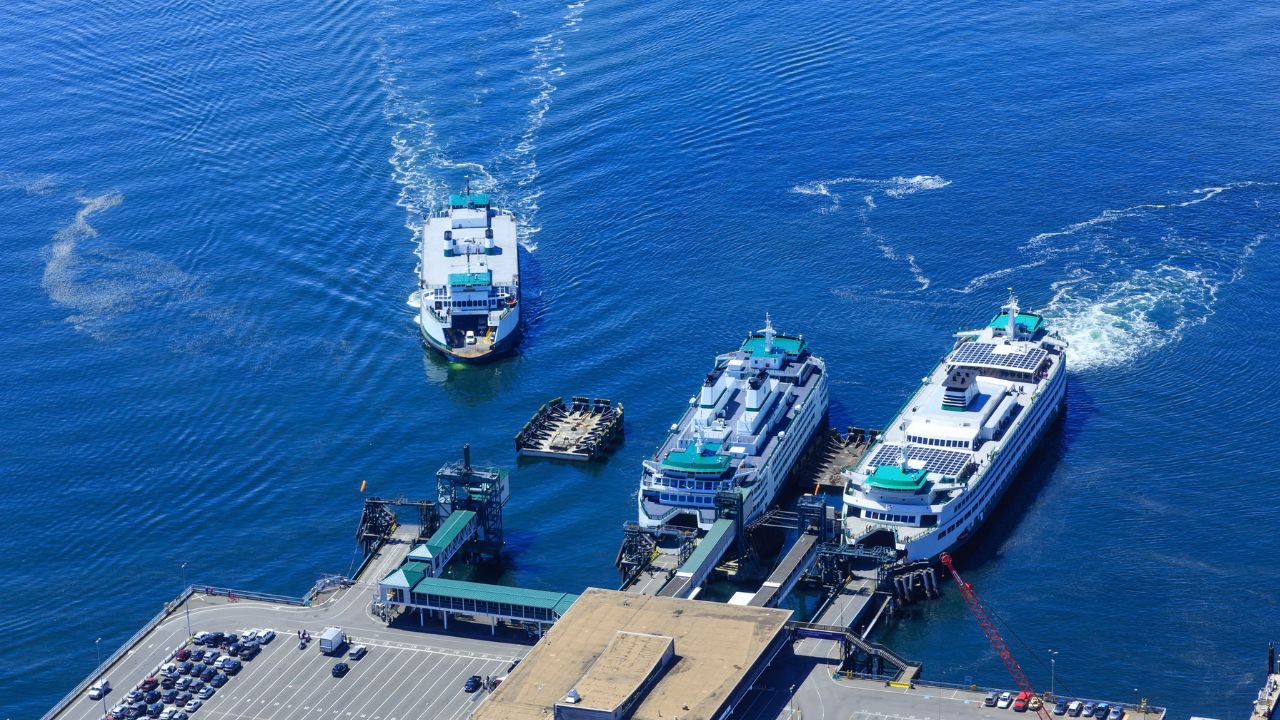
When a ferry trip is on the calendar, the local habit is reserving a spot the way other drivers might book a flight.
Washington State Ferries is the largest ferry system in the country.
It carried more than 20 million riders in 2025 across 8 routes and 20 terminals in Puget Sound and the San Juan Islands.
That scale is exactly why the state runs a reservation system for its busiest routes, including trips to the San Juan Islands and the Port Townsend to Coupeville crossing.
Standby luck isn’t required.
If a driver skips the reservation on a summer Friday, the next available sailing might not have room for a car until the following day.
6. Bringing Reusable Bags
Shoppers grab a reusable tote before a grocery run out of habit, not environmental guilt.
State law has banned free single-use plastic bags at checkout since October 2021, and stores now charge for anything they hand over instead.
That fee changed at the start of 2026.
No bag is free.
A paper bag now costs 8 cents at checkout counters from QFC (Quality Food Centers) to Fred Meyer to the corner PCC Community Markets.
A thicker reusable plastic bag costs 12 cents, up from 8 cents.
Every cent goes to the store, not the state, which is why regulars keep a stash of totes in the trunk instead of paying it.
7. Budgeting for Car Tabs
Washington’s Puget Sound car owners make a yearly habit of setting aside money for a bill that surprises newcomers: Car tab renewal.
Sound Transit collects a motor vehicle excise tax on top of the state’s base registration fee for anyone registering a vehicle inside its taxing district.
That taxing district covers parts of King, Pierce, and Snohomish counties.
The rate runs 1.1% of a car’s depreciated value, or $110 for every $10,000 that car is still worth.
That’s not pocket change, and drivers outside that taxing district skip the extra tax, which is why the bill catches new arrivals to the Seattle area off guard.
Washington’s Math on a $20,000 Car Tab
Washington’s Sound Transit runs its motor vehicle excise tax on a simple formula: Multiply a car’s depreciated value by 1.1%.
A car worth $20,000 after depreciation owes about $220 a year to Sound Transit alone, on top of the state’s base renewal fee and any other local add-ons.
That number resets every year as the car’s value drops, so the bill shrinks slowly as the vehicle ages.
8. Timing the Low Tide
Ahead of a razor clam dig on the coast, diggers build their whole morning around a single number: The time of low tide.
The Washington Department of Fish and Wildlife opens certain beaches on certain dates, and only after marine toxin testing confirms the clams are safe to eat.
Final approval can land as close as two or three days before a dig opens, since it depends on marine toxin test results the state can’t confirm any earlier.
Nobody wastes a trip.
Diggers 16 and older need a valid fishing license, and the best digging happens 1-2 hours before low tide, not after it.
9. Carrying a Discover Pass
People who hike or camp are in the habit of keeping a pass displayed on the dashboard before they ever reach a trailhead.
The state created the Discover Pass in 2011 after the 2008 recession forced deep budget cuts to state parks, and the pass has funded day-use parking ever since.
No pass, no parking.
It now costs $10 for a single day or $45 for the year.
The pass covers more than 100 state parks along with hundreds of Department of Natural Resources and Fish and Wildlife sites.
A National Park pass covers none of it, so a hiker headed to a state trailhead instead of Mount Rainier National Park needs a different pass in hand.
10. Keeping ID Ready for Canada
Only five states issue an Enhanced Driver’s License built for crossing into Canada by land or sea, and Washington is one of them.
Washingtonians who want one apply through the state Department of Licensing, trading a passport for a single card that also works as a REAL ID for domestic flights.
One card, no passport required.
Whatcom County alone has four separate official land crossings into British Columbia, and Interstate 5 runs directly into one of them at Blaine.
A trip to Vancouver or a grocery run to a Costco across the line stays a normal Saturday plan for many families.
Even drivers who live nowhere near Blaine carry the card too.
11. Watching the Smoke Map
Washingtonians check an air quality map before an August workout the way people elsewhere check the pollen count.
The state Department of Ecology now tracks wildfire smoke through 133 monitors statewide, feeding a live map and a running blog once fire season starts turning the sky hazy.
The 2025 season hit Central Washington hardest, driven by the Wildcat, Lower Sugarloaf, and Labor Mountain fires east of the Cascades.
On the Olympic Peninsula, the Bear Gulch Fire in Olympic National Park grew past 19,000 acres in a single week that September.
The fire finished the season as the largest wildfire recorded in the park since it was established in 1938.
Everybody watches the sky.
Many people who never gave air quality a second thought a decade ago now plan runs and yard work around it.
12. Packing a Two-Week Kit
Families build an earthquake kit the way other households build a hurricane kit, as a methodical yearly habit.
The state sits on the Cascadia Subduction Zone, a fault the state’s Military Department says produces a magnitude 8.0 to 9.0 earthquake on average once every 200 to 500 years.
The Great Washington ShakeOut runs every October, and residents statewide practice dropping, covering, and holding on at the same moment.
REI (Recreational Equipment, Inc.), the outdoor retailer founded in Seattle, sells emergency kits built around the same two-week guideline emergency managers recommend.
No help required.
That means enough water, food, and supplies to get a household through fourteen days without help from anyone else.
13. Buying Spirits With the Groceries
Washington’s grocery aisles carry something many other states keep locked behind a separate counter: Hard liquor.
State law lets any retail store with at least 10,000 square feet of fully enclosed space carry a full spirits license.
Vodka and whiskey end up on the same shelves as cereal and canned goods at stores like Fred Meyer and Costco.
No separate trip.
A shopper grabs a bottle of gin on the same run as the groceries and pays for everything at one register.
Nobody has to hunt down a state-run store to do it.
That convenience comes from the state’s size threshold in the law, not a store’s choice to carry liquor.
Psst! How much do you know about Washington beyond the rain and the ferries? Take our quiz and see how many you can get right.
Quiz
Washington State IQ
Answer these questions on Washington history, geography, and firsts. We bet you can’t get them all right. Prove us wrong?
What is the capital of Washington State?
14. Keeping a Good To Go! Account
Two of Seattle's busiest crossings collect a toll with nobody standing at a booth, and drivers who use them set up an electronic account before they ever need it.
The State Route 520 (SR 520) floating bridge and the SR 99 tunnel both charge tolls automatically through Good To Go!, the state's electronic tolling system, with no toll booths anywhere in sight.
The gap adds up fast.
Skip the pass, and Good To Go! mails a bill instead, at a noticeably higher rate.
On the SR 520 bridge alone, a Good To Go! pass saves as much as two dollars a crossing, more than enough reason for a daily Eastside commuter to sign up before the first bill ever lands in the mailbox.
10 Things the Record Shows About Boar's Head at the Publix Deli Counter
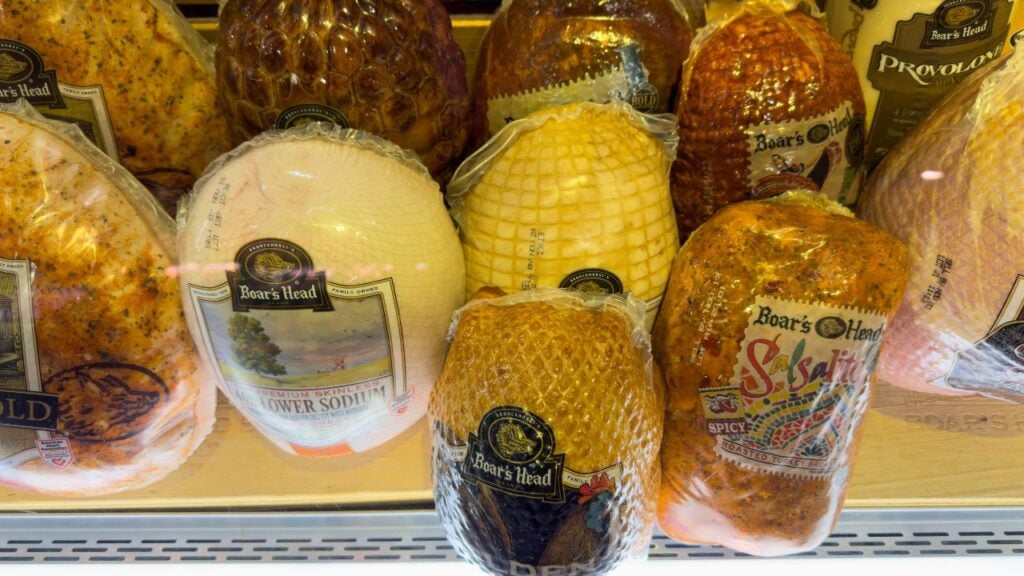
The Boar's Head label sits behind deli counters far outside Washington, too, and it carries a federal paper trail going back to 2024.
None of it started with a shopper complaint.
10 Things the Record Shows About Boar's Head at the Publix Deli Counter
