
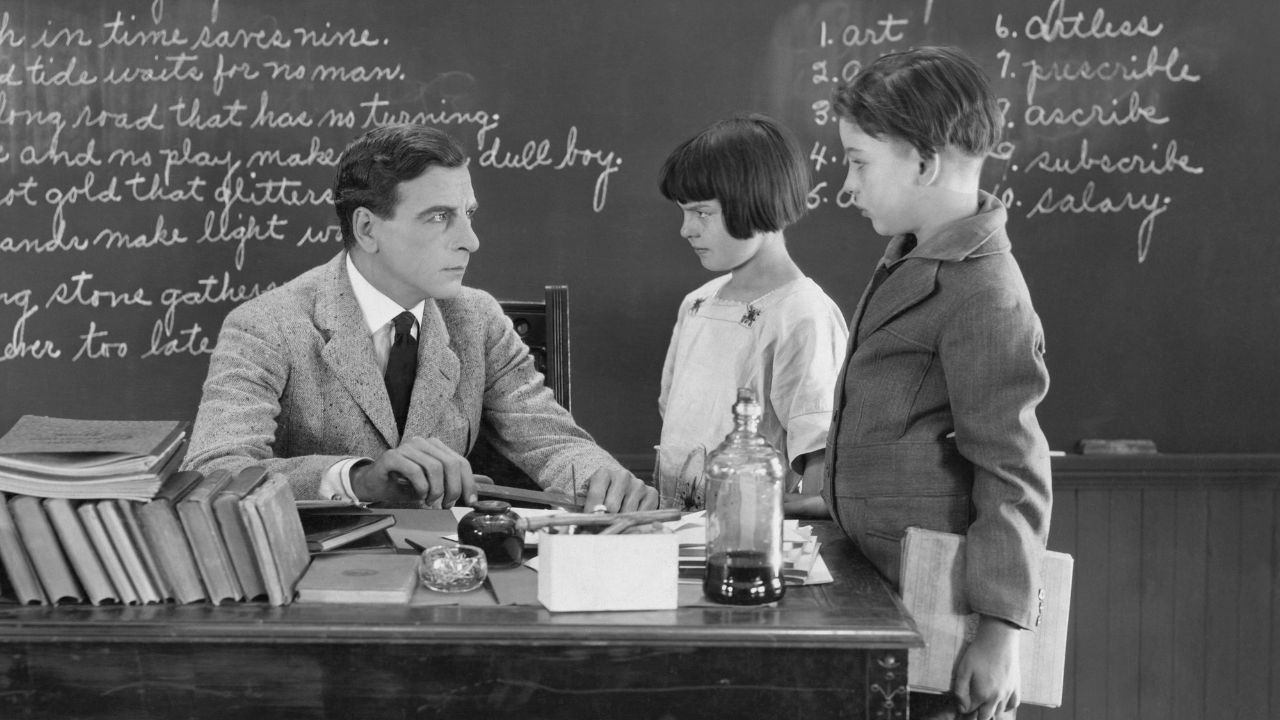
15 Rules Pennsylvania Teachers Could Enforce in the ’50s That Would Get Them Fired Today

In 1950s Pennsylvania, the classroom was a place where teachers had the final word. No questions, no exceptions.
Misbehavior meant real consequences, and people of authority didn’t worry about hurt feelings.
These are some of the things teachers could do in the ’50s that would get them fired today.
Spanking Students With a Paddle
In the 1950s, corporal punishment wasn’t just allowed; it was expected in many classrooms.
Teachers kept wooden paddles behind their desks. If a student acted out, talked back, or even slouched too much, they could be sent up for a few hard swats.
Parents didn’t complain. In fact, many supported it. Some even told teachers to “go ahead and give it to them” if their kid stepped out of line.
Today, striking a student would lead to immediate suspension or legal action. Teachers now manage behavior with strategies, not paddles.
Making Left-Handed Kids Switch to Their Right
It sounds unbelievable now, but in the ’50s, being left-handed was considered a problem.
Teachers forced left-handed students to write with their right hands. They believed being left-handed was a flaw to be corrected, not a natural difference.
Kids were forced to retrain their grip, their posture, even how they held their pencils. It led to frustration, poor handwriting, and confusion.
Today, this would be called discrimination. Left-handed kids are free to write however they’re most comfortable, no questions asked.
Washing Mouths Out With Soap
If a student cursed or talked back in the 1950s, some teachers responded by literally washing their mouth out with soap.
They’d drag the child to the bathroom and wash their mouth out with soap. Sometimes it was liquid. Sometimes it was a bar.
Either way, it was humiliating and harsh. But it was seen as a lesson in manners.
These days, this kind of punishment would lead to serious consequences. No school could justify forcing a child to ingest or taste soap.
Sending Kids Outside as a Punishment
Back in the ’50s, if you were disruptive in class, your teacher might send you outside alone for who knows how long.
There was no supervision. No hall pass. No one checking to make sure you didn’t wander off.
Some teachers used it to “cool kids off.” Others did it just to get some peace and quiet.
Today, no teacher would be allowed to leave a child unsupervised, especially not outside. That’s a safety issue, and it could cost someone their job.
Shaming Students in Front of the Class
Public shaming was common in the 1950s. If you got an answer wrong, forgot your homework, or misbehaved, the whole class would hear about it.
Some teachers made kids stand in the corner. Others slapped bad grades on the board for everyone to see.
It was supposed to teach responsibility. But for many students, it just created fear and embarrassment.
Modern educators are trained to handle mistakes privately. Public humiliation is no longer part of the lesson plan.
Grading Students on Conduct and Citizenship
In the 1950s, your report card didn’t just track math and reading. It included grades for behavior, attitude, and even posture.
Categories like “obedience,” “neatness,” and “courtesy” were marked with letter grades or handwritten comments.
If a student was quiet and respectful, they got an A. If they questioned anything or fidgeted too much, their grade dropped, no matter how smart they were.
Today, grading systems focus on academic achievement. Personal traits like “cheerfulness” aren’t part of the equation anymore.
Enforcing Mandatory Gender Roles
Girls in the ’50s were often expected to act “ladylike.” That meant quiet voices, neat handwriting, and zero interruptions.
Boys were expected to be tough, assertive, and competitive. If a boy cried or showed emotion, he might be scolded for acting “like a girl.”
Teachers reinforced these roles daily through seating charts, dress codes, and even the kinds of questions students were encouraged to answer.
Today, this would be considered outdated and harmful. Teachers now aim to support every student, regardless of gender or personality.
Refusing to Provide Special Help or Modifications
In the 1950s, if a child struggled in school, they were often labeled as “slow” or “lazy.”
There were no widespread programs for students with learning disabilities, attention issues, or emotional needs.
Teachers weren’t expected to adjust the lesson. Kids either kept up or got left behind.
Now, schools are required by law to provide accommodations. Teachers are trained to recognize different learning styles and support every student where they are.
Requiring Absolute Silence, All Day
In many ’50s classrooms, talking without permission wasn’t just discouraged. It was strictly forbidden.
Students couldn’t chat during work time. They couldn’t whisper to a neighbor. Even asking a question at the wrong moment could land them in trouble.
The classroom was treated like a courtroom, where one person spoke and everyone else listened.
Modern classrooms are louder, livelier, and more interactive. Teachers encourage discussion and collaboration. Silence is no longer a symbol of success.
Giving Out Nicknames to Embarrass Students
Teachers in the ’50s sometimes gave students nicknames based on behavior, size, or personality.
If you were slow to speak up, you might get called “Silent Sam.” If you talked too much, “Motor Mouth” was coming your way.
To them, it was a joke. To students, it was humiliating and the whole class joined in.
Now, this would fall under bullying. Teachers are expected to build trust, not tear it down with public labels.
Controlling How Students Wore Their Hair
In many schools, especially strict ones, teachers enforced unspoken rules about grooming.
Boys were expected to keep their hair short. Girls were expected to wear theirs neat and pulled back. Messy or “unusual” styles drew attention, often the negative kind.
A teacher might pull a student aside and tell them to change it. Or worse, send them home.
Modern schools may still have dress codes, but personal appearance is treated with more respect. Enforcing hair rules based on taste or bias is no longer acceptable.
Punishing the Whole Class for One Person’s Mistake
This one was all too common. One kid goofed off, and everyone paid the price.
The class lost recess. Everyone had to write lines. The teacher made a point of saying, “You can thank your classmate for this.”
The idea was to build peer pressure and enforce group discipline. But mostly, it created resentment and made kids turn on each other.
Today, this method would raise eyebrows. Group punishment is discouraged, and teachers are trained to deal with problems individually and fairly.
Denying Bathroom Breaks as Discipline
In the 1950s, if a student asked to use the restroom too often or at the “wrong time,” teachers sometimes just said no.
The idea was to teach discipline and control. But in reality, it was a power move.
Some students were forced to sit and wait through discomfort. Others had accidents and were then scolded or embarrassed in front of the class.
Today, this kind of denial would be considered a health and safety issue. Teachers are expected to allow breaks and trust students’ needs.
Requiring Strict Dress Codes With No Exceptions
In many schools, the dress code was strict and closely enforced by teachers.
Girls had to wear skirts or dresses, often below the knee. Boys needed tucked-in shirts and belts. Jeans were banned in some schools entirely.
There were no exceptions for weather, comfort, or expression. If you broke the rules, you were sent home or written up.
Now, dress codes are more flexible and inclusive. And teachers rarely take the lead on enforcing them. In many districts, it’s handled by administrators or school-wide policy teams.
Making Students Write Punishment Lines by the Hundreds
“Write ‘I will not talk in class’ one hundred times.” If you were a student in the ’50s, this punishment was almost a rite of passage.
It didn’t matter if the rule was minor. If you broke it, you could be stuck for hours writing the same sentence over and over.
The goal wasn’t reflection. It was repetition and a sore hand.
Today, this kind of punishment is considered ineffective and outdated. Teachers are encouraged to use methods that actually help students learn from their mistakes.
Your Decade DNA
If these old-school rules made you cringe—or brought back memories—you’re not alone. The way teachers ran classrooms in the 1950s was strict, intense, and often completely off-limits by today’s standards.
So, how well would you have handled it? Would you have followed every rule without blinking, or found yourself standing outside every afternoon?
Take our Decade DNA Quiz to find out which classic American era your personality was meant for.
Meet Your Match. Discover Your Decade DNA. (Your Vintage Roots Are Showing)

15 Once-Popular 1950s Baby Names Rarely Heard Today

Have you ever wondered what happened to some of the most popular baby names from the 1950s?
Travel down memory lane with us and reminisce about the classic names from the ’50s that you hardly hear anymore.
15 Once-Popular 1950s Baby Names Rarely Heard Today
18 All-American Traditions Every Baby Boomer Used to Have

From church on Sundays to dinner at the table every night, there was a rhythm to daily life for kids back in the ’50s and ’60s.
These are some of the boomer traditions that once defined what it meant to be American.
18 All-American Traditions Every Baby Boomer Used to Have

