16 Everyday Items Illinoisans Didn’t Know Were Invented by Accident

Not every genius idea starts with a plan.
Some of the most useful things in our daily lives in Illinois were invented by mistake, by someone trying to do something entirely different.
From scientists in labs to cooks in random kitchens, these “oops” moments led to everyday items we now take for granted.
Get ready to question how much of our modern world was shaped by pure chance.
The Microwave Was Discovered by a Melting Candy Bar
The invention of the microwave oven wasn’t part of a kitchen appliance plan, it started with radar technology.
Engineer Percy Spencer was working on magnetrons for radar systems when he noticed the chocolate bar in his pocket had melted. He realized the microwaves from the equipment were responsible.
Intrigued, he placed popcorn kernels near the machine and watched them pop. That moment sparked the idea for microwave cooking.
Soon after, the first microwave ovens were developed, all because of a lucky snack-time discovery.
Post-it Notes Came From a Failed Super Glue
Post-it Notes might seem like the result of precise office planning, but they actually started with a glue that didn’t work as intended.
A scientist at 3M, Spencer Silver, was trying to make a super-strong adhesive. Instead, he ended up with one that stuck lightly and could be removed easily.
For a while, no one knew what to do with it. Then another 3M employee, Art Fry, used it to anchor bookmarks in his church hymnal, and a classic office supply was born.
What began as a “failure” turned into a must-have for desks and classrooms everywhere.
Potato Chips Were Created Out of Spite
Believe it or not, the crunchy snack we know as the potato chip came from a frustrated chef trying to prove a point.
In 1853, a customer at a New York restaurant kept sending his fried potatoes back, complaining they were too thick and soggy.
Chef George Crum, annoyed, sliced the potatoes paper-thin, fried them until crispy, and drowned them in salt, expecting to annoy the customer.
Instead, the customer loved them. The accidental creation caught on, and now no party or lunchbox is complete without chips.
Penicillin Was Found on a Dirty Petri Dish
The discovery of penicillin is often called one of the greatest medical breakthroughs, but it happened by chance.
In 1928, Alexander Fleming returned from vacation to find mold growing on a petri dish he’d forgotten to clean.
He noticed that the mold was killing the surrounding bacteria. That mold turned out to be Penicillium notatum, and it became the basis for penicillin.
This unintentional find eventually revolutionized modern medicine and saved millions of lives.
Popsicles Were Invented by an 11-Year-Old on a Cold Night
One of summer’s most iconic treats wasn’t invented by a chef, it was discovered by a kid.
In 1905, 11-year-old Frank Epperson left a cup of powdered soda mix and water outside overnight with a stirring stick still in it.
The temperature dropped, and by morning, the mixture had frozen solid. He pulled it out by the stick, and realized he had a frozen treat on his hands.
Years later, he patented the idea as the “Epsicle,” but his kids called them “Pop’s sicles,” and the name Popsicle stuck.
Velcro Came From a Hike in the Woods
Velcro wasn’t dreamed up in a lab, it started with a Swiss engineer walking his dog.
George de Mestral noticed how burrs clung to his pants and his dog’s fur after a walk in the woods. Curious, he examined them under a microscope and saw tiny hooks.
That observation inspired him to create a two-part fastening system that mimicked the hook-and-loop structure.
The result was Velcro, a product that’s now used in shoes, clothes, bags, and even spacecraft.
Super Glue Was a Rejected Product, Twice
Super Glue was invented while scientists were actually trying to make clear plastic for gun sights during World War II.
Researcher Harry Coover stumbled upon a chemical compound that was extremely sticky, but since it wasn’t useful for their project, he discarded it.
Years later, he rediscovered the same compound while working on another assignment and realized its potential as a powerful adhesive.
What was once tossed out as useless became one of the strongest household glues available today.
Safety Glass Was Created by a Clumsy Chemist
Many car windshields and safety goggles rely on laminated glass, but it wasn’t created on purpose.
In 1903, French chemist Édouard Bénédictus accidentally dropped a glass flask coated with plastic cellulose nitrate.
To his surprise, the flask cracked but didn’t shatter. That got him thinking about how this combination could prevent injuries.
His accidental drop led to the development of shatter-resistant glass, which has since saved countless lives.
The Slinky Was Born From a Shipbuilding Mishap
The Slinky wasn’t designed to be a toy, it came from an attempt to solve a serious problem.
In the 1940s, naval engineer Richard James was trying to create springs that could stabilize sensitive instruments aboard ships.
One of the springs accidentally fell off a shelf, and instead of landing with a thud, it “walked” across the floor.
He and his wife saw its playful potential, and the Slinky was born. It’s now one of the most iconic toys in history, all thanks to a bouncing mistake.
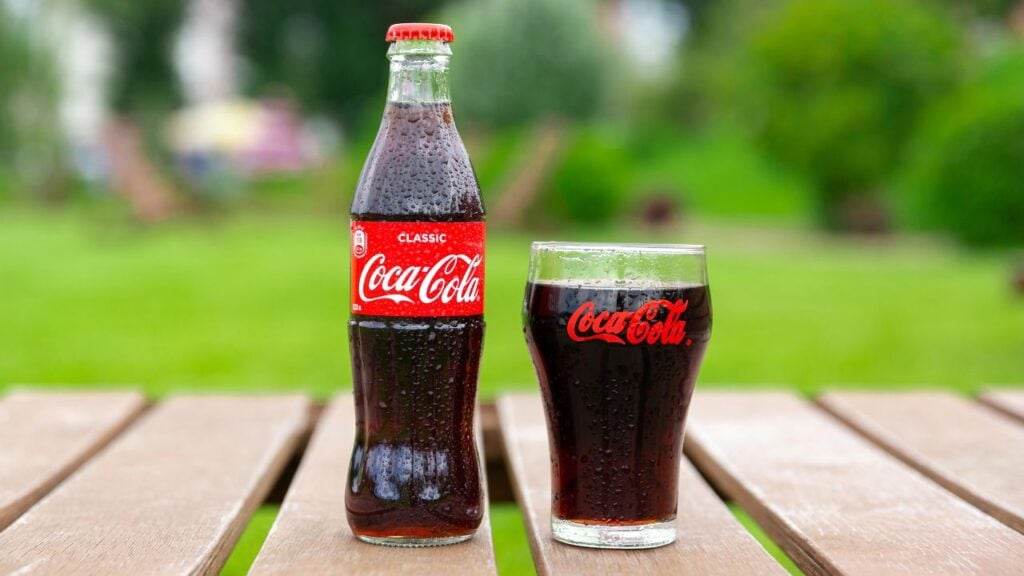
Coca-Cola Started as a Cure for Headaches
Coca-Cola wasn’t supposed to be a soft drink. It was originally marketed as a medicinal tonic.
In 1886, pharmacist John Pemberton created a syrup to treat headaches and fatigue. He accidentally mixed it with carbonated water while experimenting with the formula.
People loved the fizzy result, and it quickly gained popularity, not as medicine, but as a refreshment.
Today’s version is much different, but that first carbonated mix-up gave birth to one of the most famous drinks on Earth.
Corn Flakes Came From a Forgotten Batch of Dough
Breakfast cereal owes part of its existence to a bit of carelessness.
In the late 1800s, the Kellogg brothers were developing healthy meals for patients at their sanitarium. One day, they left a batch of cooked wheat out for too long.
When they rolled it out, the grains broke into flakes instead of forming dough. They baked the flakes anyway, and patients loved them.
After a few more experiments (and a switch to corn), Corn Flakes were born completely by accident.
The Pacemaker Was Discovered Through a Wiring Error
The modern pacemaker began with an electrical engineer making a simple mistake.
In 1956, Wilson Greatbatch was building a device to record heart rhythms when he accidentally installed the wrong resistor.
Instead of recording, the device emitted electrical pulses, at a rhythm similar to a human heartbeat.
Realizing what he had stumbled upon, Greatbatch shifted his focus and developed it into a tool that could regulate heartbeats.
A miswired circuit became a life-saving device used by millions.
Tea Bags Came From a Misunderstood Sample
Tea bags weren’t carefully crafted to change how we brew tea, they were the result of a packaging mix-up.
In the early 1900s, a tea importer named Thomas Sullivan sent out samples of his tea in small silk bags.
Customers assumed the bags were meant to go directly in hot water, so they did just that.
The idea caught on, and soon, companies began making purpose-built tea bags. All from a misunderstanding about how samples were supposed to be used.
Scotchgard Came From a Spill on a Shoe
Scotchgard, the fabric protector, was created because of a lab accident involving a lab assistant’s shoe.
3M chemist Patsy Sherman was working on rubber for jet fuel hoses when her assistant spilled a chemical mixture on her canvas shoe.
No matter what they did, they couldn’t get it off, and the area stayed clean and stain-free.
That unexpected reaction became the foundation for Scotchgard, now used to protect carpets, clothes, and furniture.
Silly Putty Was an Attempt to Make Rubber
Silly Putty might be a kid favorite today, but it started as a failed attempt to help with war supplies.
During World War II, the U.S. was facing a rubber shortage, and scientists were trying to create a substitute.
One experiment resulted in a bouncy, stretchy, goo-like substance that was fun to play with but useless as a rubber replacement.
Eventually, it was sold as a novelty toy and went on to become a best-seller in toy stores.
Matchsticks Came From an Unintentional Chemical Reaction
The first friction matches weren’t designed, they were discovered by accident.
In 1826, English chemist John Walker was stirring a chemical mixture when some of it dried on the end of his stick.
When he scraped the stick on the floor to clean it, it sparked into flame.
He realized he’d stumbled upon something useful and began producing them as “friction lights,” the early version of modern matches.
19 Historical U.S. Myths That Annoy History Buffs to the Core

If your teacher taught it in history class, it’s normal to assume it’s true. Ask any historian, though, and you might be surprised to learn the stuff of school history lessons is often riddled with inaccuracies.
19 Historical U.S. Myths That Annoy History Buffs to the Core
Remember When Everything Had Color? These 18 Things Definitely Did

There was a time when even the most ordinary things were bursting with color.
But now?
We’ve swapped charm for minimalism, and for some reason, we all agreed to pretend it’s better. Here are some everyday things that used to be colorful but aren’t anymore.
Remember When Everything Had Color? These 18 Things Definitely Did
What Decade Were You Really Meant For?
Whether you’re dreaming of bell-bottoms or soda fountains, our Decade DNA Quiz will match you with the decade that fits your personality. No work deadlines here, just a fun escape when you need it most.
Meet Your Match. Discover Your Decade DNA. (Your Vintage Roots Are Showing)