
16 Once-Popular Hotel Amenities That Sound Ridiculous to Modern-Day New Jerseyans

There was a time when checking into a hotel felt glamorous. You’d wheel your suitcase into the lobby, get an actual metal key, and think you were living large because there was a Bible in the drawer and a mint on your pillow.
From the 1950s through the early 2000s, hotels competed to offer guests the “latest and greatest,” even if it now seems laughably outdated.
Here are the once-popular hotel amenities that screamed luxury but now feel straight out of a travel time capsule for modern-day New Jerseyans.
In-Room Rotary Phones
Before smartphones, every hotel room had a chunky rotary or push-button phone right beside the bed.
Half the time, it didn’t even work, but that didn’t stop people from pretending they were making important business calls while lounging in bed with a towel wrapped around their head.
In the 1980s, hotels upgraded to phones with multiple lines and big “Front Desk” buttons that made guests feel like CEOs.
Now, most people look at those relics and think, “Who are we calling? Room service or 1997?”
These days, the phone’s only real purpose is to hold the laminated Wi-Fi password card.
Pay-Per-View Movie Menus
Nothing said “fancy night in” like scrolling through an on-screen list of movies that cost $2.99 to watch once.
Pay-per-view was the Netflix of its time, but slower, grainier, and always one accidental remote click away from embarrassment.
Families would debate for twenty minutes before finally picking something that was already halfway over. Then they’d all fall asleep before the ending.
Streaming killed the concept entirely. Today’s guests can just log into Netflix, and no one has to explain to the front desk why there’s a mystery charge for The Fast and the Furious: Tokyo Drift.
Complimentary Sewing Kits
It’s hard to imagine anyone in 2025 sewing a button back on mid-vacation. But in the 1970s, every hotel thought you might.
The tiny sewing kit came in a cardboard sleeve with two needles, three strands of thread, and buttons that never matched anything you owned.
It wasn’t luxury, it was survival. People actually packed these in their suitcases like souvenirs.
Modern travelers just call the front desk for help or—let’s be honest—buy a new shirt at Target.
Bedside Bibles and Phone Books
Hotel drawers were once a sacred space for two things: a Gideon Bible and a local phone directory.
Both were heavy enough to double as doorstops.
Guests in the 1960s could spend a quiet evening reading a passage or flipping through the yellow pages to find a nearby diner.
Today, both have been replaced by Google Maps and late-night scrolling through Instagram.
If you find one of these relics in a hotel today, you’re lucky.
Free Matches
Hotels used to hand out branded matchbooks like they were candy. They were in bowls at the front desk, on bar counters, and even tucked into ashtrays in every room.
People collected them like postcards, and lighting one felt classy… until non-smoking policies hit and the whole idea went up in smoke.
By the 1990s, matchbooks had become nostalgic souvenirs rather than useful tools.
Some collectors still trade them online today, proof that every road trip deserves a tiny spark of memory.
Coin-Operated Vibrating Beds
Few amenities captured the late-1950s “roadside motel” era like the infamous Magic Fingers bed.
Drop a quarter in the box, and your mattress buzzed like a mildly possessed washing machine for fifteen minutes of “relaxation.”
Families thought it was hilarious. Couples thought it was romantic. Maintenance crews thought it was a nightmare.
By the 1980s, most hotels quietly phased them out, and today’s guests are grateful they did.
Imagine trying to explain that feature during check-in today.
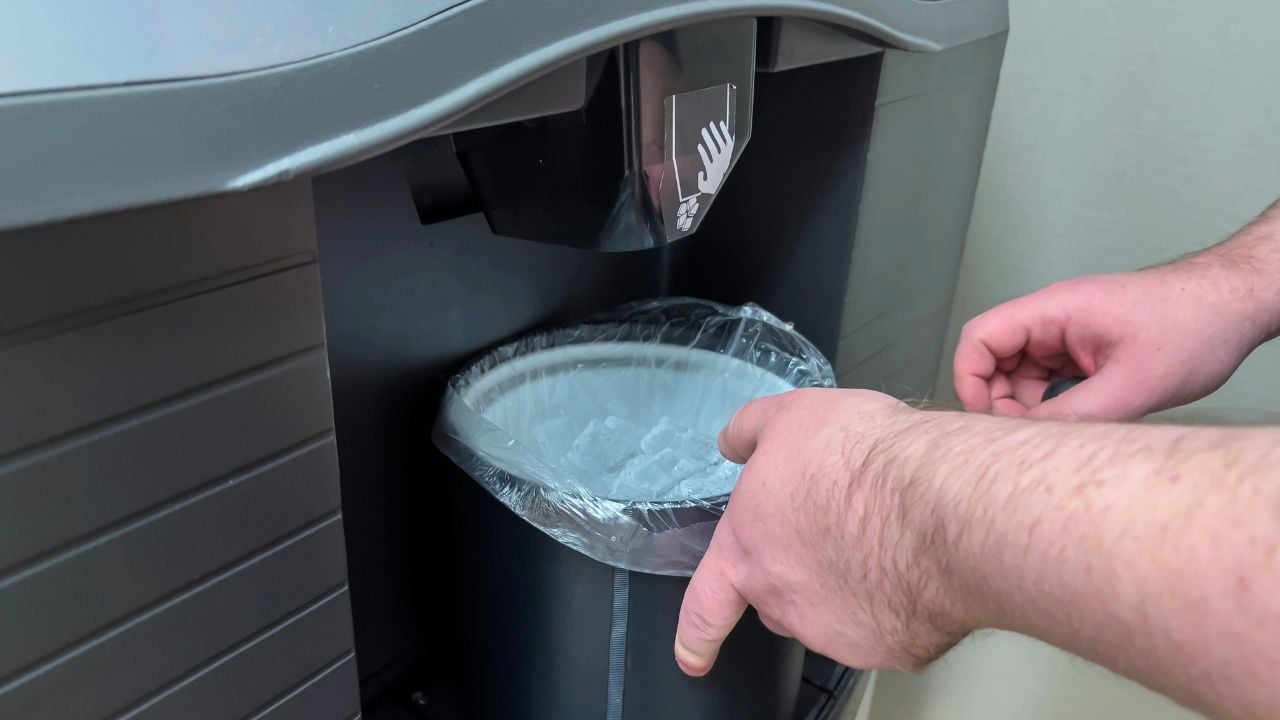
Ice Buckets and Hallway Machines
There was a time when filling an ice bucket felt like a hotel ritual.
Guests would grab the plastic liner, trek down the hall in slippers, and return victorious with half-melted cubes for their Coke or minibar gin.
It wasn’t about the ice. It was about the experience. Entire sitcom episodes were built around ice machine drama.
Now, hotel rooms have mini-fridges, ice is automatic, and most guests just order cold drinks from DoorDash.
The ice bucket lives on only in vintage movie scenes and nostalgic TikToks.
Wake-Up Calls
Before cell phone alarms, hotels offered the ultimate luxury: a real person calling to wake you up.
You’d answer groggily, say “Thanks,” and feel mildly important, like a jet-setter preparing for a big meeting.
By the late 1990s, it was mostly automated: a cheerful robot voice that somehow still startled you every time.
Now, no one requests wake-up calls because we all trust our phones more than hotel staff to get us up for that 6 a.m. flight.
Complimentary Stationery
Every decent hotel once stocked a neat pad of paper and matching envelopes embossed with the hotel logo.
Guests would write postcards, jot notes, or use them to pretend they were handling very important correspondence.
It was a status symbol: the kind of stationery you’d tuck into your purse and use later at home to seem worldly.
Now, paper has been replaced by Wi-Fi and email.
The only thing guests steal today are the pens, which, for the moment, have remained eternal.
Mini Bars with Sensors
In the 1990s and early 2000s, hotels decided to get sneaky. They replaced the classic mini bar with motion-sensitive shelves that charged you the moment you lifted a Snickers.
It was like a trap for jet-lagged travelers who just wanted a Diet Coke.
No one trusted them. People avoided opening the fridge entirely, terrified of being billed $5 for a tiny can of Pringles.
Now, mini bars are disappearing altogether, replaced by lobby markets where you can pay ten dollars for bottled water in person instead.
“Free HBO”
In the 1980s and 1990s, no hotel sign was complete without a proud banner announcing “Free HBO.”
It was a badge of honor, a promise of entertainment that felt high-end.
Guests would flip to Channel 3, find a fuzzy movie halfway through, and feel like they’d made it. Free cable was luxury before streaming made it unnecessary.
Today’s hotels brag about “Smart TVs.”
But there’s something undeniably charming about the low-tech thrill of watching Back to the Future in standard definition at midnight.
Continental Breakfasts That Weren’t Continental
Hotels made “continental breakfast” sound elegant, like something served under silver lids in Paris.
In reality, it meant instant coffee, dry muffins, and a suspiciously bright bowl of fruit cocktail.
Guests pretended to enjoy it, stacking toast on flimsy paper plates before heading to their car.
By the 1990s, waffle irons and cereal dispensers joined the lineup, and suddenly, breakfast became a full-contact sport.
Today’s travelers expect espresso bars and omelet stations. But secretly, many old-timers miss the thrill of snagging the last packet of peanut butter.
In-Room Fax Machines
When hotels thought business travel meant faxes, not emails, some rooms actually had a fax line next to the desk.
It made guests feel like Wall Street executives, even if they were just filling out vacation postcards.
For a few years, it seemed futuristic. Then the Internet happened, and the machines became dust collectors.
The last time anyone used one was probably to send a Pizza Hut order in 1999.
Guest Books in the Lobby
Before online reviews, hotels displayed handwritten guest books proudly at the front desk.
Visitors from Ohio or Germany would sign their names and leave glowing comments about the service or the “lovely continental breakfast.”
It was genuine, analog hospitality. But it was also chaos: pages filled with doodles, fake names, and the occasional complaint in cursive.
Now, reviews live online, and guest books are antiques.
Still, there’s something wholesome about seeing a physical record of who passed through before you.
In-Room CD and Cassette Players
For a brief window in the 1990s, hotels thought travelers wanted mood music.
Fancy ones had CD players stocked with smooth jazz compilations, while mid-range spots offered clock radios with cassette decks.
It was meant to feel luxurious, like you were living in a spa commercial.
But if you forgot to turn it off before bed, you’d wake up to saxophone solos at 3 a.m.
These days, guests bring Bluetooth speakers and playlists. The in-room stereo went extinct somewhere between Now That’s What I Call Music! Vol. 6 and the iPod Nano.
Ashtrays in Every Room
There was a time when smoking in hotel rooms wasn’t just allowed. It was expected.
Every nightstand had a heavy glass ashtray, and the faint smell of cigarettes was considered “normal.”
By the late 1990s, nonsmoking rooms became standard, and ashtrays quietly vanished. The idea of lighting up indoors now feels as distant as shag carpet and wood paneling.
Still, for anyone who grew up road-tripping in the ’80s, that scent of old smoke and air conditioner hum is part of the memory.
“Internet Access” Signs
By the early 2000s, every hotel proudly advertised “Internet Access,” as if it were a rare miracle.
Guests paid by the hour for dial-up speeds so slow you could practically hear the connection struggling.
It was cutting-edge technology at the time. Business travelers bragged about “checking email from the road” while waiting twenty minutes for one message to send.
Now, Wi-Fi is expected and free everywhere.
But there’s something endearing about remembering a time when going online felt like an event.
Remember When Everything Had Color? These 18 Things Definitely Did
There was a time when even the most ordinary things were bursting with color.
But now?
We’ve swapped charm for minimalism, and for some reason, we all agreed to pretend it’s better. Here are some everyday things that used to be colorful but aren’t anymore.
Remember When Everything Had Color? These 18 Things Definitely Did
14 Restrictions American Men Faced in the Early 1900s

One hundred years ago, there were many things men weren’t allowed to do from a legal or societal perspective.
Whether it was about fashion, feelings, or family roles, these are some of the strict rules that governed men a century or more ago.
14 Restrictions American Men Faced in the Early 1900s
Which Classic American Decade Is Totally You?
Take a quick break and discover which classic American era matches your personality and old-school soul. Our Decade DNA Quiz is fast, fun, and full of feel-good retro energy.
Meet Your Match. Discover Your Decade DNA. (Your Vintage Roots Are Showing)

