20 Past Norms Oklahomans Once Accepted That Seem Crazy Today

There are things we all complain about now. But a few decades ago, many “annoyances” were just part of daily life in Oklahoma.
People didn’t love them, but few questioned them.
Now, we’re used to instant answers, fast service, and everything at our fingertips. These are the once-normal things that would drive the average modern-day American up the wall.
Waiting for Film to Be Developed
You took your photos, dropped off the roll of film, and waited days to see how they turned out.
Sometimes they were blurry. Sometimes someone blinked. And there was no way to fix it.
You just hoped for the best and flipped through the glossy prints one by one.
Now we’d never stand for that kind of wait, but back then, it was part of the fun.
Sharing One Phone for the Whole House
If you grew up in a house with one landline, you know the struggle.
You had to take turns, keep calls short, and hope no one picked up in the middle of your conversation.
There was no privacy. Everyone could hear everything, or worse, join in.
And if someone was waiting on an important call, you weren’t allowed to touch it at all.
Listening to the Radio for Your Favorite Song
Back in the day, if you wanted to hear a specific song, you had to wait, and wait, and hope the DJ played it.
You couldn’t hit “play” on demand. There was no playlist, no rewind button, no skip.
People would sit by the stereo with a blank cassette, ready to hit record the second the song started.
Sometimes you missed the beginning. Sometimes the DJ talked over the end. And somehow, it was still exciting.
Writing Checks at the Grocery Store
Paying with a check took time. You had to write it out, show ID, and wait for someone to approve it.
The line behind you? It kept growing.
But no one complained, because that’s just how people paid.
Now we swipe, tap, or click, but back then, a checkbook was always in someone’s purse.
Waiting for the TV Guide
In the relatively recent past, if you wanted to know what was on TV, you had to check the weekly guide or flip through the newspaper.
There was no scrolling, no “what’s trending,” and definitely no watching things whenever you felt like it.
You planned your week around shows, and if you missed one, too bad.
People didn’t love the wait, but it was normal. You learned to be patient or you missed your show.
Sitting in Traffic Without GPS
Before smartphones and real-time traffic apps, you just had to guess the best route.
If there was an accident or a slowdown, you didn’t find out until you were stuck in it.
Maps helped, but they didn’t tell you where the construction zones were.
People kept paper atlases in their glove boxes and hoped for the best. Getting lost was just part of the deal.
Watching Commercials You Couldn’t Skip
Back in the day, commercials were just part of watching TV. You couldn’t skip them. You couldn’t fast-forward.
You sat through five minutes of ads for every ten minutes of show.
Sometimes they were annoying. Sometimes they were catchy. Either way, you had no choice.
And if you left the room, you had to rush back so you didn’t miss the start of the next scene.
Getting a Busy Signal
Before cell phones and voicemail, calling someone meant you might hear a steady tone instead of a ring.
That sound meant the line was busy. You had to hang up and try again later.
There was no way to leave a message. No way to know how long the person would be on the phone.
People just kept dialing until they got through. It was normal, even if it drove you crazy.
Calling Information for a Phone Number
Before the internet, people dialed 411 to get a phone number or address.
You’d talk to a real person. Sometimes they found it quickly. Sometimes you had to spell the name three times.
It wasn’t free. And if they couldn’t find it, that was the end of the road.
Now we Google everything. But for decades, 411 was the go-to for basic info.
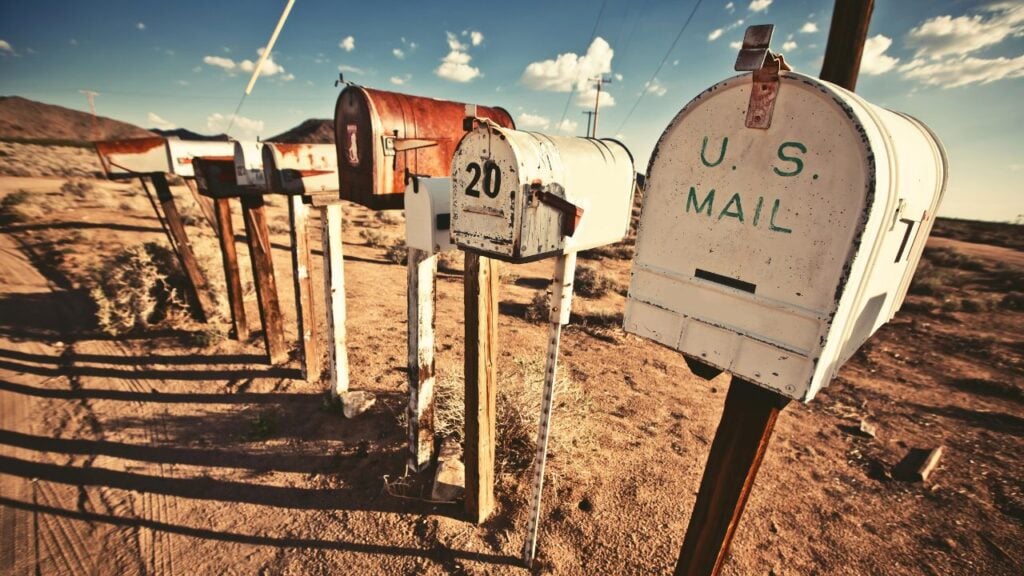
Waiting Days for Mail to Arrive
Before email and texting, most communication happened through the mail.
Birthday cards, bills, invitations, even basic messages took days to get to you.
And if something got lost? You just hoped it showed up eventually.
People checked the mailbox every day, hoping for news. Now we get impatient if a text isn’t answered in five minutes.
Having to Rewind Movies Manually
VHS tapes didn’t rewind themselves. You either sat there holding the button or bought a separate rewinder.
And if you returned a rental without rewinding? You might get charged.
“Be kind, rewind” wasn’t just a cute phrase. It was a real rule.
Today’s streaming options make it feel like a different lifetime.
Using Pay Phones in Public
If you were out and needed to make a call before cell phones existed, you had to find a pay phone.
You needed change. You needed a quiet spot. And you needed to talk fast.
Sometimes the phone didn’t work. Sometimes someone was already using it. And you always hoped the line wasn’t too gross to touch.
Now that everyone has a phone in their pocket, pay phones feel like something from a movie.
Having to Wait for the Weather Report
If you wanted to know the forecast, you had to watch the news or wait for it on the radio.
You couldn’t pull it up on your phone in five seconds.
Sometimes the weather report came late in the broadcast. And if you missed it, you had to wait for the next one.
It made planning tricky, but most people just looked outside and guessed.
Missing a Call Meant No Message
If someone called your house and you weren’t home, that was it. No message. No missed call alert.
You just had to hope they called back.
Answering machines helped, but not every household had one at first.
People got used to calling again and again until someone finally picked up.
Getting Tangled in Phone Cords
If you grew up with a corded phone, you know the struggle.
The cord stretched across rooms. People tripped over it. And it always seemed to twist itself into knots.
You’d stand in the kitchen trying to have a private conversation with five feet of spiral plastic holding you back.
But that’s what phones were like, connected to the wall, literally.
Getting Up to Change the TV Channel
Remote controls weren’t always standard. At one time, you had to walk across the room just to change the channel.
That meant flipping between just a handful of options by hand.
No scrolling. No guide. Just clicking until you found something that wasn’t static.
Families often argued over who had to get up next.
Using White-Out for Every Mistake
Before digital documents, even small typos meant a mess.
If you typed something wrong, you had to backspace, use correction tape, or dab on white-out.
And you had to wait for it to dry if you were patient enough.
Making anything look neat took serious effort. There was no delete key to save the day.
Hearing the Internet Dial-Up Sound
Logging onto the internet used to take time, and it was loud.
That screeching dial-up tone meant you were connecting. Slowly.
While you waited, no one could use the phone. And if someone picked it up, you got disconnected.
It was frustrating, but it was also exciting. Because once you were online, anything felt possible.
Using a Road Atlas on Family Trips
Before GPS, family road trips meant unfolding a giant paper map across your lap.
Parents argued about exits. Someone always held it upside down. And refolding it neatly was nearly impossible.
There were no turn-by-turn directions, just a highlighter, a rough plan, and a lot of guesswork.
It wasn’t efficient, but it made for a real adventure.
Waiting for Someone to Pick You Up Without a Way to Check
Prior to the late 2000s, if your ride was late, you just stood there. No text. No update. No “on my way” message.
You trusted they’d show up when they said they would.
And if they didn’t? You waited longer. Or found a pay phone. Or gave up.
It was normal to be stuck without answers, and nobody thought twice about it.
Your Decade DNA
If you remember a time when busy signals, paper maps, and dial-up were just part of daily life, your roots might run deeper than you think. Were you built for the patience of the ‘50s? Or the cassette-tape chaos of the ‘80s?
Take our Decade DNA Quiz to find out which classic American era your personality was made for. It’s fast, fun, and filled with sweet nostalgia.
Meet Your Match. Discover Your Decade DNA. (Your Vintage Roots Are Showing)

18 All-American Traditions Every Baby Boomer Used to Have

From church on Sundays to dinner at the table every night, there was a rhythm to daily life for kids back in the ’50s and ’60s.
These are some of the boomer traditions that once defined what it meant to be American.
18 All-American Traditions Every Baby Boomer Used to Have
17 Decor Items That’ll Make Your Home Look Cheap

No one wants to hear their home looks cheap. But sometimes, a cheap-looking home doesn’t reflect what you spent on it. It reflects the decor you chose.
17 Decor Items That’ll Make Your Home Look Cheap