21 Weird Scientific Facts That Sound Totally Fake to Virginians (But Aren’t)

Virginia students might remember memorizing the periodic table and learning about photosynthesis. But some facts never made it into the textbook.
From animals that survive in space to metals that melt in your hand, science gets weirder the deeper you look.
These are truths that sound like myths… but aren’t.
Bananas Are Technically Berries, but Strawberries Aren’t
It sounds backward, but it’s true. According to botanical definitions, bananas qualify as berries because they develop from a single flower with one ovary and have soft flesh and seeds inside.
Strawberries, on the other hand, don’t meet the criteria. Their seeds are on the outside, and they form from a flower with multiple ovaries.
So even though strawberries seem like the poster child for berries, science says otherwise.
The banana wins the berry debate, even if it doesn’t taste like one.
Water Can Boil and Freeze at the Same Time
This isn’t a riddle, it’s called the “triple point,” and it happens under very specific pressure and temperature conditions.
At this point, water can exist as a gas, liquid, and solid all at once.
Scientists can demonstrate this in a lab by adjusting the pressure and heat just right.
It’s not something you’ll see in your kitchen, but it’s a real and measurable phenomenon.
A Day on Venus Is Longer Than a Year on Venus
Venus spins on its axis incredibly slowly, so slowly that it takes longer to complete one full rotation than it does to orbit the sun.
One day on Venus equals about 243 Earth days, but its year, one full orbit around the sun, takes just 225 Earth days.
That means if you lived there, the sun would rise and set less often than your birthdays.
It completely flips the way we think about time on a planet.
Sharks Are Older Than Trees
Sharks have been swimming through Earth’s oceans for over 400 million years.
Trees, on the other hand, didn’t evolve until about 350 million years ago.
That means sharks existed before the first leafy tree ever rooted into the ground.
They’ve survived multiple mass extinctions and remain one of the oldest living lineages on the planet.
Your Stomach Gets a New Lining Every Few Days
The inside of your stomach is constantly regenerating.
Its lining is exposed to strong acid all day long, so to protect itself, your body creates a new layer every three or so days.
Without this renewal process, the acid would start digesting your own stomach tissue.
It’s one of those behind-the-scenes processes that keeps you alive without you even noticing.
You Can Start a Fire With Ice
It seems impossible, but under the right conditions, you can use ice to start a fire.
Clear ice can be carved into a lens and used to focus sunlight, just like a magnifying glass.
If shaped properly, it can concentrate the light onto dry tinder and cause it to ignite.
It’s not easy to pull off, but it’s scientifically valid and has been demonstrated in survival training.
Octopuses Have Three Hearts and Blue Blood
Octopuses are strange in almost every way, starting with their circulatory system.
They have three hearts: two pump blood to the gills, and one sends it to the rest of the body.
Their blood is blue because it contains copper-based hemocyanin, not iron-based hemoglobin like in humans.
The result is a creature that looks and functions like it came from another planet.
There’s a Type of Jellyfish That Can Live Forever
The Turritopsis dohrnii jellyfish has a trick that defies aging.
When threatened or injured, it can revert its cells back to an earlier stage of life and start over.
This process can repeat indefinitely, making it biologically immortal under the right conditions.
It doesn’t mean it never dies, but it can technically live forever, something scientists are still trying to fully understand.
Sloths Can Hold Their Breath Longer Than Dolphins
Dolphins are known for their breath-holding ability, but sloths actually beat them in this category.
A sloth can hold its breath for up to 40 minutes by slowing its heart rate dramatically when underwater.
Dolphins, by comparison, usually surface every 10 to 15 minutes.
It’s a surprising edge for such a slow-moving animal.
You’re Taller in the Morning Than at Night
When you wake up, you’re slightly taller than you were the night before.
That’s because the soft discs between your spinal vertebrae rehydrate and expand while you sleep.
As the day goes on, gravity compresses them again, shaving up to half an inch off your height.
It’s a small change, but a measurable one that happens every single day.
Honey Never Spoils
Archaeologists have discovered pots of honey in ancient Egyptian tombs that are over 3,000 years old and still perfectly edible.
Honey’s low moisture content and natural acidity create an environment that’s nearly impossible for bacteria or mold to grow in.
As long as it’s sealed and stored properly, honey can last forever without going bad.
It’s one of the only foods that never expires.
You Can Smell Rain Before It Starts
That earthy scent before a rainstorm has a name: petrichor.
It comes from chemical compounds secreted by plants and bacteria in the soil. When raindrops hit the ground, they release these compounds into the air.
Humans are especially sensitive to this smell, which is why we often notice it just before the rain arrives.
It’s not your imagination, it’s chemistry.
Saturn Would Float in Water
If you could find a bathtub big enough, Saturn would float in it.
That’s because Saturn is mostly made of gas and has an extremely low density.
In fact, it’s the least dense planet in our solar system, lighter than water by volume.
It’s a fun fact that sounds absurd, but the numbers add up.
Your Body Glows in the Dark (Just Very Dimly)
Humans naturally emit a very faint light, known as bioluminescence, due to chemical reactions in our cells.
The glow is about 1,000 times weaker than what the human eye can detect, so we can’t see it.
But sensitive cameras have captured images of this low-level light.
We’re glowing all the time, we just can’t tell.
The Eiffel Tower Grows Taller in the Summer
Metal expands when heated, and the Eiffel Tower is made mostly of iron.
In the heat of summer, it can grow over 6 inches taller as the metal expands in the sun.
When cooler weather returns, the tower shrinks back down.
It’s a simple application of physics, but a surprising one for such a massive structure.
Wombat Poop Is Cube-Shaped
It sounds like a joke, but it’s true, wombats produce cube-shaped poop.
This unique shape helps prevent the droppings from rolling away, which is useful for marking territory in the wild.
Scientists believe the shape comes from the way the intestines contract unevenly during digestion.
It’s one of the strangest examples of animal adaptation ever studied.
Some Turtles Can Breathe Through Their Butts
Certain species of turtles, like the Australian Fitzroy River turtle, can absorb oxygen through their cloaca, an opening used for both waste and reproduction.
This unusual ability allows them to stay underwater for extended periods.
It’s not their only method of breathing, but it’s surprisingly effective.
Nature gets creative when survival is on the line.
The Moon Is Slowly Drifting Away From Earth
Every year, the Moon moves about 1.5 inches farther from Earth.
This is due to gravitational interactions and tidal forces between the two bodies.
Over millions of years, this slow drift will have measurable effects on Earth’s rotation and tides.
It’s happening so gradually that we won’t feel it, but it’s happening.
You Share About 60 Percent of Your DNA With a Banana
Humans and bananas have more in common than most people expect.
Around 60 percent of our genetic material is shared, not because we’re closely related, but because all life shares basic building blocks.
Genes that help with cell structure and function exist in many living organisms, including fruit.
It’s a reminder of how deeply connected life on Earth really is.
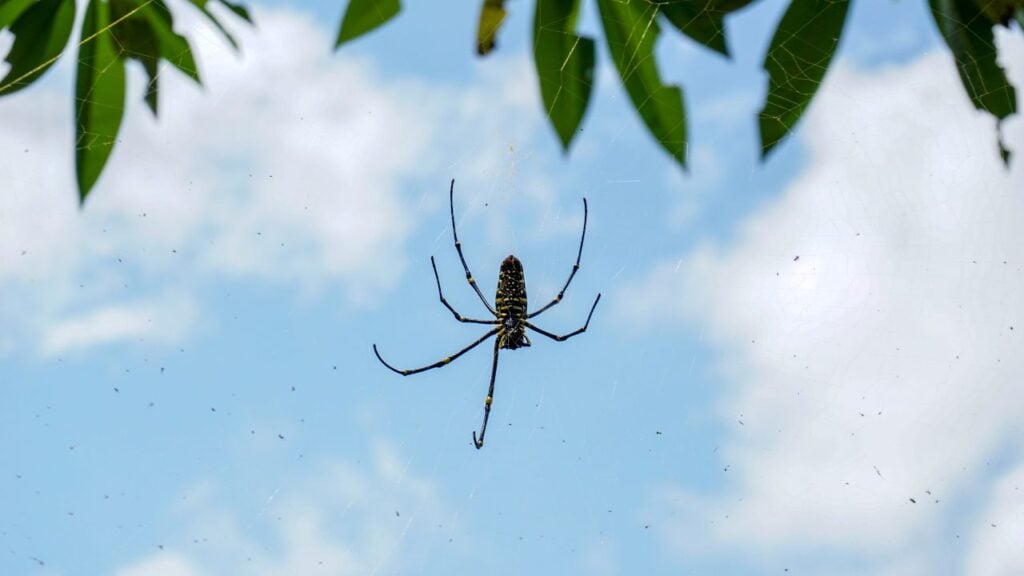
Spiders Can “Fly” Using Electric Fields in the Air
Some spiders can travel through the air by releasing silk strands and catching the electric fields naturally present in Earth’s atmosphere.
This behavior, known as ballooning, can carry them across long distances, even miles.
It was once thought they relied only on wind, but recent studies show electric forces play a key role.
It’s a scientific trick that makes them seem like tiny, floating magicians.
There Are More Trees on Earth Than Stars in the Milky Way
It sounds unbelievable, but it’s backed by data.
Estimates suggest there are about 3 trillion trees on Earth, while the Milky Way contains roughly 100 to 400 billion stars.
That means our planet has far more trees than there are stars in our galaxy.
It’s a surprising fact that flips our perspective on what’s rare and what’s abundant.
Which Classic American Decade Is Totally You?
Take a quick break and discover which classic American era matches your personality and old-school soul. Our Decade DNA Quiz is fast, fun, and full of feel-good retro energy.
Meet Your Match. Discover Your Decade DNA. (Your Vintage Roots Are Showing)

19 Historical U.S. Myths That Annoy History Buffs to the Core

If your teacher taught it in history class, it’s normal to assume it’s true. Ask any historian, though, and you might be surprised to learn the stuff of school history lessons is often riddled with inaccuracies.
19 Historical U.S. Myths That Annoy History Buffs to the Core
14 Restrictions American Men Faced in the Early 1900s

One hundred years ago, there were many things men weren’t allowed to do from a legal or societal perspective.
Whether it was about fashion, feelings, or family roles, these are some of the strict rules that governed men a century or more ago.
14 Restrictions American Men Faced in the Early 1900s