
22 Toys From the 1970s You’d Never Find on Florida Store Shelves Today

Long before toy safety was a hot topic, Florida kids in the 1970s played with things that would never make it past store shelves today.
Parents didn’t worry much. And kids?
They loved every second of it.
Let’s revisit the toys that defined a wilder, looser version of childhood.
Lawn Darts (a.k.a. Jarts)
These heavy metal darts were designed to be thrown into the air and land in plastic rings on the ground.
The problem? They had sharp, pointed tips that turned them into dangerous projectiles.
Injuries were common, and tragically, some were severe enough to prompt a nationwide ban.
Today, you can only find the soft-tipped version, and even that comes with warnings.
Clackers
Clackers were two acrylic balls on a string that you swung up and down until they smacked together.
They made a loud “clack” sound and were wildly satisfying until they shattered.
The hard plastic could break into sharp shards, and some even flew off at high speeds.
Eventually, manufacturers stopped making them due to the risk of injury.
Creepy Crawlers with Real Heating Plates
This popular toy let kids create their own rubber bugs by squeezing colored goo into metal molds.
The molds were then placed on a heating element that got dangerously hot.
There were no safeguards or timers. Kids just had to know when it was done.
Burns and ruined countertops were part of the experience.
Kenner’s Easy-Bake Oven (with Exposed Bulbs)
The original Easy-Bake Oven used real light bulbs as a heat source to bake tiny cakes and cookies.
While the idea was fun, the design exposed kids to hot surfaces and metal parts.
Fingers often got burned, and the plastic exterior could melt with enough use.
Newer versions are safer, but the original was anything but childproof.
Chemistry Sets With Real Chemicals
In the 1970s, chemistry sets often came with actual chemicals that could cause fires, burns, or worse.
Some included potassium permanganate, ammonium nitrate, or even small amounts of sulfur.
There were minimal safety instructions and little protective gear, if any.
Today’s kits are far more limited, with most of the reactive elements removed entirely.
Cap Guns with Loud Blasting Powder
Cap guns were everywhere in the ’70s, and they made a realistic sound by igniting tiny gunpowder caps.
The smell, the smoke, and the loud bang made kids feel like action stars.
But they were also loud enough to damage hearing and sometimes caused burns if the caps misfired.
Modern versions are quieter, safer, and usually don’t use real ignition caps.
Super Elastic Bubble Plastic
This toy let kids blow plastic-like bubbles using a straw and a small tube of chemical goo.
The substance smelled like glue and contained solvents like acetone and ethyl acetate.
It created stretchy, colorful bubbles, but it also exposed kids to toxic fumes with every breath.
Eventually, concerns over inhalation risks and flammability led to its removal from toy shelves.
Battlestar Galactica Missile-Firing Toys
These space-themed toys came with spring-loaded plastic missiles that kids could shoot across the room.
Unfortunately, one tragic incident involving a swallowed missile led to a redesign of the entire toy line.
The missiles were removed or made permanently attached in future versions.
It was one of several cases that pushed toy companies to rethink safety standards.
The Water Wiggle
This toy connected to a garden hose and flailed wildly as it sprayed water in every direction.
It was marketed as a fun backyard toy, but the hard plastic nozzle at the end could whip around unpredictably.
In several cases, children were injured when the nozzle struck them in the face or head.
The toy was eventually recalled after reports of serious harm.
Toy Guns That Looked Exactly Like Real Ones
In the 1970s, many toy guns were modeled to closely resemble actual firearms in both size and color.
There were no orange safety tips or bright colors to set them apart.
This led to several police-related incidents and public concern over their realism.
Modern laws now require toy guns to be clearly marked and easily distinguishable from the real thing.
Mini-Hammocks Without Spreader Bars
These small, child-sized hammocks were sold as backyard toys or accessories.
They lacked a key feature: spreader bars that keep the hammock open.
Several tragic accidents occurred when children became entangled after falling in and not being able to get out.
The design was eventually pulled from shelves, and newer models are built with strict safety standards.
Inflatable Bouncing Toys Without Grip or Base Support
Several 1970s toys let kids bounce, roll, or ride on giant inflatable animals or balls with little to no stability.
Some had no handles, no safety straps, and poor balance control.
Falls were common, and many kids ended up with sprains or bumps from toppling over.
Today’s inflatable toys are built with stronger materials, better grips, and reinforced bottoms for safer play.
Johnny Reb Civil War Cannon
This toy cannon let kids fire small plastic cannonballs across the yard using a spring-loaded mechanism.
Marketed under the theme of the Confederacy, it came with a gray uniform and Confederate flag.
Beyond safety concerns, the toy has long since disappeared due to changing views around the glorification of the Civil War.
It’s a clear example of how cultural awareness has reshaped what’s considered acceptable for kids.
Wham-O Air Blaster
The Air Blaster was a hand-held toy gun that shot bursts of air strong enough to knock over lightweight objects.
It didn’t fire projectiles, but it could hit hard enough to surprise or annoy anyone in its path.
Some users reported ringing ears or mild bruises after being blasted at close range.
While the concept lives on in milder forms, the original version is long gone.
Real Glass Marbles in Pinball-Style Toys
Some 1970s tabletop pinball games came with actual glass marbles or heavy steel balls.
They looked cool, felt authentic, and rolled fast, but they also posed a choking hazard for younger kids.
In some cases, the balls shot out unexpectedly and could break nearby objects or injure fingers.
Modern versions use lighter, safer materials and more secure launch mechanisms.
Fireworks Sold as Toys
In the ’70s, it wasn’t unusual to see small firecrackers or sparklers marketed directly to kids around the Fourth of July.
They were sometimes packaged with cartoon graphics or labeled as “safe” backyard fun.
But they came with all the risks of fire, burns, and explosions, especially without adult supervision.
Stricter regulations eventually moved these items out of toy aisles and into controlled sales environments.
Slingshots Sold as Standard Toys
In the 1970s, slingshots were often sold in toy aisles without much restriction.
They were made of wood or plastic with real rubber bands and were fully functional as projectile launchers.
Kids used them to shoot rocks, marbles, or whatever they could find, often with little regard for safety.
Today, slingshots are classified as sporting goods or weapons in many areas, not toys.
Stretch Armstrong Filled with Unknown Gel
Stretch Armstrong was one of the most iconic toys of the era, known for his extreme stretchability.
But inside the rubbery skin was a corn syrup-based gel that could leak or ooze if the toy tore or was punctured.
Kids often tried to overstretch or freeze the doll, which weakened the material and caused messy breakage.
Newer versions use safer materials, and there are more warnings about rough play.
Fisher-Price Playsets with Tiny, Chokeable Pieces
Many Fisher-Price Little People playsets from the 1970s included figures that were small, smooth, and easy to swallow.
The original peg-style figures were perfect for tiny hands but posed serious choking risks for toddlers.
In later years, the company redesigned the figures to be larger and less likely to fit into a child’s throat.
The old ones are now collector’s items, but they wouldn’t meet today’s safety standards.
Toy Tool Sets with Sharp Metal Parts
Kids’ tool sets in the 1970s sometimes included real metal screwdrivers, saws, or hammers in mini sizes.
They were marketed as realistic, and in many cases, they were just scaled-down versions of adult tools.
Without plastic guards or rounded edges, these toys could easily cause injury during play.
Modern tool sets are made from soft plastic or foam and are designed to be completely harmless.
Belt Buckle Toy Guns
These novelty belt buckles hid small toy guns that could pop out and “fire” plastic bullets with the push of a button.
They were designed to surprise opponents during play, mimicking a secret weapon.
The problem was that the spring-loaded mechanism could misfire, and the small plastic bullets posed a risk if aimed near the face.
Toy weapons like this are no longer made due to stricter regulations around projectile safety and concealed toy firearms.
Miniature Smoking Toys
Some novelty toys in the 1970s included bubble pipes or fake cigarettes that produced puff-like effects with powder or vapor.
These toys often mimicked adult smoking habits and were marketed as fun or sophisticated.
Though they didn’t contain tobacco, they sent a very different message than what’s acceptable today.
By the 1980s and beyond, these items were phased out due to growing concerns about promoting smoking to children.
9 Iconic Candies That Ruled 1970s Corner Stores
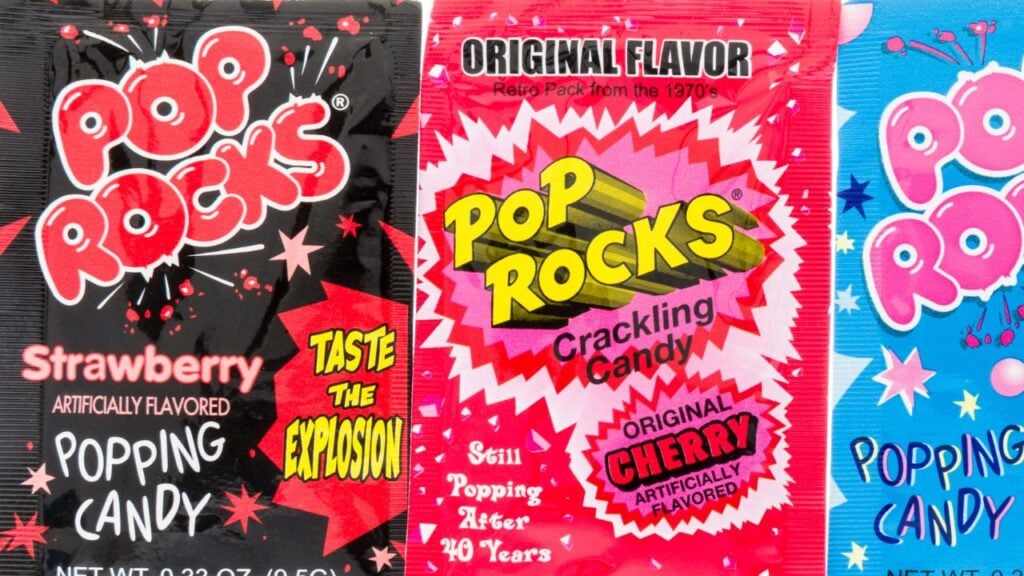
The 1970s were a golden time for candy lovers. Whether you were sneaking sweets into class or swapping treats on the school bus, certain candies were just part of growing up.
If you remember unwrapping a treat while watching The Brady Bunch, this one’s for you.
9 Iconic Candies That Ruled 1970s Corner Stores
14 Things Every ’70s Kid Had in Their Lunchbox

From smashed sandwiches to sticky pudding cups, here’s a look at all the classic foods every ‘70s kid had crammed inside their trusty lunchbox.
14 Things Every ’70s Kid Had in Their Lunchbox
What Decade Were You Really Meant For?
Whether you’re dreaming of bell-bottoms or soda fountains, our Decade DNA Quiz will match you with the decade that fits your personality. No work deadlines here, just a fun escape when you need it most.
Meet Your Match. Discover Your Decade DNA. (Your Vintage Roots Are Showing)