

26 Things Only Utahans Understand Who Grew Up Without the Internet

Before “just Google it” was a reflex, growing up in Utah meant learning how to survive without an instant connection to the entire world.
If you needed an answer, you went to the library.
If you wanted to talk to a friend, you picked up the phone and hoped their mom didn’t answer first.
And if you were a kid in Utah before the internet took over, there’s a whole world of small, everyday experiences you had that make zero sense to younger generations.
Waiting Weeks for a Letter to Arrive
Mail was the original long-distance chat app.
If your best friend moved across the country, you wrote them a letter and waited… and waited. Weeks later, you’d get their reply, complete with doodles in the margins.
You learned patience in a way that instant messaging could never teach. That anticipation made the letter feel like a treasure.
And if the envelope came with a “return to sender” stamp? You felt a mix of disappointment and curiosity.
Using a Phone Book to Find Anyone
If you didn’t know someone’s number, you didn’t Google it, you grabbed the phone book, a literal printed list of everyone in town.
Flipping through those thin pages was its own skill. You learned to navigate alphabetical order fast.
The yellow pages were for businesses, the white pages for people. And if someone had an unlisted number, forget it, you were out of luck.
Sometimes the book itself doubled as a booster seat for kids at the dinner table.
Memorizing Everyone’s Phone Number
Before contact lists, you had to store numbers in your brain.
Your best friend’s, your crush’s, your grandma’s, they all lived rent-free in your head.
Even now, you might still remember the landline number from your childhood home.
If you forgot, you had to call information (411) and hope the operator could find it for you.
Drama of the Busy Signal
When you called someone and they were already on the line, you got the busy signal, an endless beep-beep-beep.
It could ruin your evening plans if you couldn’t get through.
Some people were clever enough to set up call waiting, but most of us just hit redial until our finger hurt.
And if you were trying to reach a crush? That busy signal felt like personal rejection.
Taping Songs Off the Radio
If you wanted music, you didn’t stream it; you waited by your boom box with a blank cassette, finger on the record button.
You prayed the DJ wouldn’t talk over the intro or fade out too early.
Every mixtape was an act of love and timing.
You labeled each one carefully, sometimes with elaborate doodles, and guarded it like treasure.
Writing Reports with Encyclopedias
School projects meant hauling the heavy encyclopedia set off the shelf.
If your family didn’t own one, you spent hours at the library, flipping through the index.
Information wasn’t always up-to-date, but it was what you had. No Wikipedia rabbit holes, just static facts on a printed page.
The weight of those volumes felt like the weight of knowledge itself.
Saturday Morning Cartoons Being an Event
Cartoons weren’t on demand. They aired at a set time, and if you missed them, too bad.
You woke up early on Saturday, bowl of cereal in hand, and stayed glued to the screen for hours.
It was a communal experience. Everyone at school watched the same shows that weekend.
Even the commercials became part of the ritual.
Having to Develop Film
Taking pictures was a gamble. You didn’t know if your shot was good until you developed the roll.
Sometimes you’d get back a stack of blurry, finger-in-the-frame disasters.
But holding physical prints felt magical in a way digital photos can’t match.
You’d flip through them with friends or stick them into albums that became family heirlooms.
Using a Payphone
If you were out and needed to call home, you found a payphone and hoped you had a quarter.
You memorized where the “good” payphones were, the ones that didn’t smell weird or have a broken handset.
And yes, sometimes you called collect and said your whole message during the “state your name” prompt to avoid the fee.
In emergencies, that trick was a lifesaver.
Waiting for TV Shows to Air
You couldn’t binge an entire season in a weekend. Episodes aired once a week, and you had to be home on time.
Miss an episode? You might not see it again for years, unless it got a rerun.
It made cliffhangers feel like actual torture.
Some people even recorded entire shows on VHS just to avoid the risk.
Renting Movies from a Video Store
Friday night meant a trip to Blockbuster or the local rental shop.
You’d walk the aisles, reading the backs of VHS cases like they were novels.
If the movie you wanted was out of stock, you had to pick something else. No instant alternatives.
And don’t forget the pressure of rewinding before returning, “Be Kind, Rewind” wasn’t just a suggestion.
Using Actual Maps
Road trips required folding paper maps and figuring out how to refold them without creating new creases.
You had to memorize exits and landmarks, not rely on a voice telling you to turn left in 500 feet.
Getting lost was part of the adventure.
Sometimes, it even led you to places worth remembering.
Recording TV on VHS
If you couldn’t watch something live, you set the VCR to record it.
You hoped nobody in the house would change the channel or stop the tape.
Fast-forwarding through commercials was a delicate skill.
And if you recorded over someone else’s tape, family drama was guaranteed.
Passing Notes in Class
Without texting, passing notes was the only way to have a mid-class conversation.
You perfected the art of folding paper into tiny triangles or elaborate origami shapes.
Getting caught meant trouble and possibly having your note read aloud.
That humiliation was enough to make you a stealth expert.
Using a Library Card Catalog
Before online databases, libraries had big wooden drawers full of index cards.
You’d search by author, title, or subject, then write down the call number before hunting the shelves.
It was slow, but there was something satisfying about the process.
The smell of those cards was part of the experience.
Listening to the News on the Radio
If you wanted to know the weather or hear sports scores, you tuned into the radio at the right time.
You couldn’t just check an app. You had to wait for the announcer to get to your segment.
It made information feel more fleeting, like you had to catch it in the moment.
And if you missed it, you’d have to wait all over again.
Looking Up Movie Times in the Newspaper
To find out when a movie was playing, you checked the listings in the daily paper.
You circled your choice, called your friends, and planned the whole outing around it.
Sometimes you’d even call the theater’s recorded hotline just to double-check.
That printed grid was your entertainment calendar.
Using a Typewriter
Before home printers were common, some school reports were typed on actual typewriters.
Mistakes meant starting over or carefully using correction fluid.
The sound of the keys and the ding of the carriage return is still burned into your memory.
There was no “undo”, only perseverance.
Playing Outside Until the Streetlights Came On
Without the lure of screens, kids spent hours roaming the neighborhood.
Your parents’ main rule was to be home by the time the streetlights turned on.
It taught independence and how to tell time without a watch.
Those last minutes of play felt like borrowed time.
Looking Up Words in a Dictionary
If you didn’t know how to spell something, you had to guess close enough to find it in the dictionary.
It was a slow process that sometimes made you forget what word you were even looking for.
But you learned more vocabulary along the way.
You might even stumble across a brand-new word and start using it just because it sounded interesting.
Finding Song Lyrics by Listening Over and Over
There was no genius.com. If you loved a song, you replayed it until you could catch every word.
You might even write them down in a notebook, with questionable accuracy.
Misheard lyrics became part of the charm.
Sometimes, they were better than the real thing.
Waiting for Your Favorite Album to Drop
Album releases were events. You’d save your allowance, then rush to the record store on release day.
If they sold out, you were crushed.
Listening to the whole thing from start to finish was part of the ritual.
You didn’t skip tracks, you let it all play.
Using TV Guide
TV schedules were printed, either in a magazine or the newspaper.
You’d plan your whole week around a new episode or a special airing.
Highlighting your picks with a pen was half the fun.
And if you lost the guide? You were flying blind.
Asking Strangers for Directions
Without GPS, you had to rely on friendly locals to guide you.
Sometimes their directions were great, sometimes they were hilariously vague.
Either way, you learned to navigate by landmarks instead of street names.
And occasionally, you met someone worth remembering.
Clipping Coupons from the Newspaper
There were no promo codes, just scissors, paper, and patience.
Sunday papers were goldmines for deals, and your parents kept a little envelope in the kitchen for them.
If you forgot to bring them to the store, you missed your discount.
Sometimes the savings made the difference between splurging and skipping.
Making Mix CDs from the Radio or Other CDs
Before playlists, you burned mix CDs for friends, carefully choosing each track.
Labeling them with Sharpie was half the fun.
Sometimes the songs cut off early if you misjudged the disc space.
Burning mix CDs was a true art that’s been lost with time.
20 Nostalgic Things Americans Could Buy for Under $1 Back in the Day
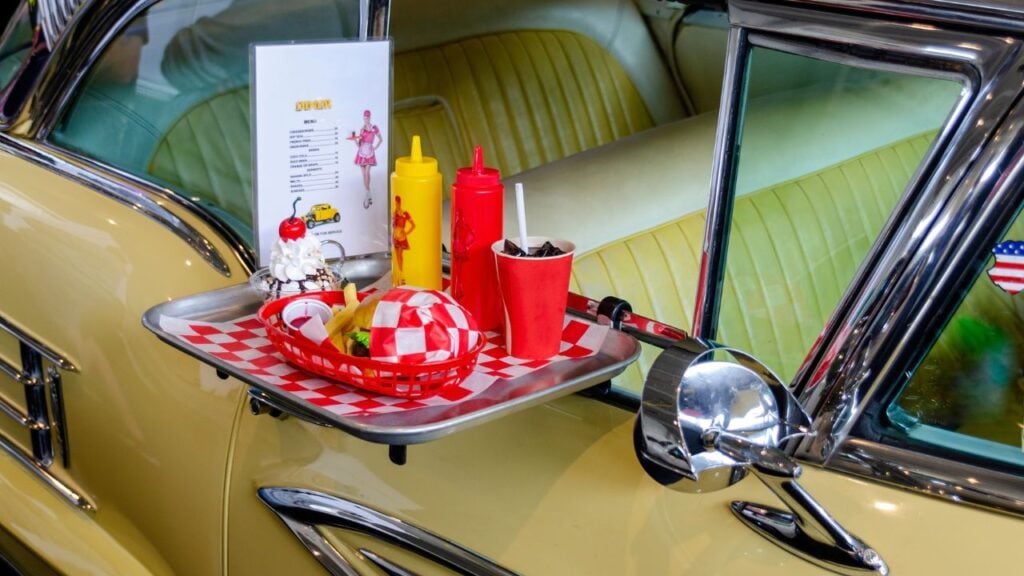
It’s hard to believe now, but there was a time when $1 could buy something meaningful.
Let’s take a trip back to the days when Americans’ pockets didn’t need much cash to bring home something fun, useful, or just plain delicious.
20 Nostalgic Things Americans Could Buy for Under $1 Back in the Day
18 Recipes Grandmas Always Took to Church Potlucks

In old-school America, your grandma didn’t need a crown to rule the church potluck. She just needed a slow cooker and a handwritten recipe card.
18 Recipes Grandmas Always Took to Church Potlucks
Which Classic American Decade Is Totally You?
Take a quick break and discover which classic American era matches your personality and old-school soul. Our Decade DNA Quiz is fast, fun, and full of feel-good retro energy.
Meet Your Match. Discover Your Decade DNA. (Your Vintage Roots Are Showing)


