
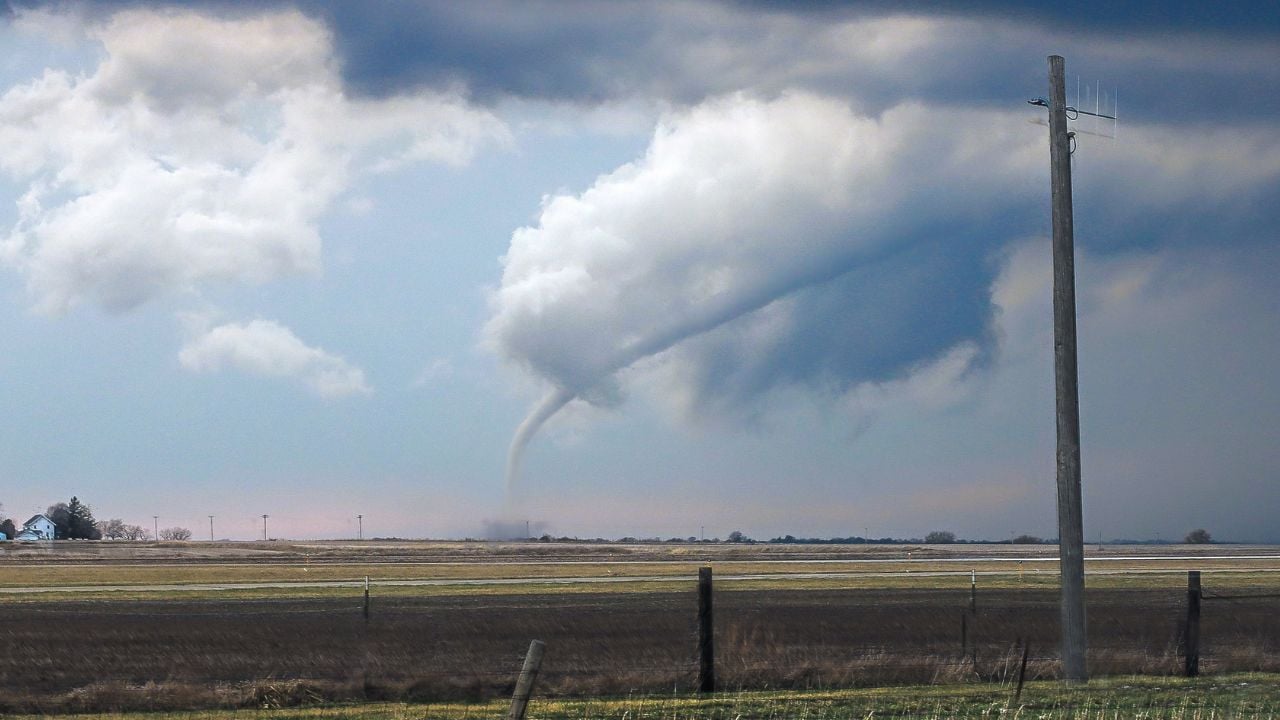
3 Storm Shelter Programs Oklahoma Homeowners Don’t Always Claim

A storm shelter can cost thousands of dollars, but Oklahoma homeowners don’t necessarily have to cover the entire bill themselves.
The state offers one rebate, while tribal nations, the USDA and even Oklahoma’s property tax system offer other ways for certain homeowners to save.
The catch is that each program has its own rules.
These are the storm shelter programs Oklahoma homeowners don’t always claim.
Note: This is general information, not financial, tax or legal advice. Program details, grant amounts and eligibility rules are subject to change.
1. SoonerSafe Safe Room Rebate
The SoonerSafe Safe Room Rebate Program pays Oklahoma homeowners back for part of what they spend on a certified safe room, and the 2026 cycle isn’t taking new names as of publication.
Oklahoma Emergency Management has run the drawing every year since 2011, funded through federal hazard mitigation grants.
Nobody pays up front.
Homeowners register for free each year at soonersafe.ok.gov, and a random drawing picks winners, so registering costs nothing even in years the drawing passes a homeowner by.
Some years the drawing favors homeowners in counties with a recent disaster declaration before it opens to the rest of the state.
Winning the drawing has nothing to do with registering a shelter’s location with the fire department.
Cities including Oklahoma City, Norman, Tulsa and Edmond run that separate registry so first responders know where to look after a storm.
The Math Behind SoonerSafe’s $3,000 Cap
SoonerSafe pays back 75% of what a homeowner spends on an eligible safe room, capped at $3,000, whichever number is smaller.
A $4,000 underground shelter earns the full $3,000 cap, since 75% of $4,000 comes out to exactly $3,000.
That math flips for a $2,400 shelter, which gets back $1,800 since 75% of the smaller bill lands under the cap.
The check only goes out after the shelter is paid for in full and installed, so homeowners front the entire cost themselves before any of it comes back.
2. Your Tribal Nation’s Storm Shelter Grant
Several tribal nations headquartered in Oklahoma run their own storm shelter grants for enrolled citizens, completely separate from anything the state offers.
The Choctaw Nation pays $1,750 to $5,000 toward a shelter depending on the applicant’s age and disability status.
The Chickasaw Nation’s Homeowner Preparedness Grant covers up to $5,000 toward a shelter or other storm gear.
The two never overlap.
A Choctaw or Chickasaw citizen can register for the state rebate and their nation’s grant in the same year; skipping the rebate doesn’t disqualify the grant, and the reverse holds too.
Citizenship decides who qualifies here, not the county a homeowner lives in, and several other Oklahoma tribal nations run comparable programs for their own citizens.
3. USDA Grant for Rural Homeowners 62 and Older
The United States Department of Agriculture (USDA) helps Oklahoma homeowners pay for a storm shelter through its Rural Development agency.
The program offers grants of up to $10,000 for very-low-income rural residents 62 and older, and Oklahoma’s version is currently open.
Age is the dividing line.
Younger rural homeowners with very low incomes can still borrow through the same program at a fixed 1% interest rate, and only the 62-and-older grant skips repayment, unless the home sells within three years of receiving it.
A federal report on shelter funding lists storm shelter construction as an eligible use of that grant money, right alongside roof repairs and other health and safety fixes.
The property has to sit in a USDA-eligible rural area, which rules out homes inside Oklahoma’s biggest cities but covers much of the rest of the state.
The Property Tax Break Owners Forget to Claim
Oklahoma’s constitution excuses up to 100 square feet of a storm shelter from property tax, but only for homeowners who file for it.
Filing is on the homeowner.
The break covers a safe room installed on or after January 1, 2002, and homeowners claim it with a one-page form filed at the county assessor’s office.
A homeowner who built a shelter years ago and never filed the form is still paying tax on square footage the state already agreed to exempt.
Sell the house, and the exemption doesn’t transfer, so the new owner has to file for it all over again.
A Discount for Your Existing Shelter
Many home insurers in Oklahoma knock a percentage off a policy’s premium once a shelter meets the same safety standard Oklahoma’s storm shelter programs require.
The discount varies by carrier.
The agent won’t bring it up first.
The same certificate a homeowner used for SoonerSafe, or for a tribal nation’s grant, usually works as the proof an insurer asks for.
A homeowner who never asks their agent about it leaves a discount sitting on the table every single renewal.
What Counts as a Safe Room
Every program above only pays for a shelter built to a set safety standard, not a home-welded box or a used shelter bought secondhand.
Oklahoma Emergency Management defines a safe room as any above- or below-ground shelter built to the Federal Emergency Management Agency (FEMA)’s safe-room publications, plus the International Code Council (ICC) 500 storm shelter standard.
A shelter built to that standard has to survive winds up to 250 miles per hour.
Oklahoma logs an average of nearly 60 tornadoes a year, trailing only Texas and Kansas nationally.
Retrofitting an old shelter to meet those specs doesn’t qualify for program money either.
Only new shelters qualify.
Ask any installer for paperwork proving a shelter meets that standard before signing a contract.
A legitimate installer hands over that paperwork without being asked twice, since they fill it out on every job.
A homeowner who has to chase a contractor down for proof their shelter meets the standard is looking at the wrong contractor.
Psst! Storm shelters aren’t just about surviving the storm. See how many of these boxes you can check.
5 Oklahoma Stores Closing as a 39-Year-Old Grocery Chain Restructures in 2026
Homeland has survived two bankruptcies, a buyout and 39 years in the Oklahoma grocery business.
None of that saved every one of its stores in 2026, and the employee-owned chain confirmed a fresh wave of closures this spring before putting another ten stores up for sale.
5 Oklahoma Stores Closing as a 39-Year-Old Grocery Chain Restructures in 2026
9 Things Oklahomans Miss Most After They Leave the State
A cooler goes into the back of a moving truck outside a Braum’s on the edge of Norman, packed with one last half-gallon of butter pecan ice cream for the drive to Colorado.
It won’t survive the trip, and everyone loading that truck already knows it, so they pack it anyway.
