
3 Virginia Ferry Rides Locals Take That Tourists Never Hear About

One of Virginia’s Chesapeake Bay ferries isn’t running at all this summer, and hardly anyone off the island has noticed.
Its longtime captain is out on medical leave with no return date posted.
Virginia’s other working ferries are still crossing on schedule, mostly for the people who live a short drive from the landing.
These are the Virginia ferry rides that stay locals-only long after tourists have gone home for the day.
Sunnybank Ferry
Sunnybank Ferry carries a maximum of six passengers at a time, and it still costs nothing to ride.
The Virginia Department of Transportation (VDOT) runs this small cable ferry across the Little Wicomico River on Route 644 in Northumberland County, well off any interstate.
The crossing itself takes a couple of minutes.
Getting there on time is the harder part, since Sunnybank only operates weekdays from 8 a.m. to 4:30 p.m. and Saturdays until noon, with nothing running on Sundays.
Northern Neck residents build errands around that window instead of the other way around.
Miss it, and the alternative is a long backroad loop around the river.
Locals plan ahead.
Merry Point Ferry
Merry Point Ferry has crossed the western branch of the Corrotoman River since 1847, and Lancaster County drivers still ride it every week.
VDOT’s own count, last published in 2017, logged about 10,300 vehicles a year crossing this free cable ferry off Route 604.
That’s a commute, not a novelty ride.
One operator runs the whole crossing, and Virginia’s own regional guide describes it plainly: A 2-car ferry that closes for a 30-minute lunch break each day it runs.
No detour beats it.
Hours run Tuesday through Friday and Saturday, with Sunday and Monday off entirely.
A Lancaster County local uses Merry Point to shave minutes off a Northern Neck drive, not to admire the scenery, even though the scenery does its part too.
Elizabeth River Ferry
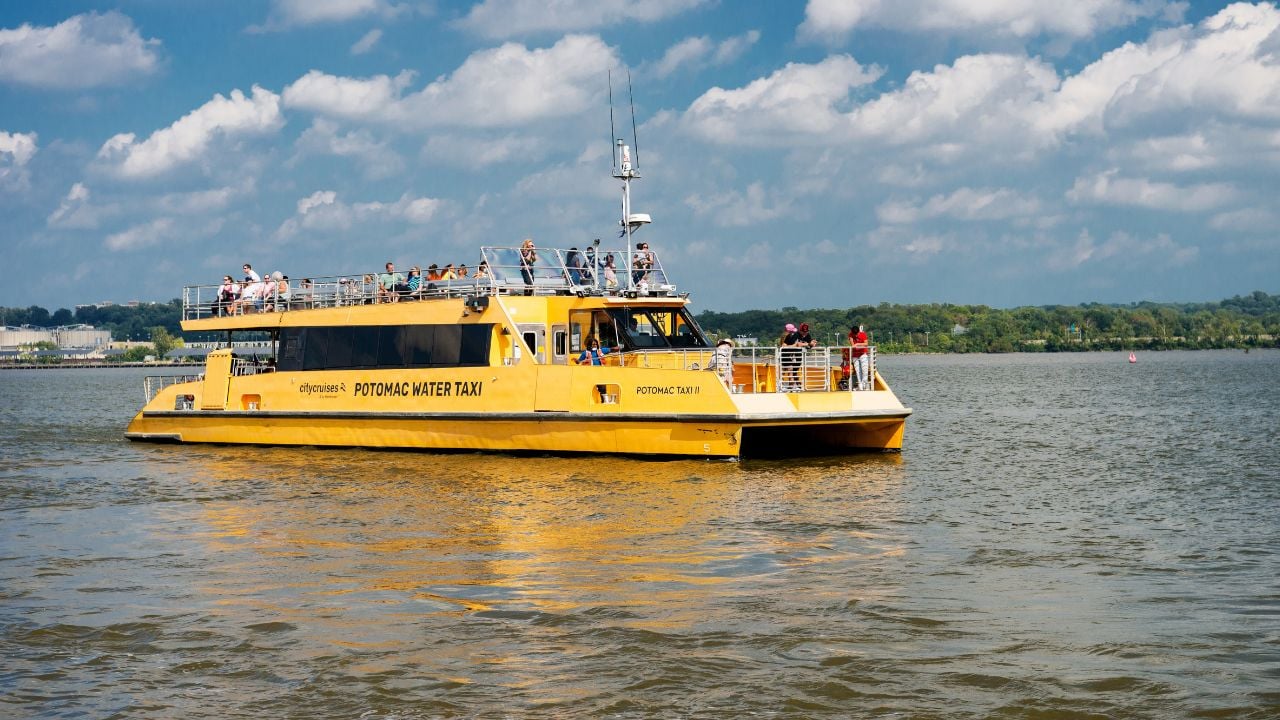
Elizabeth River Ferry runs as a transit route, not a scenic cruise, and many visitors to Norfolk never realize it exists.
Hampton Roads Transit (HRT) operates a four-boat fleet, each one carrying 149 passengers, between Waterside in downtown Norfolk and two landings across the river in Portsmouth.
Two of those boats joined the route in early 2024, replacing an older vessel and adding capacity the older three-boat fleet couldn’t keep up with.
A rider pays a $2 fare each way, the same GoPass that covers HRT’s buses and light rail.
That’s cheaper than most parking downtown.
Boats run every 30 minutes, tightening to every 15 on busy summer weekends, and Hampton Roads Transit adds extra runs to Harbor Park whenever the Norfolk Tides play at home.
Norfolk and Portsmouth residents hop on with the same GoPass they’d use for a city bus.
Nobody’s taking photos.
How Sunnybank and Merry Point Stay Free
Sunnybank Ferry and Merry Point Ferry have carried Virginia drivers at no charge since VDOT took over both crossings from private operators in the early 1930s.
VDOT still books both routes as sections of state highway rather than as a business, which is why neither one ever picked up a toll.
Elizabeth River Ferry breaks that pattern because Hampton Roads Transit, not VDOT, runs the boat as a transit route, so the ride comes with a fare the way any bus or train trip would.
Psst! Is your next Virginia ferry ride worth the trip? Run through this checklist and see where you stand.
Jamestown-Scotland Ferry Is the One Everybody Already Knows About
Jamestown-Scotland Ferry is the exception to everything above, and it’s the busiest free ferry Virginia runs.
VDOT keeps this James River crossing moving 24 hours a day, 365 days a year, continuing State Route 31 across the water between Scotland in Surry County and Jamestown in James City County.
VDOT’s own count put average daily traffic at 2,185 vehicles a day in 2023, and TripAdvisor lists it among the top attractions travelers report visiting near Williamsburg, with hundreds of five-star reviews.
Surry County Tourism promotes the ride itself as a scenic day trip, not just a shortcut across the river.
No secret here.
Four boats split the route: Powhatan and Pocahontas each carry 70 cars, while Williamsburg and Surry carry 50 apiece.
Surry County residents still ride it to reach jobs, doctors, and grocery stores in James City County, riding alongside a car with out-of-state plates almost every trip.
Tangier-Onancock Ferry Isn’t Running Right Now
Tangier-Onancock Ferry is normally the main way on or off Tangier Island, and right now, it isn’t running at all.
Longtime captain Mark Crockett suspended the seasonal route in June 2026 while he’s treated for cancer.
The ferry’s own site, tangierferry.com, still greets visitors with a single line: The Tangier-Onancock Ferry is currently suspended.
No relief captain exists.
No substitute boat has taken his place.
When it’s running, the Joyce Marie II carries 25 passengers on the roughly hour-long crossing from Onancock’s town dock, and a round trip costs $30, cash or check only.
No bridge has ever reached Tangier, and the shoreline keeps losing ground to the bay, so fewer than 450 residents depend on this boat and its counterpart from Crisfield, Maryland for groceries, mail, and getting to a mainland doctor.
Neighbors on the island started a fundraiser for Crockett’s medical bills, the same boat that used to carry their groceries now waiting on him to recover.
White’s Ferry Is Still Closed, but Something Finally Moved
White’s Ferry once carried Loudoun County drivers across the Potomac River toward Maryland, and it’s sat idle since December 2020.
A ferry has run this crossing since at least 1786, when it operated as Conrad’s Ferry, though a legal dispute over landing rights on the Virginia shore shut the modern service down.
Co-owner Chuck Kuhn donated the boat, the store lease, and the Maryland-side equipment to Montgomery County, Maryland in July 2026, hoping public ownership finally gets the ferry moving again.
Montgomery County still has to reach a deal with Loudoun County and the Virginia landowner over the landing before a single car drives back on.
Virginia’s turn to stall.
The holdup just moved to Virginia’s side of the river.
Drivers who once used it now face a much longer loop to the nearest bridge.
A Loudoun County commute that used to take minutes now eats up the better part of an hour.
Hatton Ferry Is Gone for Good
Hatton Ferry crossed the James River near Scottsville for 155 years before it stopped for good.
Many still call it the last poled ferry in the country, a claim a 2023 report disputed after finding a similar poled boat still crossing West Virginia’s Greenbrier River.
The Albemarle Charlottesville Historical Society’s board voted to decommission the ferry in January 2025, citing safety issues with its aging cable system and a river that only cooperated for about eight weekends a year.
By that March, crews had pulled the barge from the water entirely and hauled it to a farm in Goochland County.
No boat left to ride.
Volunteers used to pole passengers across on weekends every spring and fall, a throwback many Virginians never got around to riding even once.
The historical society isn’t walking away from the site, even with the barge sitting on a farm in Goochland County now.
Staff there are researching a bid for the National Register of Historic Places, teaming up with the Scottsville Museum and a University of Virginia intern to document what the crossing meant to the county for a century and a half.
8 Vanishing Diner Foods Virginians Still Talk About

The stools at Skeeter’s in Wytheville have held Virginians since 1925, and the chili recipe hasn’t budged in all that time.
The rest of the menu, at lunch counters and diners from the coast to the coalfields, has emptied out around it.
8 Vanishing Diner Foods Virginians Still Talk About
7 Kroger Perks Virginia Shoppers Over 60 Keep Missing

Virginia’s Kroger stores ended their nickel-off-every-dollar senior discount back in 2017.
What replaced it doesn’t work anything like a Tuesday-only discount, and many shoppers over 60 still haven’t caught on.
