

3 Ways an Indiana Neighbor Could End Up Owning a Strip of Your Yard

Many Hoosiers would hand a neighbor a ladder, a cup of sugar or a set of jumper cables without thinking twice.
Handing over a portion of your yard is a different story.
But it can happen without you realizing.
Here are the ways a neighbor could end up owning a strip of your yard.
Note: This is general information, not legal advice. Property laws and required timelines are subject to change.
1. Ten Years of Possession
A neighbor’s shed that sits a bit over your line is more than an eyesore.
Let it ride for ten straight years, and your neighbor can ask a court to make that strip theirs.
Lawyers call it adverse possession, and a summer of mowing the edge of your yard won’t get a neighbor there.
Your neighbor has to prove control of the strip, intent to claim it as the owner, notice to you, and continuous use for the full ten years.
The homework is your neighbor’s: Indiana courts demand clear and convincing evidence, a heightened standard of proof.
Then there’s the tax rule: Possession doesn’t count against you unless your neighbor pays the taxes and special assessments they reasonably and honestly believe are due on the strip.
In other words, the tax bills matter as much as the calendar.
A farm family learned that the hard way in 2005.
The Indiana Supreme Court found they’d used roughly 2.5 wooded acres beside their farm from 1956 until the 2002 trial.
They’d fenced it, used its wood and camped on it.
You’d think that settles it.
They’d paid taxes on the land next to the tract.
But the trial court never found that they paid, meant to pay or believed they were paying taxes on that tract, and the Supreme Court reversed that judgment.
2. A Fence Treated as the Line
The leaning fence between your yard and your neighbor’s could end up deciding who owns what.
If you both treated it as the line for twenty years or more, a court can side with the fence over a survey.
The doctrine is called acquiescence, and it only works if you and your neighbor shared a good-faith belief about where the line runs.
Twenty years is a long time to leave a leaning fence alone.
In 2013, the Indiana Court of Appeals sided with neighbors who’d built a garage and driveway based on a fence line.
Imagine paving a driveway to a fence line, then learning years later that the line runs somewhere else.
The neighbors next door didn’t challenge that fence for twenty-seven years, until a 2010 survey put the true line about twelve feet away.
By then the garage sat over the surveyed line.
That’s a lot of lawn.
The court went with the fence over the survey.
If the fence between your yards sits off the surveyed line, settle it before the years pile up.
3. A Handshake Sale
A verbal deal can still cost you land, if your neighbor paid for the strip, took possession and built something lasting on it.
Indiana law says a deal to sell land has to be in writing and signed.
Say you take cash for the strip beside your neighbor’s driveway, then watch a concrete pad go down on it.
Cash alone isn’t enough.
Add possession and a pad, and the handshake has backup.
In a 1999 case, two neighbors said the seller had agreed to give them part of a thirty-foot strip their deeds left out.
The Court of Appeals ruled the evidence fell short and sided with the owner whose deed included the strip.
Years That Carry Past a Sale
The ten-year clock behind a neighbor’s claim doesn’t restart when your house sells.
A 2025 ruling shows how that plays out.
An American Legion post fenced a grassy patch behind its building in 2013, thirty feet by fifty feet, and later added a patio.
The couple who bought a property behind the post sued almost three years after buying it, claiming the patch was theirs.
They argued that earlier sales had broken the ten years.
That argument sounds reasonable if you’re the one who just bought the house.
The Court of Appeals disagreed.
Indiana law doesn’t require the ten years to run against one owner.
The post had used the space from 2013 through 2023, and the court said that was enough to make it the post’s.
Any years a neighbor logged before you bought your house can count against you.
Saying Yes First
A neighbor who started using the strip with your permission has a hard time claiming it as the owner.
A 1989 Indiana Supreme Court case turned on that point: The claimant never changed his permissive occupancy into adverse possession.
That’s worth remembering if you’re letting a neighbor use the edge of your yard.
Once a neighbor has met the requirements for the full ten years, title passes by law.
A late yes won’t help.
In the 2005 farm case, one family member asked about buying part of the tract.
The court said that inquiry wouldn’t undermine any ownership the family had gained years earlier.
Psst! How much do you know about Indiana’s land, taxes, and capitol history? Take our quiz and see how many you can get right.
Quiz
Hoosier Land IQ
Answer nine questions on Indiana’s capitols, property taxes, and family farms. We bet you can’t get them all right. Prove us wrong?
Indianapolis’s first Capitol, built in the 1830s, was meant to correspond in character with which ancient landmark?
Tax-Exempt Neighbors
A government body or a tax-exempt nonprofit next door can claim part of your yard without having paid taxes on it.
The catch is that the land that group owns beside your yard has to be exempt from property taxes too.
That makes it worth a look at who owns the lot next to yours.
The American Legion post in the 2025 case is tax-exempt, so the court didn't make it prove a good-faith belief that it was paying property taxes on the patch.
The exception skips only the tax step, and the post's fence and patio still had to show control, intent and notice.
5 Indiana Buggy Laws Drivers Don't Learn Until They Meet One on the Road
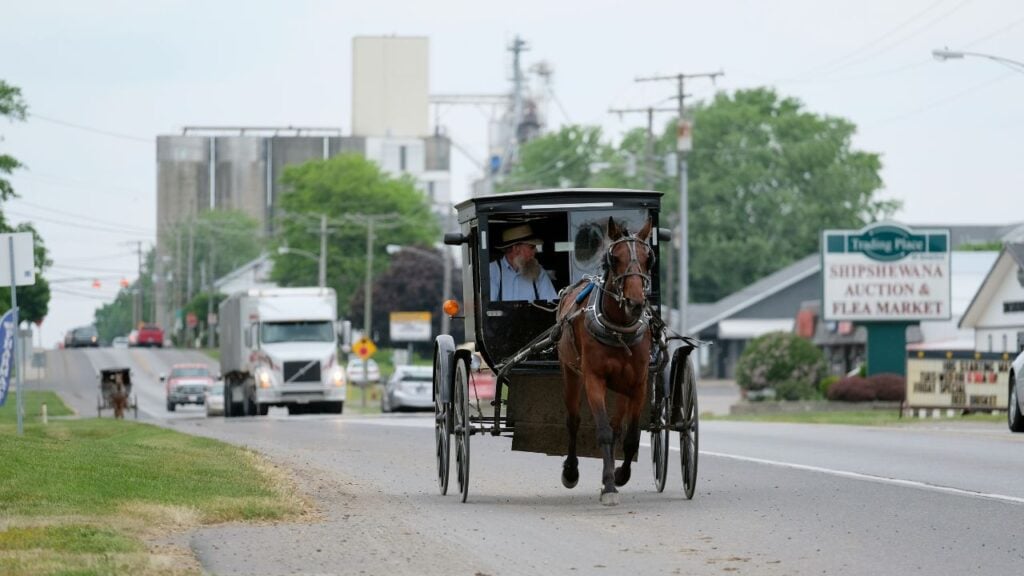
A buggy ahead on an Indiana road changes what you need to know as a driver.
These are the rules that matter once a buggy shows up in front of you.
5 Indiana Buggy Laws Drivers Don't Learn Until They Meet One on the Road
5 Things Hoosiers Do Without Realizing It's Not Normal Anywhere Else
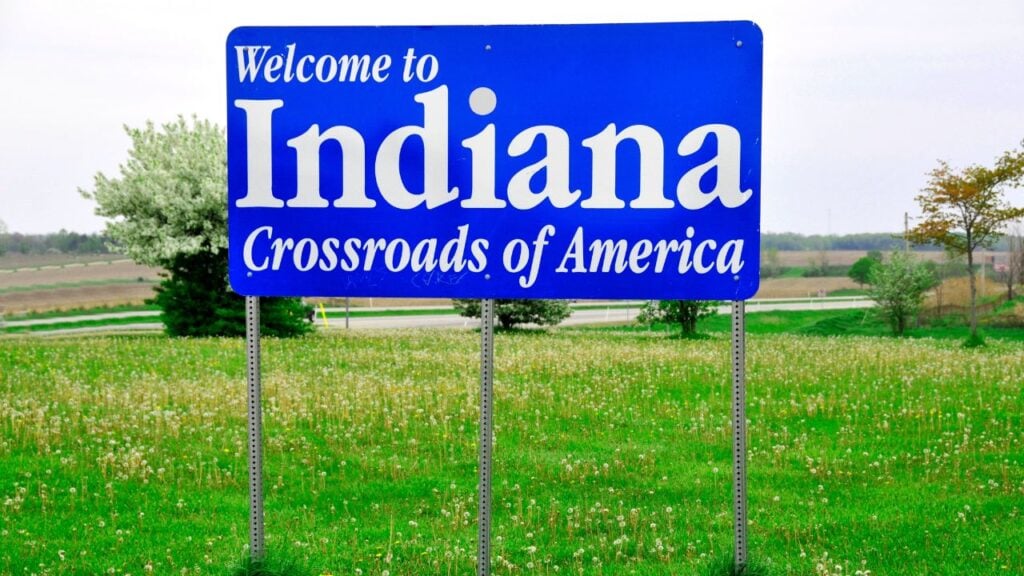
Some everyday Hoosier habits only stand out once you describe them to a friend in another state.
These are the habits that stop being normal at the state line.
5 Things Hoosiers Do Without Realizing It's Not Normal Anywhere Else
