
3 Wild Animals Tennesseans Can Be Fined for Feeding

You’re at a Kingsport park with half a loaf of bread and a pond full of ducks.
Think twice before you open the bag.
Here are the wild animals Tennesseans can be fined for feeding.
Note: This is general information, not legal advice. Wildlife rules and fines are subject to change, so confirm the current rules with the Tennessee Wildlife Resources Agency (TWRA).
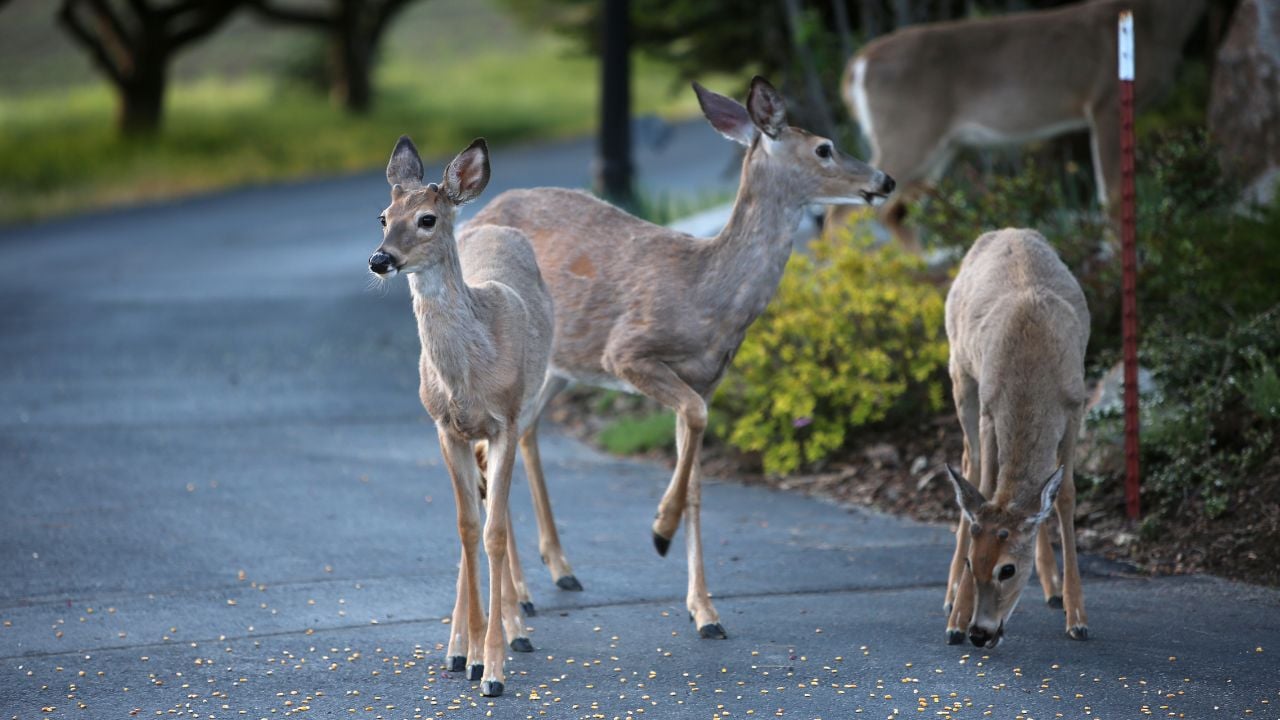
1. White-Tailed Deer
As of September 2026, you can’t feed white-tailed deer in 26 Tennessee counties, from Shelby and Madison in the west to Dickson and Williamson in Middle Tennessee.
TWRA bans feeding inside its chronic wasting disease (CWD) Management Zone and in any county where the disease has turned up.
Twenty-one of those counties form the management zone, and the other five are counties with a positive test.
Placing grain, salt products, minerals or other consumable products out for wildlife is off-limits there.
Feed within 100 feet of a home or other occupied building is exempt, and so is feed placed so deer can’t reach it.
Normal farming and forestry practices, crop and wildlife food production, and wild hog control authorized by TWRA also get a pass.
Hunting over feed isn’t allowed under any of those exceptions.
Under state law, breaking a TWRA rule like this one is a Class C misdemeanor, so you could be fined.
A Class C misdemeanor carries up to 30 days in jail, a fine of up to $50, or both.
TWRA says higher rates of direct contact around bait sites increase the risk of disease transmission.
2. Black Bears
Black bears are covered by a Tennessee feeding law that took effect July 1, 2026.
If you knowingly feed a bear inside a closed area, you face a Class B misdemeanor and a fine of at least $250, before court costs.
The law applies only in areas where the Tennessee Fish and Wildlife Commission has proclaimed bear feeding off-limits.
Gatlinburg is a proclaimed area.
The city says the ban covers North Chalet Village too.
TWRA says feeding conditions bears to look for human food, and that leads to conflicts with people.
You can break the law without meaning to feed a bear.
Knowingly leaving food or garbage unsecured where bears can reach it counts as unknowing feeding, and the first offense brings a written warning.
After the warning, a second or later offense costs at least $250.
The same law also lets TWRA sign agreements with local police to help enforce wildlife rules and proclamations.
Does the Bear Law Cover Hunters?
The opening clauses of Tennessee’s bear-feeding law say it doesn’t apply to lawful hunting activities.
Those clauses describe the target as feeding that endangers the public.
If you hunt, the offense itself applies only inside an area the commission has proclaimed closed to bear feeding.
3. Ducks and Geese in Kingsport Parks
In Kingsport, you can’t feed waterfowl, a group that includes ducks and geese, in any city park or recreation area.
The same ordinance covers shorebirds, and it bars you from allowing others to feed them.
The exception is any area the city’s parks and recreation director designates for feeding waterfowl and shorebirds.
Smokies Feeding Rules
Rangers at Great Smoky Mountains National Park enforce rules against littering, feeding wildlife and improper food storage.
The National Park Service says violations can bring fines up to $5,000 and jail time up to six months.
The park says bears that rely on human food tend to live shorter lives.
If you picnic or camp there, bear-proof trash cans and dumpsters are available in all campgrounds, picnic areas and high-use areas like visitor centers.
During the summer, some picnic areas close each evening for cleaning before dark.
Plan your picnic around that, since rangers patrol picnic areas and campgrounds to enforce evening closures.
Park volunteers also remove unattended food and coolers, so keep yours with you.
Psst! How much do you know about bears and deer? Take our quiz and see if you can ace it.
Quiz
Tennessee Wildlife IQ
Answer these questions on Tennessee’s bears, deer and bait rules. We bet you can’t get them all right. Prove us wrong?
TWRA cites a study on bears that wildlife officers move to new territory. About what share die within four months?
Legal Deer Baiting
Deer baiting is allowed in Tennessee with a Privilege License, as long as you're hunting on private land outside the CWD counties.
The license costs $50 for residents and $100 for non-residents.
You need it even with a lifetime license or an age exemption.
The license stays valid for the whole deer season, even if a new county turns CWD-positive partway through.
It's valid only on private land you own or lease.
Baiting stays off-limits on wildlife management areas, in the CWD Management Zone and in any CWD-positive county.
Open trough feeders are out, though other feeder styles are legal.
Properties of five acres or less get one bait site.
TWRA says feeding and baiting can spread diseases such as CWD, bovine tuberculosis and brucellosis.
Bait has to be scattered across the ground, not piled.
Scented sprays and powders don't count as bait.
Hunting over normal farming practices or wildlife food plots isn't considered baiting.
No other big game animal can be taken within 250 yards of a bait site.
Black bears are drawn to deer bait sites too, which often results in damage to feeders, trail cameras and blinds.
Depredation permits won't be issued for bear or other wildlife damage tied to bait sites or feeders.
7 Things Weigel's Does in East Tennessee Beyond Filling Your Tank

Some stops are just for gas, and some turn into part of the neighborhood.
If you stop at Weigel's in East Tennessee, you may not see all of it from the parking lot.
7 Things Weigel's Does in East Tennessee Beyond Filling Your Tank
7 Tennessee Discounts and Tax Breaks for Residents Over 65 That Go Unclaimed Every Year

Everything feels pricier these days.
Tennessee has ways to ease the load for older residents, though you may need to ask.
7 Tennessee Discounts and Tax Breaks for Residents Over 65 That Go Unclaimed Every Year
